Japanese
English
- 有料閲覧
- Abstract 文献概要
- 1ページ目 Look Inside
- 参考文献 Reference
要旨
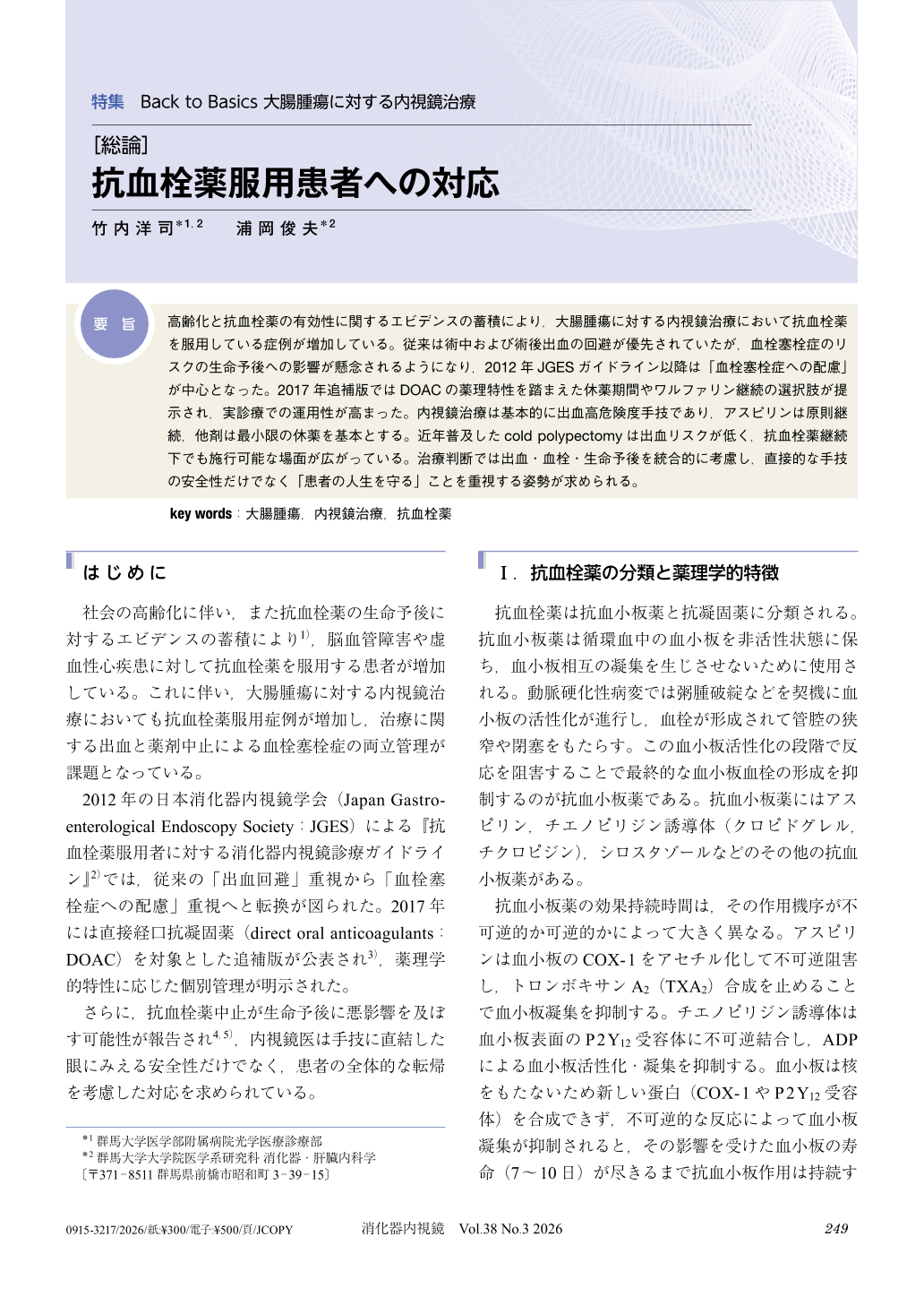
高齢化と抗血栓薬の有効性に関するエビデンスの蓄積により,大腸腫瘍に対する内視鏡治療において抗血栓薬を服用している症例が増加している。従来は術中および術後出血の回避が優先されていたが,血栓塞栓症のリスクの生命予後への影響が懸念されるようになり,2012年JGESガイドライン以降は「血栓塞栓症への配慮」が中心となった。2017年追補版ではDOACの薬理特性を踏まえた休薬期間やワルファリン継続の選択肢が提示され,実診療での運用性が高まった。内視鏡治療は基本的に出血高危険度手技であり,アスピリンは原則継続,他剤は最小限の休薬を基本とする。近年普及したcold polypectomyは出血リスクが低く,抗血栓薬継続下でも施行可能な場面が広がっている。治療判断では出血・血栓・生命予後を統合的に考慮し,直接的な手技の安全性だけでなく「患者の人生を守る」ことを重視する姿勢が求められる。
With the increasing elderly population and the growing evidence supporting antithrombotic therapy for cardiovascular and cerebrovascular diseases, the number of patients receiving antithrombotic agents during colonoscopic resection for colorectal neoplasms has increased. Historically, minimizing post-procedural bleeding was prioritized. However, accumulating experience with thromboembolic events associated with interruption of antithrombotic therapy and their impact on mortality led the 2012 JGES guidelines to shift focus toward the prevention of thromboembolism. The 2017 addendum further improved clinical applicability by incorporating the pharmacologic characteristics of direct oral anticoagulants (DOACs) and by presenting options such as continuation of warfarin administration in therapeutic range.
Because endoscopic resection procedures are classified as high-bleeding-risk interventions, aspirin should generally be continued, whereas other antiplatelet agents and anticoagulants require tailored, minimal interruption based on thromboembolic risk. Cold polypectomy, now widely adopted, has demonstrated a lower risk of post-polypectomy bleeding and can often be performed without discontinuing antithrombotic agents, thus expanding management options in real-world practice.
Optimal care requires an integrated assessment of bleeding risk, thromboembolic risk, and long-term prognosis. Clinicians should not only pursue procedural safety; they should also adopt a patient-centered approach that emphasizes early resumption of therapy, individualized decision-making, and protection of the patient’s overall life course.
© tokyo-igakusha.co.jp. All right reserved.