Japanese
English
- 有料閲覧
- Abstract 文献概要
- 1ページ目 Look Inside
- 参考文献 Reference
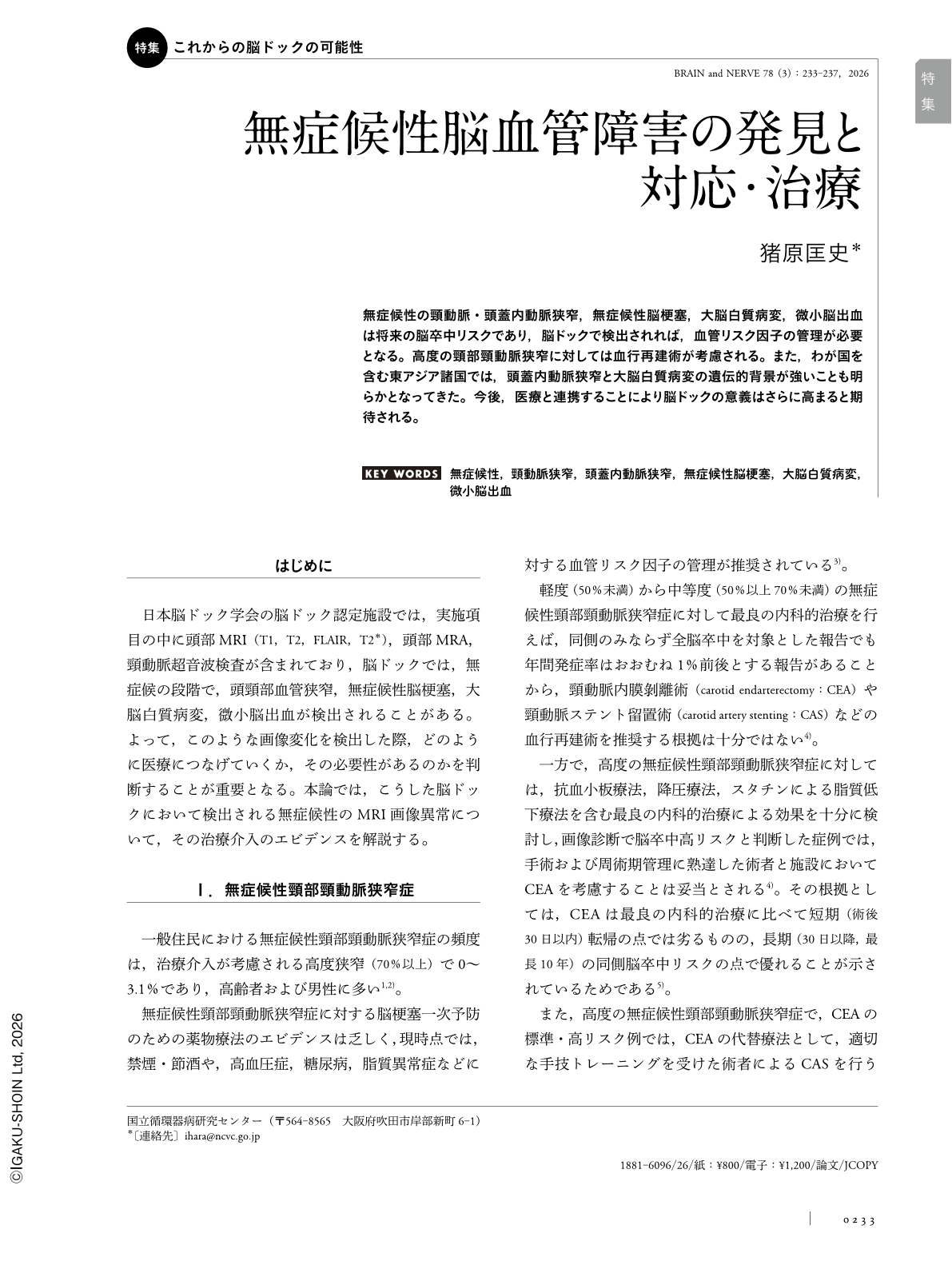
無症候性の頸動脈・頭蓋内動脈狭窄,無症候性脳梗塞,大脳白質病変,微小脳出血は将来の脳卒中リスクであり,脳ドックで検出されれば,血管リスク因子の管理が必要となる。高度の頸部頸動脈狭窄に対しては血行再建術が考慮される。また,わが国を含む東アジア諸国では,頭蓋内動脈狭窄と大脳白質病変の遺伝的背景が強いことも明らかとなってきた。今後,医療と連携することにより脳ドックの意義はさらに高まると期待される。
Abstract
Asymptomatic carotid or intracranial arterial stenosis, silent brain infarction, cerebral white matter lesions, and cerebral microbleeds are well-established predictors of stroke. When these findings are detected through brain screening programs (“brain dock”), aggressive management of vascular risk factors is warranted. In cases of severe carotid stenosis, revascularization procedures such as carotid endarterectomy or carotid artery stenting may be considered. In East Asia, including Japan, genetic predisposition appears to play a significant role. The moyamoya disease-related RNF213 p.R4810K variant has been linked to intracranial arterial stenosis, and NOTCH3 variants are associated with an increased burden of white matter disease. Closer integration of screening programs and routine clinical care is expected to further enhance the value of brain dock.
Copyright © 2026, Igaku-Shoin Ltd. All rights reserved.