Japanese
English
- 有料閲覧
PPV購入案内
1,320円 (1,200円+税10%) こちらは、217ページから220ページの文献です。購入には医書.jp本会員登録が必要です。
会員登録完了後に改めて上記「購入サイトへ」を選択してください。
または「購入サイトへ」選択後に「購入ログイン」、「新規会員登録」の順に進んでください。
会員登録について詳しくはをご確認ください。
- Abstract 文献概要
- 1ページ目 Look Inside
- 参考文献 Reference
要旨
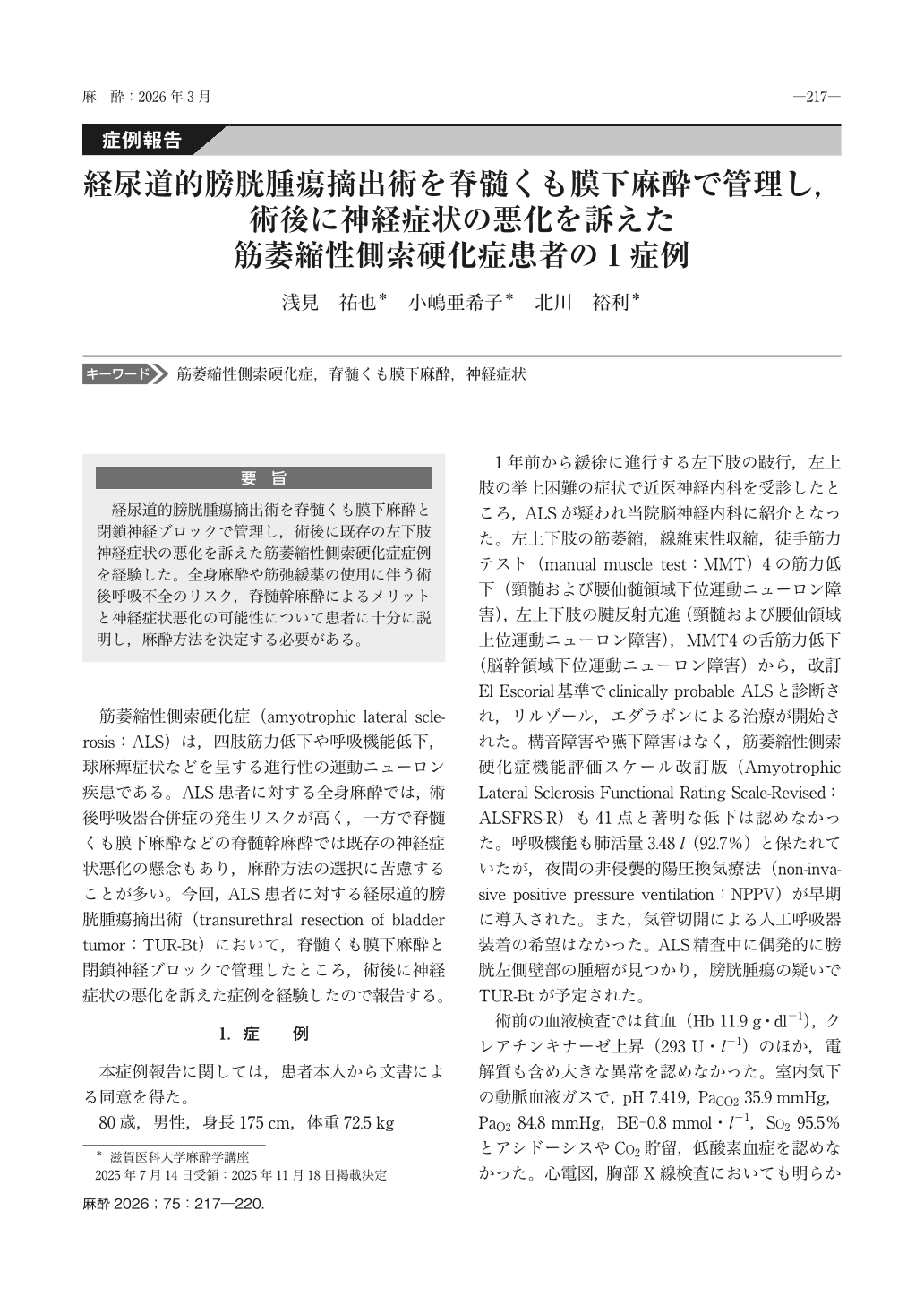
経尿道的膀胱腫瘍摘出術を脊髄くも膜下麻酔と閉鎖神経ブロックで管理し,術後に既存の左下肢神経症状の悪化を訴えた筋萎縮性側索硬化症症例を経験した。全身麻酔や筋弛緩薬の使用に伴う術後呼吸不全のリスク,脊髄幹麻酔によるメリットと神経症状悪化の可能性について患者に十分に説明し,麻酔方法を決定する必要がある。
An 80-year-old male patient with amyotrophic lateral sclerosis(ALS)underwent a transurethral resection of a bladder tumor. Spinal anesthesia combined with an obturator nerve block was used for the surgery. There were no problematic episodes during the anesthetic procedure or the patient’s management, but after the surgery the patient complained of worsening neurological symptoms associated with his left lower limb. A neurologist suggested that this neurological deterioration was a result of the progression of the patient’s ALS symptoms. However, due to the avoidance of the use of general anesthesia in the patient’s surgery, an early discharge without postoperative respiratory complications was achieved by the patient. Anesthesia methods for individuals with ALS should thus be decided after a thorough explanation of the risk of postoperative respiratory failure that is associated with the uses of general anesthesia and muscle relaxants, as well as the benefits of the use of neuraxial anesthesia and the possibility of worsening neurological symptoms.
Copyright © 2026 KOKUSEIDO CO., LTD. All Rights Reserved.