Japanese
English
- 有料閲覧
PPV購入案内
1,320円 (1,200円+税10%) こちらは、1038ページから1044ページの文献です。購入には医書.jp本会員登録が必要です。
会員登録完了後に改めて上記「購入サイトへ」を選択してください。
または「購入サイトへ」選択後に「購入ログイン」、「新規会員登録」の順に進んでください。
会員登録について詳しくはをご確認ください。
- Abstract 文献概要
- 1ページ目 Look Inside
- 参考文献 Reference
はじめに
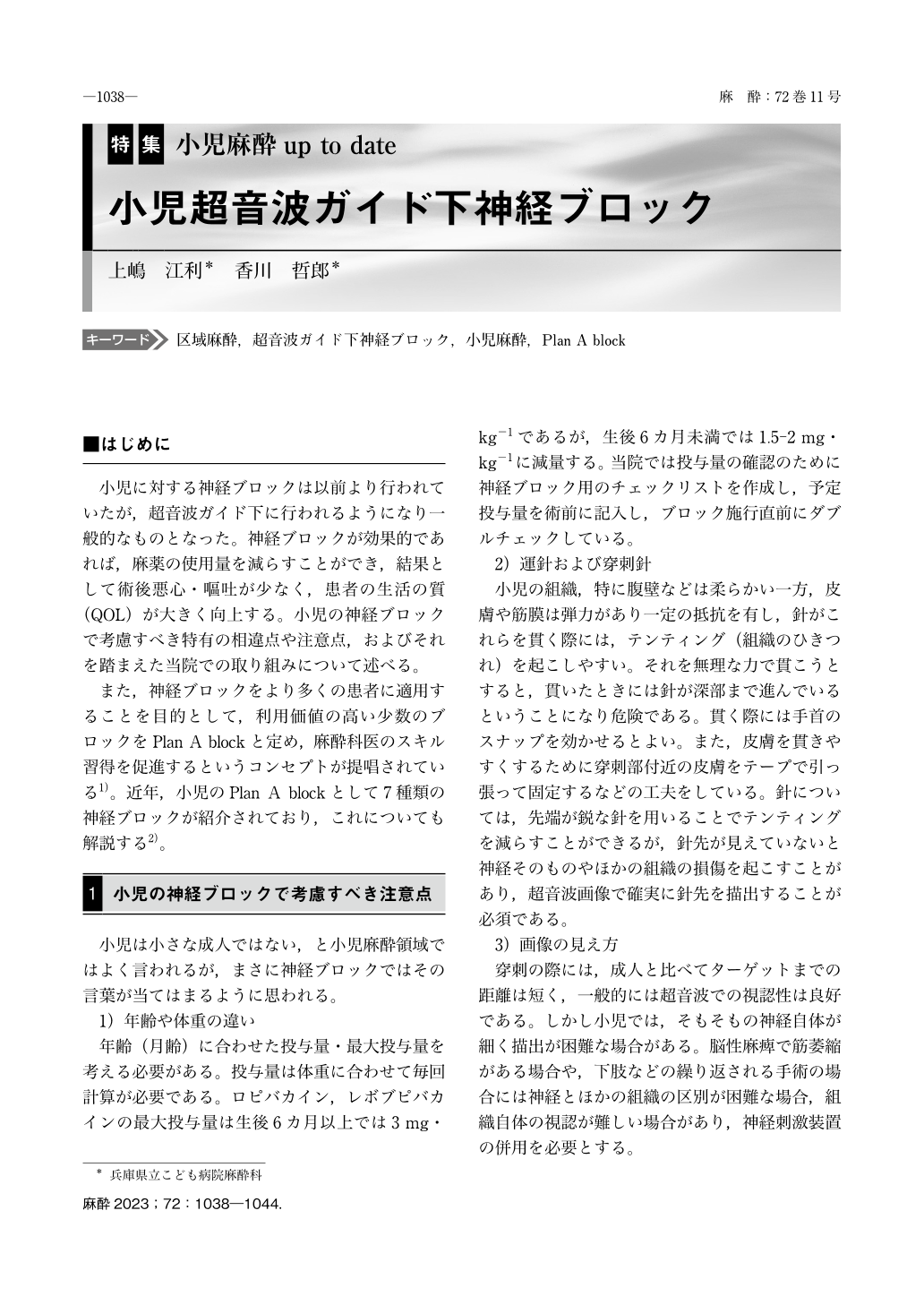
小児に対する神経ブロックは以前より行われていたが,超音波ガイド下に行われるようになり一般的なものとなった。神経ブロックが効果的であれば,麻薬の使用量を減らすことができ,結果として術後悪心・嘔吐が少なく,患者の生活の質(QOL)が大きく向上する。小児の神経ブロックで考慮すべき特有の相違点や注意点,およびそれを踏まえた当院での取り組みについて述べる。
また,神経ブロックをより多くの患者に適用することを目的として,利用価値の高い少数のブロックをPlan A blockと定め,麻酔科医のスキル習得を促進するというコンセプトが提唱されている1)。近年,小児のPlan A blockとして7種類の神経ブロックが紹介されており,これについても解説する2)。
Nerve blocks are frequently performed in pediatric anesthesia but are becoming even more common as they are now performed under ultrasound guidance. Effective nerve blocks reduce the amount of narcotics used, result in less postoperative nausea and vomiting, and greatly improve patients’ quality of life. We discuss(i)the unique differences and caveats to consider in pediatric nerve blocks and(ii)our approach to this procedure. The concept of defining a small number of high-value blocks as Plan A blocks has also been proposed in order to facilitate anesthesiologists’ skill acquisition, with the goal of adapting nerve blocks to more patients. Seven types of nerve blocks were recently introduced as Plan A blocks for children, and these will also be discussed.
Copyright © 2023 KOKUSEIDO CO., LTD. All Rights Reserved.