Japanese
English
- 有料閲覧
PPV購入案内
1,650円 (1,500円+税10%) こちらは、861ページから865ページの文献です。購入には医書.jp本会員登録が必要です。
会員登録完了後に改めて上記「購入サイトへ」を選択してください。
または「購入サイトへ」選択後に「購入ログイン」、「新規会員登録」の順に進んでください。
会員登録について詳しくはをご確認ください。
- Abstract 文献概要
- 1ページ目 Look Inside
- 参考文献 Reference
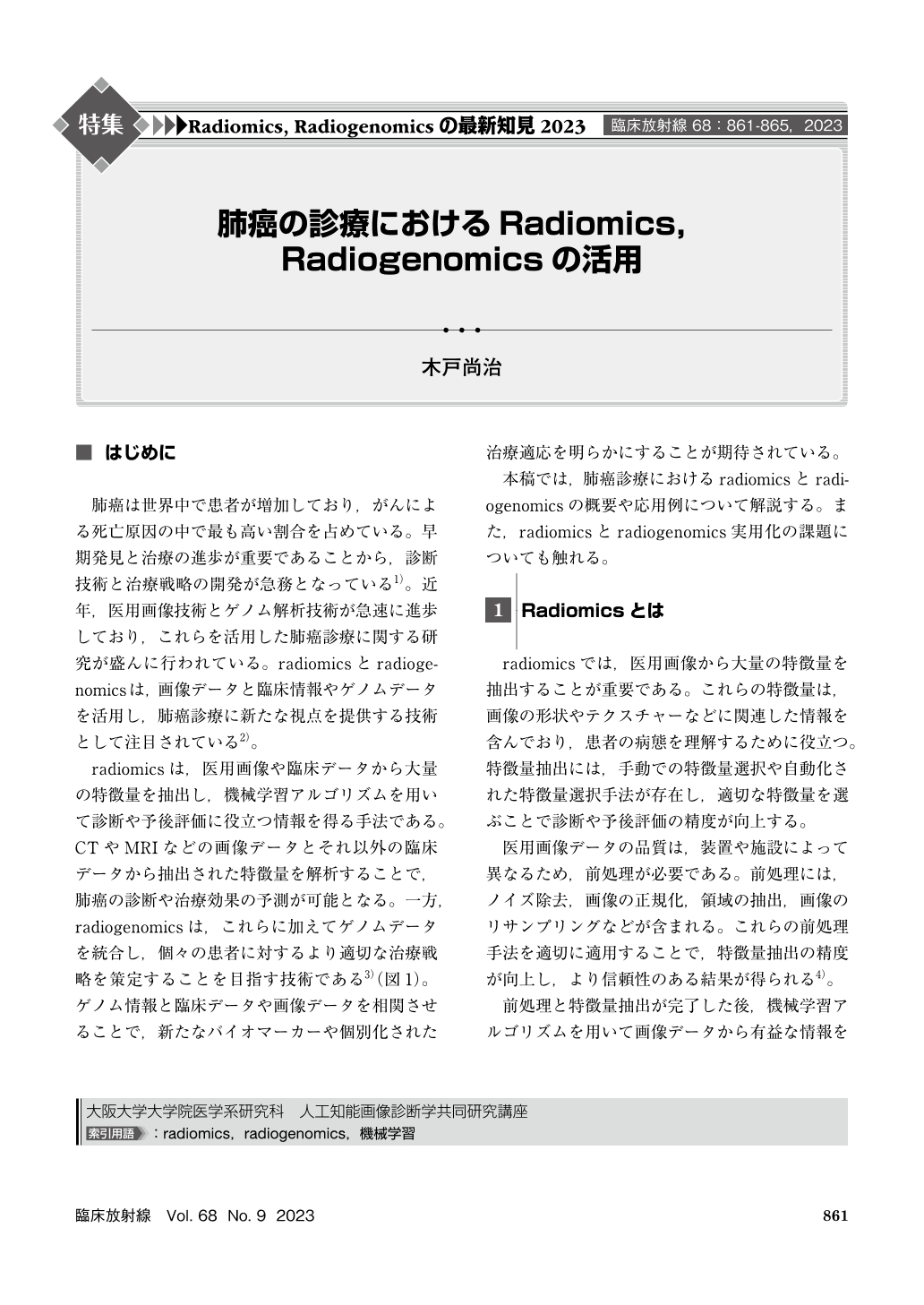
肺癌は世界中で患者が増加しており,がんによる死亡原因の中で最も高い割合を占めている。早期発見と治療の進歩が重要であることから,診断技術と治療戦略の開発が急務となっている1)。近年,医用画像技術とゲノム解析技術が急速に進歩しており,これらを活用した肺癌診療に関する研究が盛んに行われている。radiomicsとradiogenomicsは,画像データと臨床情報やゲノムデータを活用し,肺癌診療に新たな視点を提供する技術として注目されている2)。
The incidence of lung cancer is increasing worldwide, and there is an urgent need to develop methods for its detection and treatment planning. Diagnostic technologies such as radiomics and radiogenomics, which use a combination of clinical data, imaging information and genomic details, have been instrumental in lung cancer care. Their implementation has proven fruitful in various areas, including early detection, prognostication, and personalized treatment, resulting in efficient lung cancer care. To improve these technologies, further data integration, algorithm improvements, and advances in AI technology are needed. Physicians and researchers are expected to collaborate to develop innovative knowledge and technologies by sharing and reusing data sets. The comprehensive use of radiomics and radiogenomics should improve patient outcomes and maximize treatment efficacy, and they are expected to be of significant benefit in realizing personalized medicine for lung cancer therapy.
Copyright © 2023, KANEHARA SHUPPAN Co.LTD. All rights reserved.