Japanese
English
- 有料閲覧
PPV購入案内
1,650円 (1,500円+税10%) こちらは、1401ページから1406ページの文献です。購入には医書.jp本会員登録が必要です。
会員登録完了後に改めて上記「購入サイトへ」を選択してください。
または「購入サイトへ」選択後に「購入ログイン」、「新規会員登録」の順に進んでください。
会員登録について詳しくはをご確認ください。
- Abstract 文献概要
- 1ページ目 Look Inside
- 参考文献 Reference
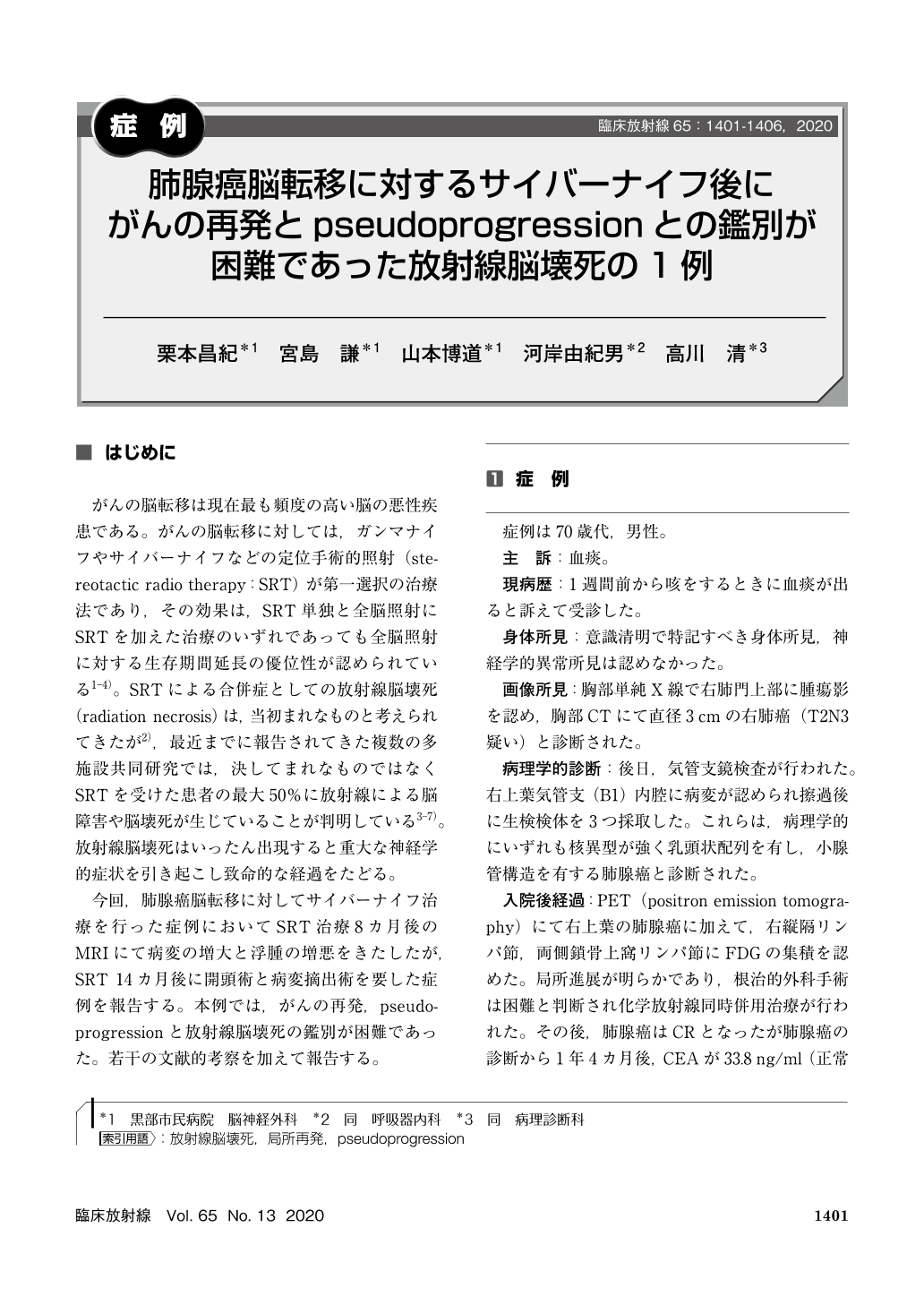
がんの脳転移は現在最も頻度の高い脳の悪性疾患である。がんの脳転移に対しては,ガンマナイフやサイバーナイフなどの定位手術的照射(stereotactic radio therapy:SRT)が第一選択の治療法であり,その効果は,SRT単独と全脳照射にSRTを加えた治療のいずれであっても全脳照射に対する生存期間延長の優位性が認められている1-4)。SRTによる合併症としての放射線脳壊死(radiation necrosis)は,当初まれなものと考えられてきたが2),最近までに報告されてきた複数の多施設共同研究では,決してまれなものではなくSRTを受けた患者の最大50%に放射線による脳障害や脳壊死が生じていることが判明している3-7)。放射線脳壊死はいったん出現すると重大な神経学的症状を引き起こし致命的な経過をたどる。
One of the major risks of intracranial stereotactic radiotherapy(SRT)is subsequent development of brain necrosis. Here, we report a 72-years-old man who suffered from a lung adenocarcinoma. He was treated with the chemo-radiotherapy for his advanced lung cancer. Serial follow-up MRI detected the metastatic brain tumor at the frontal lobe, which was 16 months after his initial admission. This brain metastasis was treated by SRT(30Gy, 3 fractions). The metastatic tumor reduced in size two months after the SRT, but it increased in size with increased brain edema after eight months. The lesion further enlarged to the size of 30mm×22mm with marked brain edema 14 months after SRT. Craniotomy and lesionectomy were done and pathological specimens revealed a brain necrosis with the viable adenocarcinoma tissues. Postoperative course was uneventful, but he underwent the second SRT to the tumor resection cavity.
Copyright © 2020, KANEHARA SHUPPAN Co.LTD. All rights reserved.