Japanese
English
- 有料閲覧
PPV購入案内
1,650円 (1,500円+税10%) こちらは、323ページから327ページの文献です。購入には医書.jp本会員登録が必要です。
会員登録完了後に改めて上記「購入サイトへ」を選択してください。
または「購入サイトへ」選択後に「購入ログイン」、「新規会員登録」の順に進んでください。
会員登録について詳しくはをご確認ください。
- Abstract 文献概要
- 1ページ目 Look Inside
- 参考文献 Reference
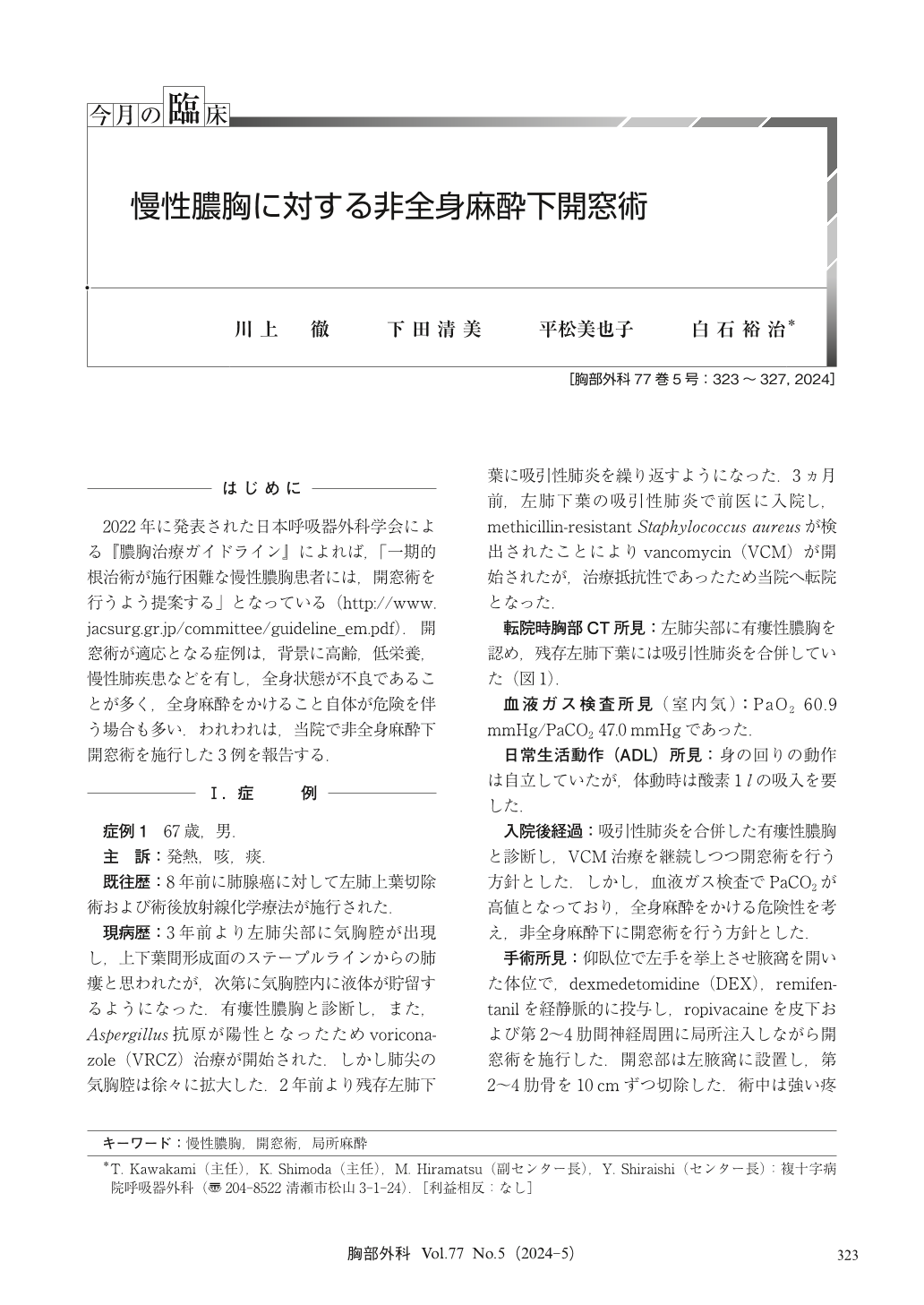
2022年に発表された日本呼吸器外科学会による『膿胸治療ガイドライン』によれば,「一期的根治術が施行困難な慢性膿胸患者には,開窓術を行うよう提案する」となっている(http://www.jacsurg.gr.jp/committee/guideline_em.pdf).開窓術が適応となる症例は,背景に高齢,低栄養,慢性肺疾患などを有し,全身状態が不良であることが多く,全身麻酔をかけること自体が危険を伴う場合も多い.われわれは,当院で非全身麻酔下開窓術を施行した3例を報告する.
We may encounter patients with chronic empyema for whom open-window thoracostomy is unavoidable. However, patients with chronic empyema are sometimes at high-risk for surgery under general anesthesia. We, herein, present our surgical experience with three chronic empyema cases who underwent open-window thoracostomy under local anesthesia. Indications for open-window thoracostomy under local anesthesia were raised PaCO2 in Case 1, old age and poor performance status in Case 2, and a history of esophageal reconstruction and vocal cordoplasty in Case 3. All patients were well during the surgery. Case 1 developed type 2 respiratory failure postoperatively and had to be put on a ventilator, but finally recuperated. The sedatives used could have exacerbated raised PaCO2 in this patient, and careful selection of anesthetic agents is mandatory. Considering pain and stress that patients suffer during open-window thoracostomy under local anesthesia, case selection is necessary. Nevertheless, we believe that open-window thoracostomy under local anesthesia is an effective option for high-risk patients.
© Nankodo Co., Ltd., 2024