Japanese
English
- 有料閲覧
PPV購入案内
1,650円 (1,500円+税10%) こちらは、1069ページから1072ページの文献です。購入には医書.jp本会員登録が必要です。
会員登録完了後に改めて上記「購入サイトへ」を選択してください。
または「購入サイトへ」選択後に「購入ログイン」、「新規会員登録」の順に進んでください。
会員登録について詳しくはをご確認ください。
- Abstract 文献概要
- 1ページ目 Look Inside
- 参考文献 Reference
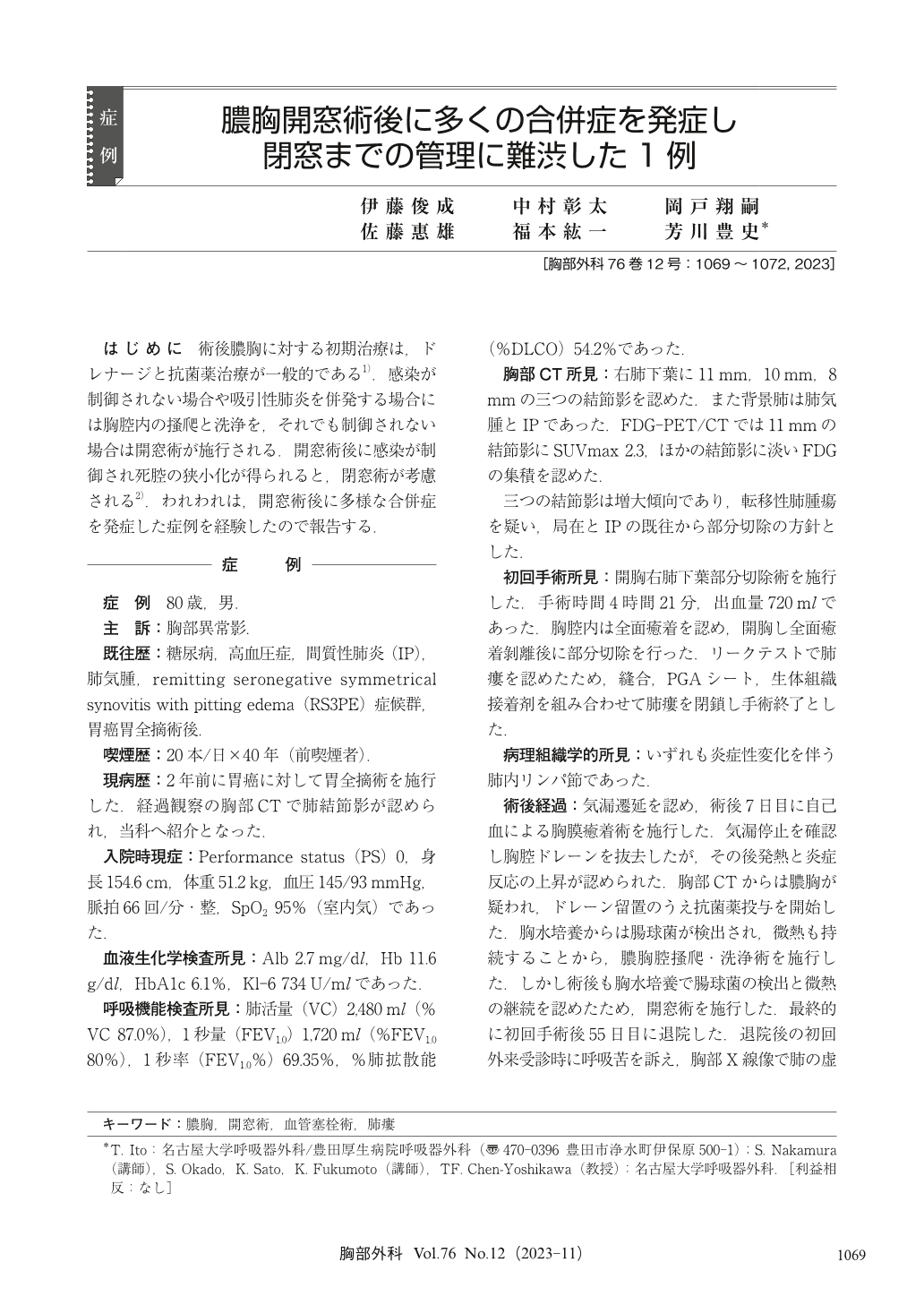
はじめに 術後膿胸に対する初期治療は,ドレナージと抗菌薬治療が一般的である1).感染が制御されない場合や吸引性肺炎を併発する場合には胸腔内の搔爬と洗浄を,それでも制御されない場合は開窓術が施行される.開窓術後に感染が制御され死腔の狭小化が得られると,閉窓術が考慮される2).われわれは,開窓術後に多様な合併症を発症した症例を経験したので報告する.
While open window thoracostomy is used to treat empyema with a high rate of infection control, it is an invasive procedure that leads to a decline in the quality of life. An 80-year-old man who had undergone wedge resection for pulmonary nodules subsequently developed postoperative empyema and underwent open window thoracostomy. After thoracostomy, the patient developed several complications, including bleeding from the lung surface and air leakage. Window closure was planned at this time;however, the plan was scuttled due to his low nutritional status and pulmonary air leakage. After the patient’s condition improved with persistent conservative treatment, window closure was performed, and he overcame his complications. Patients with postoperative empyema requiring thoracostomy are at a high risk of developing postoperative complications. Therefore, it is important to manage the patients’ condition persistently so that they can receive window closure at an appropriate time.
© Nankodo Co., Ltd., 2023