Japanese
English
- 有料閲覧
PPV購入案内
1,320円 (1,200円+税10%) こちらは、409ページから420ページの文献です。購入には医書.jp本会員登録が必要です。
会員登録完了後に改めて上記「購入サイトへ」を選択してください。
または「購入サイトへ」選択後に「購入ログイン」、「新規会員登録」の順に進んでください。
会員登録について詳しくはをご確認ください。
- Abstract 文献概要
- 1ページ目 Look Inside
- 参考文献 Reference
- サイト内被引用 Cited by
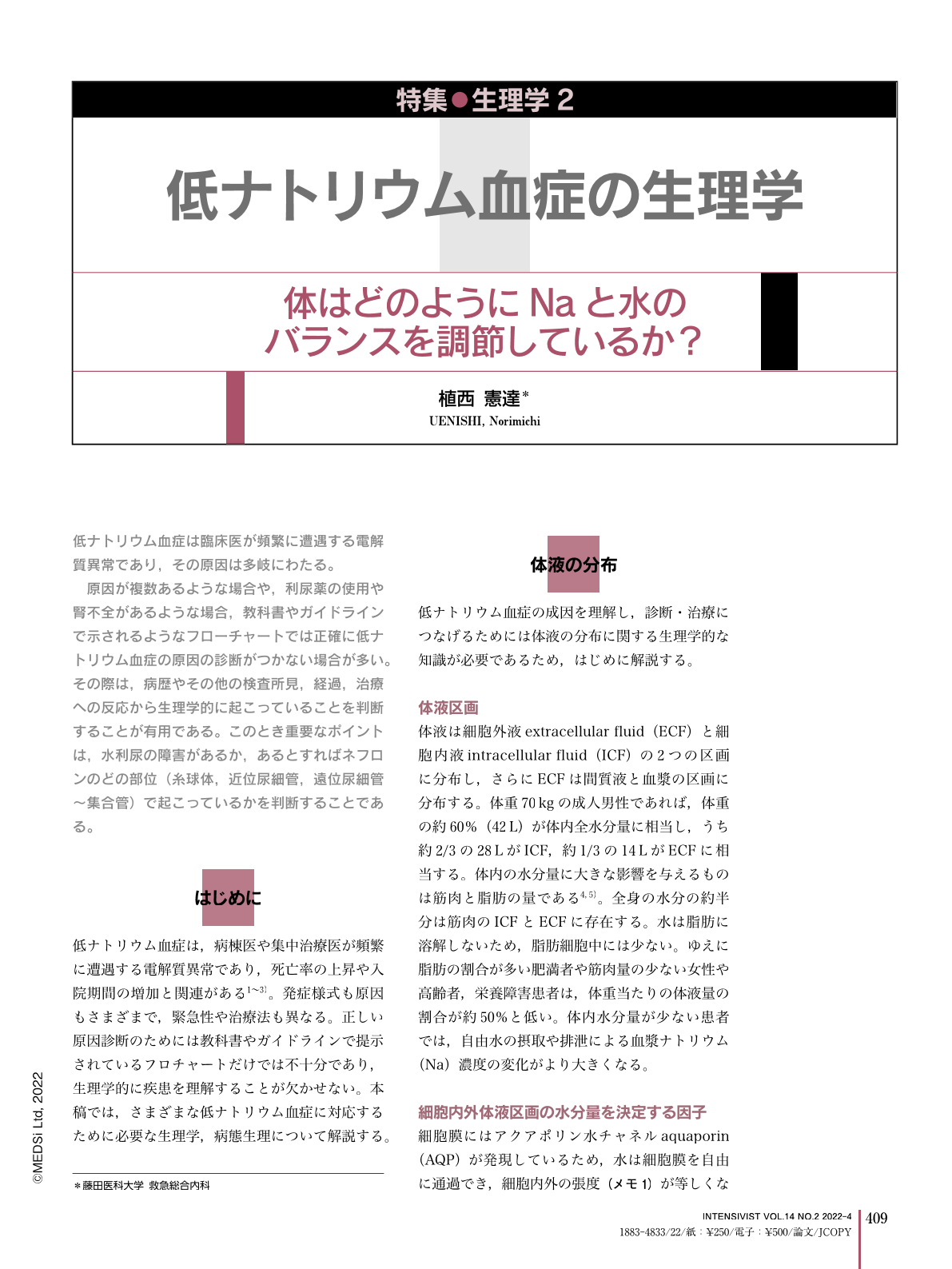
低ナトリウム血症は臨床医が頻繁に遭遇する電解質異常であり,その原因は多岐にわたる。
原因が複数あるような場合や,利尿薬の使用や腎不全があるような場合,教科書やガイドラインで示されるようなフローチャートでは正確に低ナトリウム血症の原因の診断がつかない場合が多い。その際は,病歴やその他の検査所見,経過,治療への反応から生理学的に起こっていることを判断することが有用である。このとき重要なポイントは,水利尿の障害があるか,あるとすればネフロンのどの部位(糸球体,近位尿細管,遠位尿細管〜集合管)で起こっているかを判断することである。
Hyponatremia is an electrolyte abnormality that is frequently encountered by clinicians and has a wide variety of causes. In cases where there are multiple causes, use of diuretics, or renal insufficiency, it is often difficult to accurately diagnose the cause of hyponatremia using a flow chart as described in various textbooks and guidelines. In such cases, it is useful to determine the physiological cause of hyponatremia based on the patient's history, other laboratory findings, clinical course, and response to treatment. It is important to determine whether or not there is impairment of water diuresis, and if so, in which part of the nephron (glomerulus, proximal tubule, distal tubule, or collecting duct) the impairment occurs.
Copyright © 2022, MEDICAL SCIENCES INTERNATIONAL, LTD. All rights reserved.