Japanese
English
- 有料閲覧
PPV購入案内
1,320円 (1,200円+税10%) こちらは、257ページから271ページの文献です。購入には医書.jp本会員登録が必要です。
会員登録完了後に改めて上記「購入サイトへ」を選択してください。
または「購入サイトへ」選択後に「購入ログイン」、「新規会員登録」の順に進んでください。
会員登録について詳しくはをご確認ください。
- Abstract 文献概要
- 1ページ目 Look Inside
- 参考文献 Reference
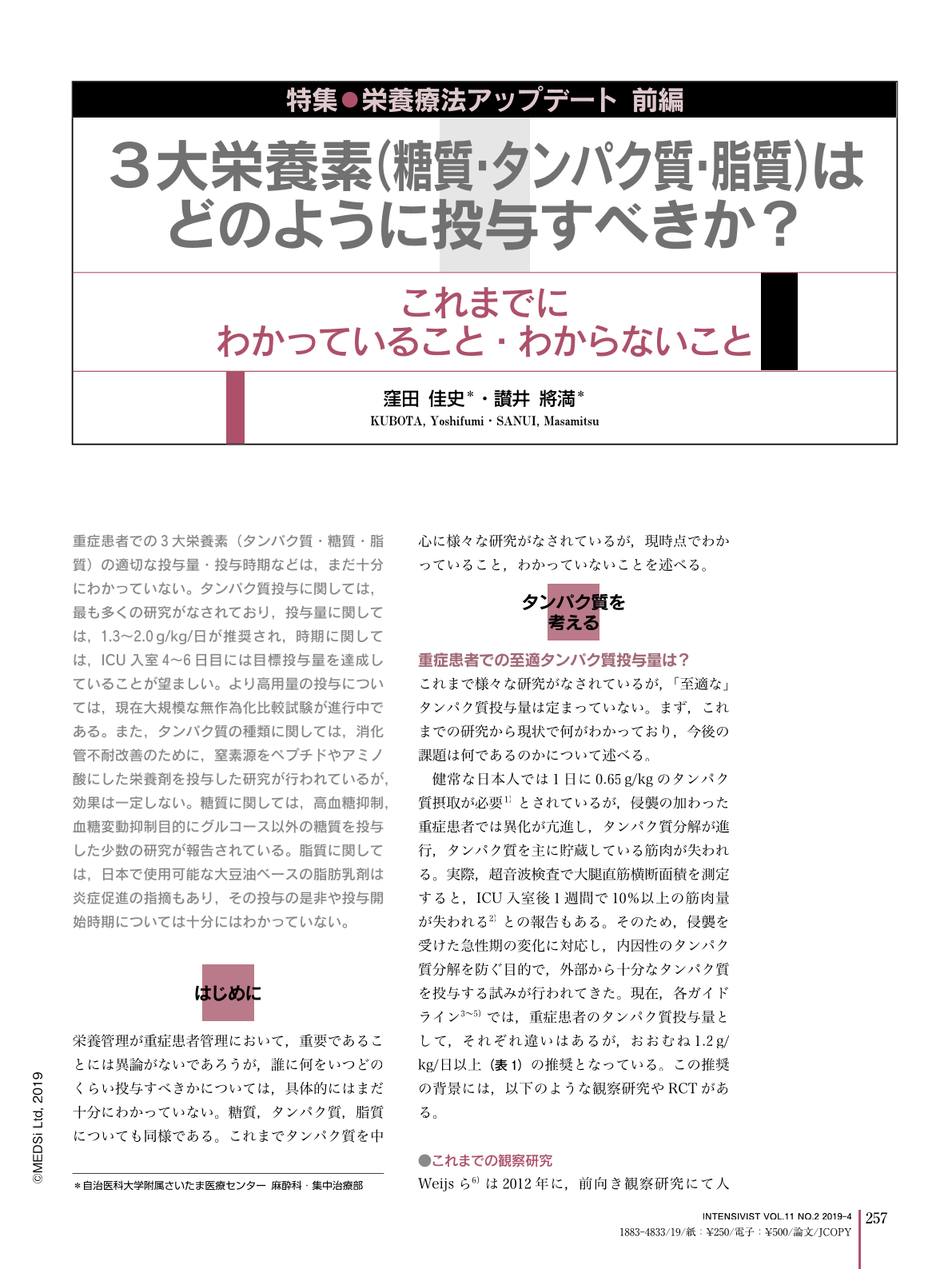
重症患者での3大栄養素(タンパク質・糖質・脂質)の適切な投与量・投与時期などは,まだ十分にわかっていない。タンパク質投与に関しては,最も多くの研究がなされており,投与量に関しては,1.3〜2.0g/kg/日が推奨され,時期に関しては,ICU入室4〜6日目には目標投与量を達成していることが望ましい。より高用量の投与については,現在大規模な無作為化比較試験が進行中である。また,タンパク質の種類に関しては,消化管不耐改善のために,窒素源をペプチドやアミノ酸にした栄養剤を投与した研究が行われているが,効果は一定しない。糖質に関しては,高血糖抑制,血糖変動抑制目的にグルコース以外の糖質を投与した少数の研究が報告されている。脂質に関しては,日本で使用可能な大豆油ベースの脂肪乳剤は炎症促進の指摘もあり,その投与の是非や投与開始時期については十分にはわかっていない。
The administration of macronutrients to critically ill patients has not been fully studied. Protein administration has been studied most. Based on the results of previous studies, the recommended amount of protein is 1.3-1.7g/kg/day. This target is preferably reached within 4 to 6 days after admission to an intensive care unit. Efficacy of larger amounts of protein is being studied in a large randomized controlled trial. As for the type of formula, an oligomeric or elemental formula with peptides or amino acids has been used to improve gastrointestinal tolerance, but the effects have not been determined.
Few studies have investigated the effects of non-glucose carbohydrates, such as xylitol, fructose, isomaltose, and dextrin, to prevent hyperglycemia and blood glucose variability. Pure soybean oil-based lipid emulsion, the only intravenous formula available in Japan, may enhance the inflammation process in critically ill patients, and therefore, administration of this emulsion within 7 days is to be avoided. It is not clear when to initiate administration of the lipid emulsion.
Copyright © 2019, MEDICAL SCIENCES INTERNATIONAL, LTD. All rights reserved.