Japanese
English
- 有料閲覧
PPV購入案内
1,320円 (1,200円+税10%) こちらは、357ページから368ページの文献です。購入には医書.jp本会員登録が必要です。
会員登録完了後に改めて上記「購入サイトへ」を選択してください。
または「購入サイトへ」選択後に「購入ログイン」、「新規会員登録」の順に進んでください。
会員登録について詳しくはをご確認ください。
- Abstract 文献概要
- 1ページ目 Look Inside
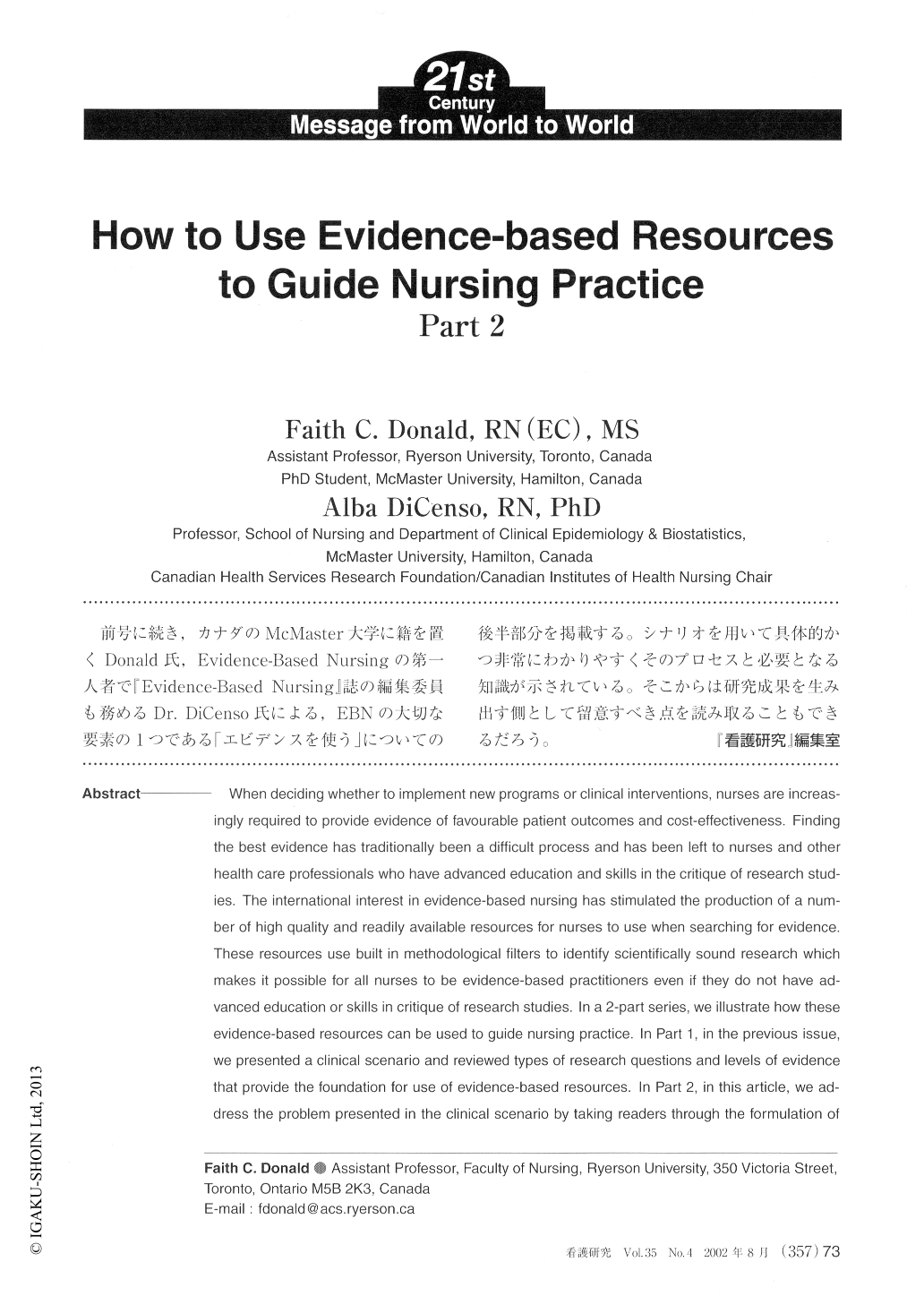
前号に続き,カナダのMcMaster大学に籍を置くDonald氏,Evidence-Based Nursingの第一人者で『Evidence-Based Nursing』誌の編集委員も務めるDr. DiCenso氏による,EBNの大切な要素の1つである「エビデンスを使う」についての後半部分を掲載する。シナリオを用いて具体的かつ非常にわかりやすくそのプロセスと必要となる知識が示されている。そこからは研究成果を生み出す側として留意すべき点を読み取ることもできるだろう。
When deciding whether to implement new programs or clinical interventions, nurses are increasingly required to provide evidence of favourable patient outcomes and costeffectiveness. Finding the best evidence has traditionally been a difficult process and has been left to nurses and other health care professionals who have advanced education and skills in the critique of research studies. The international interest in evidencebased nursing has stimulated the production of a number of high quality and readily available resources for nurses to use when searching for evidence. These resources use built in methodological filters to identify scientifically sound research which makes it possible for all nurses to be evidence-based practitioners even if they do not have advanced education or skills in critique of research studies. In a 2-part series, we illustrate how these evidence-based resources can be used to guide nursing practice. In Part 1, in the previous issue, we presented a clinical scenario and reviewed types of research questions and levels of evidence that provide the foundation for use of evidence-based resources. In Part 2, in this article, we address the problem presented in the clinical scenario by taking readers through the formulation of a focused question, the search strategy for locating high quality evidence, the consideration of clinical applicability of the research findings, and strategies to overcome organizational barriers to evidence-based changes in clinical practice.
Copyright © 2002, Igaku-Shoin Ltd. All rights reserved.