Japanese
English
- 有料閲覧
PPV購入案内
1,320円 (1,200円+税10%) こちらは、1033ページから1037ページの文献です。購入には医書.jp本会員登録が必要です。
会員登録完了後に改めて上記「購入サイトへ」を選択してください。
または「購入サイトへ」選択後に「購入ログイン」、「新規会員登録」の順に進んでください。
会員登録について詳しくはをご確認ください。
- Abstract 文献概要
- 1ページ目 Look Inside
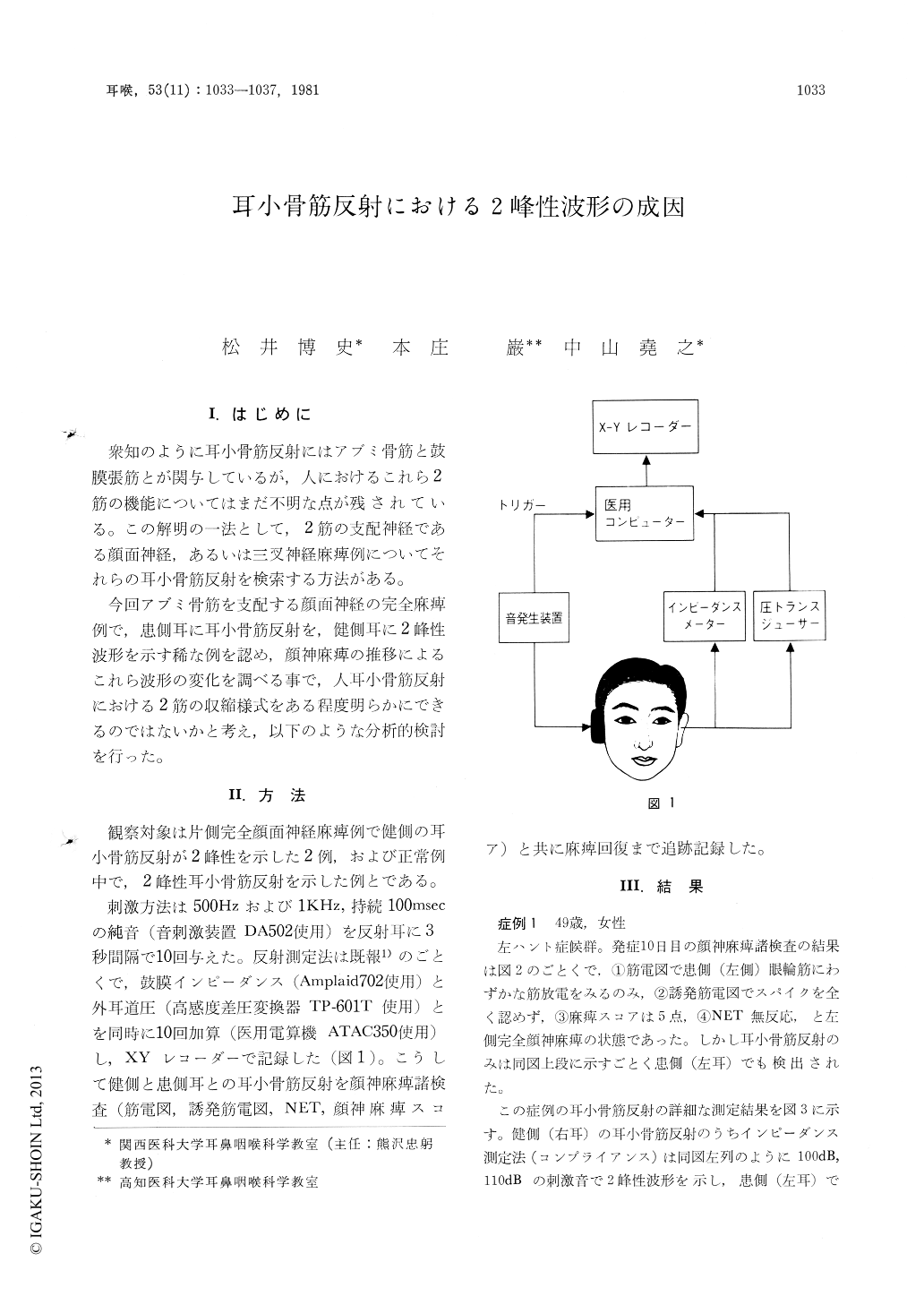
I.はじめに
衆知のように耳小骨筋反射にはアブミ骨筋と鼓膜張筋とが関与しているが,人におけるこれら2筋の機能についてはまだ不明な点が残されている。この解明の一法として,2筋の支配神経である顔面神経,あるいは三叉神経麻痺例についてそれらの耳小骨筋反射を検索する方法がある。
今回アブミ骨筋を支配する顔面神経の完全麻痺例で,患側耳に耳小骨筋反射を,健側耳に2峰性波形を示す稀な例を認め,顔神麻痺の推移によるこれら波形の変化を調べる事で,人耳小骨筋反射における2筋の収縮様式をある程度明らかにできるのではないかと考え,以下のような分析的検討を行った。
In order to clarify the function of human middle ear muscles diphasic impedance change found in patients with facial nerve paralysis was analysed. Impedance of the ear drum in response to the acoustic stimulation was recorded simultaneously with ear canal pressure. The results were that latency of the second wave in the diphasic wave was almost same as that of the wave in the paralysed side. The second wave accompanied with marked inward movement of the ear drum. The first wave appeared after complete recovery of the facial paralysis. Thus it was concluded that diphasic impedance change consists of stapedial (first wave) and tensor tympani (second wave) reflex. Diphasic wave seemed to take place through both a marked acoustic reflex of the tensor tympani muscle and difference in the latency of each reflex enough to produce two waves. Accumulated clinical observation of these cases reveal the role of each muscle in the middle ear.
Copyright © 1981, Igaku-Shoin Ltd. All rights reserved.