Japanese
English
- 有料閲覧
PPV購入案内
1,320円 (1,200円+税10%) こちらは、549ページから559ページの文献です。購入には医書.jp本会員登録が必要です。
会員登録完了後に改めて上記「購入サイトへ」を選択してください。
または「購入サイトへ」選択後に「購入ログイン」、「新規会員登録」の順に進んでください。
会員登録について詳しくはをご確認ください。
- Abstract 文献概要
- 1ページ目 Look Inside
- 参考文献 Reference
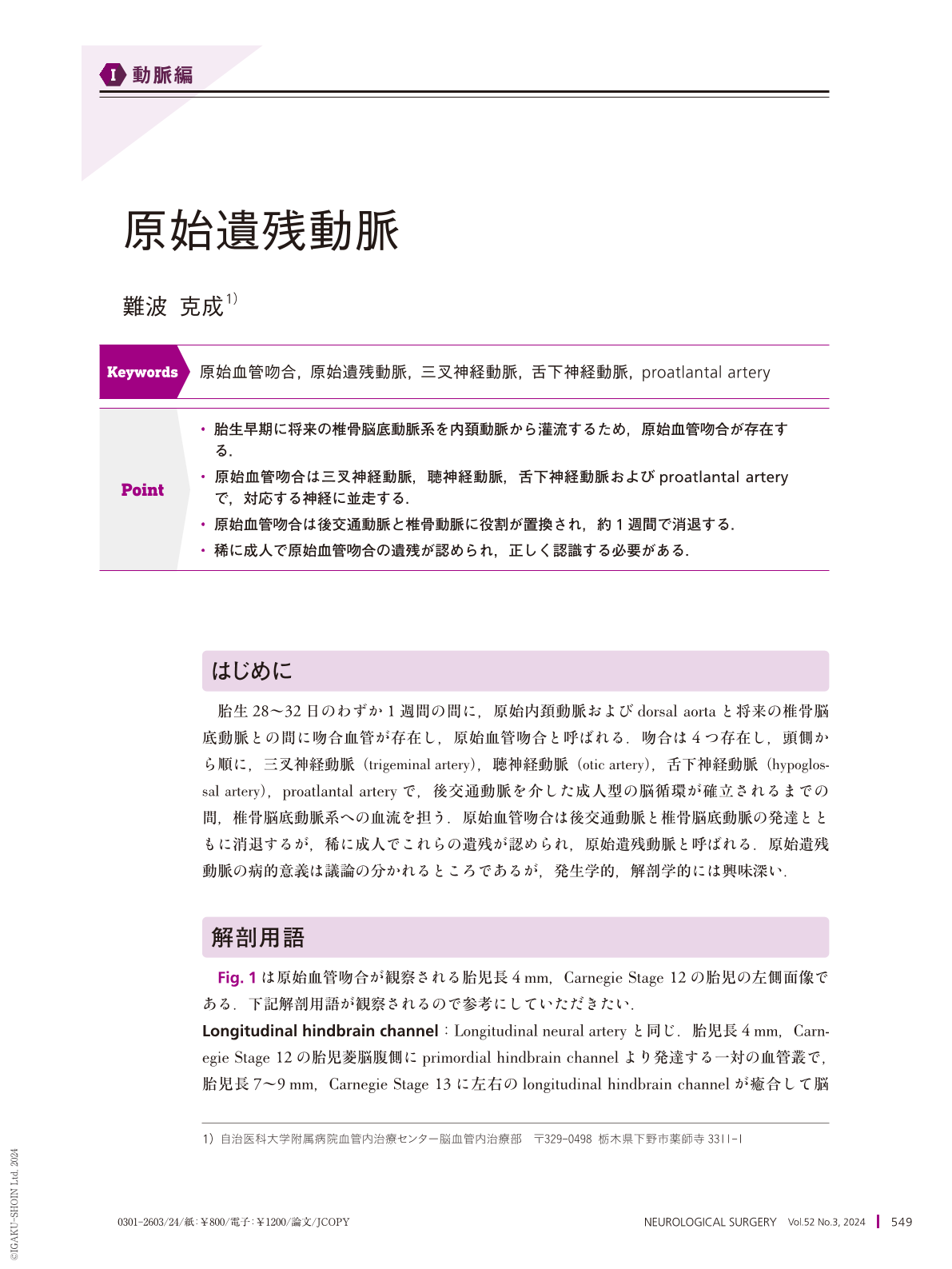
Point
・胎生早期に将来の椎骨脳底動脈系を内頚動脈から灌流するため,原始血管吻合が存在する.
・原始血管吻合は三叉神経動脈,聴神経動脈,舌下神経動脈およびproatlantal arteryで,対応する神経に並走する.
・原始血管吻合は後交通動脈と椎骨動脈に役割が置換され,約1週間で消退する.
・稀に成人で原始血管吻合の遺残が認められ,正しく認識する必要がある.
Primitive anastomotic arteries temporarily exist between the future internal carotid and vertebrobasilar arteries during the early embryonic period(between 28 and 32 days of life). The primitive trigeminal, otic, hypoglossal, and proatlantal intersegmental arteries serve as major blood channels to the developing vertebrobasilar circulation at this stage. These arteries are replaced by the posterior communicating and vertebral arteries, and the primitive anastomotic arteries rapidly regress following the development of the definitive vertebrobasilar circulation. Occasionally, these primitive anastomoses persist and are incidentally discovered after birth. Physicians who treat cerebrovascular diseases should be familiar with the anatomy and functions of these vessels. In this review, we discuss the embryonic basis of the carotid-vertebrobasilar anastomoses and the clinical significance of their persistent forms in adults.
Copyright © 2024, Igaku-Shoin Ltd. All rights reserved.