Japanese
English
- 有料閲覧
PPV購入案内
1,320円 (1,200円+税10%) こちらは、146ページから155ページの文献です。購入には医書.jp本会員登録が必要です。
会員登録完了後に改めて上記「購入サイトへ」を選択してください。
または「購入サイトへ」選択後に「購入ログイン」、「新規会員登録」の順に進んでください。
会員登録について詳しくはをご確認ください。
- Abstract 文献概要
- 1ページ目 Look Inside
- 参考文献 Reference
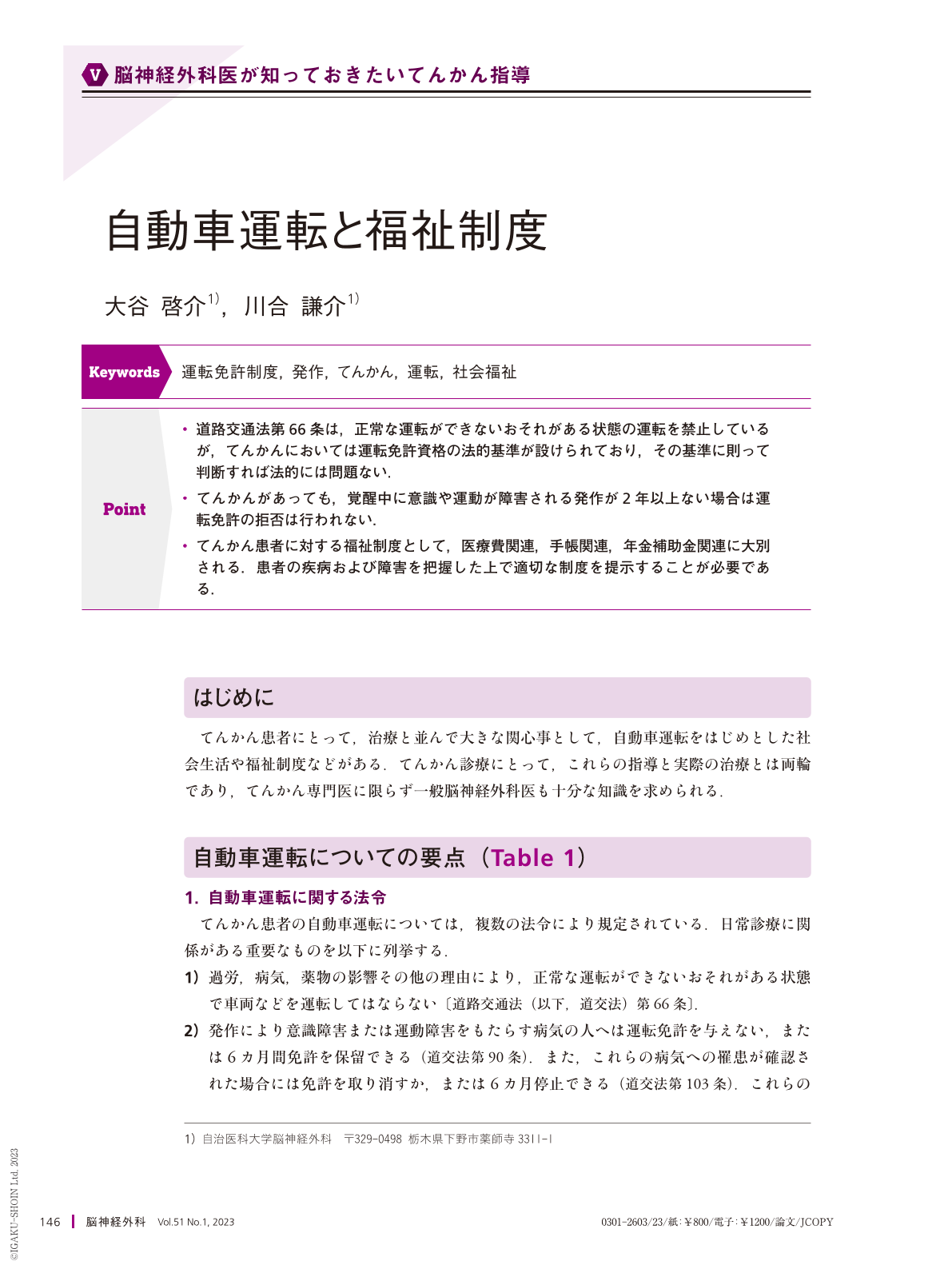
Point
・道路交通法第66条は,正常な運転ができないおそれがある状態の運転を禁止しているが,てんかんにおいては運転免許資格の法的基準が設けられており,その基準に則って判断すれば法的には問題ない.
・てんかんがあっても,覚醒中に意識や運動が障害される発作が2年以上ない場合は運転免許の拒否は行われない.
・てんかん患者に対する福祉制度として,医療費関連,手帳関連,年金補助金関連に大別される.患者の疾病および障害を把握した上で適切な制度を提示することが必要である.
Along with treatment, social life, including driving and welfare systems, are of great concern to patients with epilepsy. During treatment of epilepsy, guidance on these issues and actual treatment are two sides of the same coin, and both epileptologists and general neurosurgeons are required to have thorough knowledge of these issues.
With regard to driving, Article 66 of the Road Traffic Law prohibits driving by persons who are likely to be incapable of normal driving. However, in epilepsy, legal criteria for driver's license eligibility has been established, and there are no legal problems if decisions are made in accordance with these criteria. Even if a patient has epilepsy, a driver's license will not be denied if the patient has not had a seizure that impairs consciousness or movement while awake for at least two years.
Regarding social welfare, there are programs for patients with epilepsy related to medical expenses, disability certificates, and pension subsidies. It is necessary to present appropriate systems based on an understanding of a patient's disease and disability.
These issues are described using actual examples.
Copyright © 2023, Igaku-Shoin Ltd. All rights reserved.