Japanese
English
- 有料閲覧
PPV購入案内
1,320円 (1,200円+税10%) こちらは、122ページから131ページの文献です。購入には医書.jp本会員登録が必要です。
会員登録完了後に改めて上記「購入サイトへ」を選択してください。
または「購入サイトへ」選択後に「購入ログイン」、「新規会員登録」の順に進んでください。
会員登録について詳しくはをご確認ください。
- Abstract 文献概要
- 1ページ目 Look Inside
- 参考文献 Reference
Point
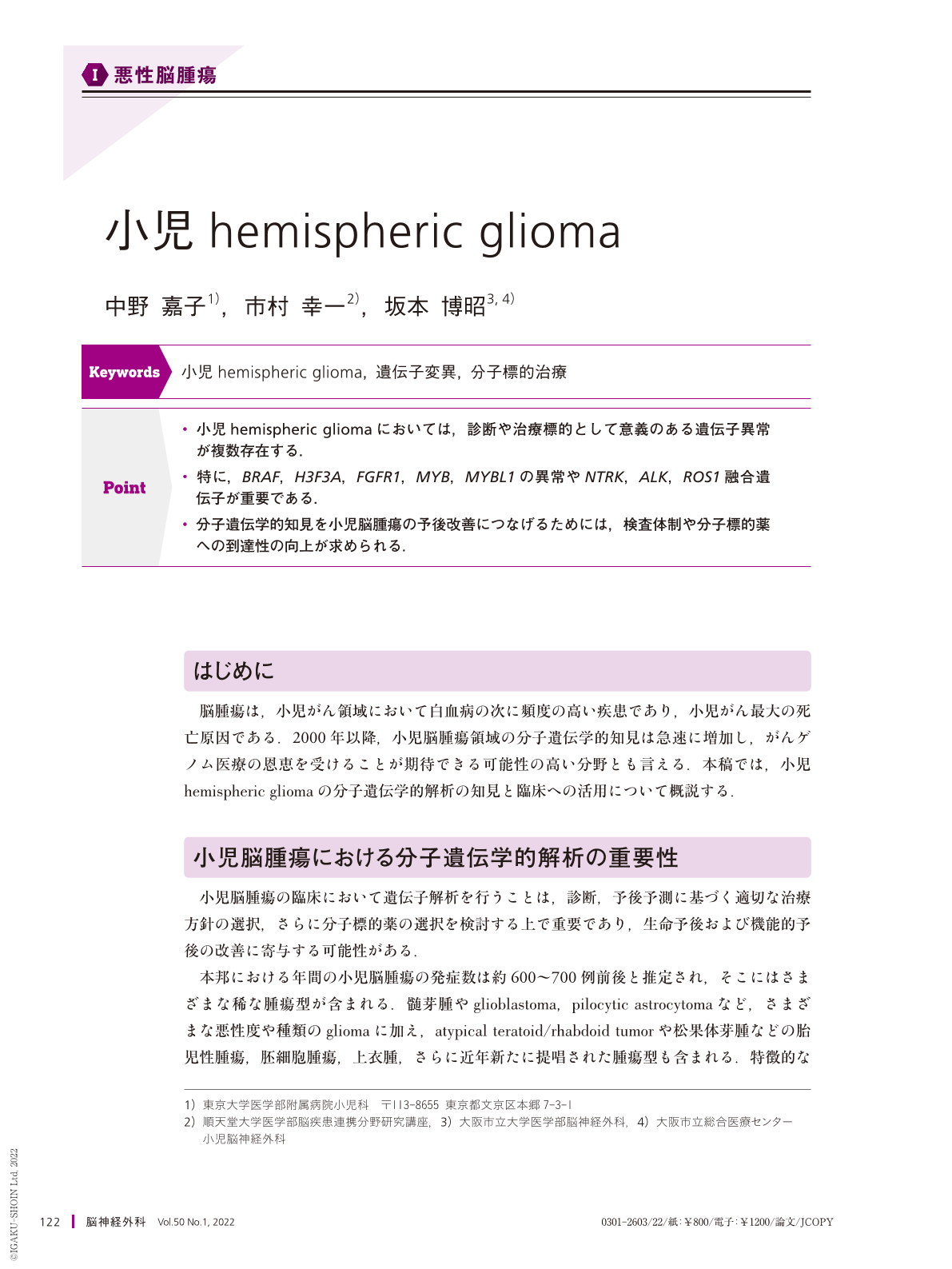
・小児hemispheric gliomaにおいては,診断や治療標的として意義のある遺伝子異常が複数存在する.
・特に,BRAF,H3F3A,FGFR1,MYB,MYBL1の異常やNTRK,ALK,ROS1融合遺伝子が重要である.
・分子遺伝学的知見を小児脳腫瘍の予後改善につなげるためには,検査体制や分子標的薬への到達性の向上が求められる.
About one-third of pediatric low-grade glioma and a half of pediatric high-grade glioma occur in the cerebrum. Pediatric hemispheric glioma may harbor diagnostic and therapeutically targetable genetic abnormalities, including BRAF V600E, H3.3 G34R/V, FGFR1 alternation, MYB or MYBL1 alternation, and NTRK/ALK/ROS1/MET fusion. In addition, the efficacy of molecular-targeted agents, such as BRAF inhibitors, MEK inhibitors, and NTRK inhibitors, against pediatric glioma with the relevant mutations has been demonstrated in several clinical trials. Furthermore, checkpoint inhibitors are considered a choice of treatment for hypermutated glioma, which is typically observed in patients with constitutional mismatch repair deficiency syndrome. Cancer gene panel testing, approved for insurance coverage in Japan in 2019, has been beneficial to pediatric cancer patients. However, to promote the clinical application of the recent molecular understanding of pediatric neuro-oncology, some issues have to be addressed. Herein, we review the genetic profiles of pediatric hemispheric glioma and introduce the current medical situation of precision medicine for pediatric patients with glioma in Japan.
Copyright © 2022, Igaku-Shoin Ltd. All rights reserved.