Japanese
English
- 有料閲覧
PPV購入案内
1,320円 (1,200円+税10%) こちらは、41ページから48ページの文献です。購入には医書.jp本会員登録が必要です。
会員登録完了後に改めて上記「購入サイトへ」を選択してください。
または「購入サイトへ」選択後に「購入ログイン」、「新規会員登録」の順に進んでください。
会員登録について詳しくはをご確認ください。
- Abstract 文献概要
- 1ページ目 Look Inside
I.はじめに
高血圧性小脳出血は,高血圧性脳出血の約10%9,12,16,22)を占め,手術適応のあるものが多いといわれている.近年CT scanにより,小脳出血が容易にしかも早期に診断されるようになり,保存療法のみで比較的良好な経過をとる小脳出血も数多く経験されるようになった4).しかし,急激な意識レベルの低下をみる例や,高齢者の小脳出血例に対しては,ときに開頭術を行うことが困難なことがある.われわれは,適応のあると考えた例には積極的に開頭血腫除去術を行ってきたが,1981年以来,高血圧性脳出血に対する基本的外科療法として定位的血腫吸引術を行う方針に変更した5,13).今回われわれは,高血圧性小脳出血の臨床成績をretrospectiveに検討し,特に定位的血腫吸引術を含む外科的治療の選択について考察したので報告する.
From May 1976, through May 1985, eighty-nine pa-tients with hypertensive cerebellar hemorrhage were admitted to our university hospital and affiliated hospi-tals. The age at onset ranged from 42 to 86 years, with a mean of 65.1 years.
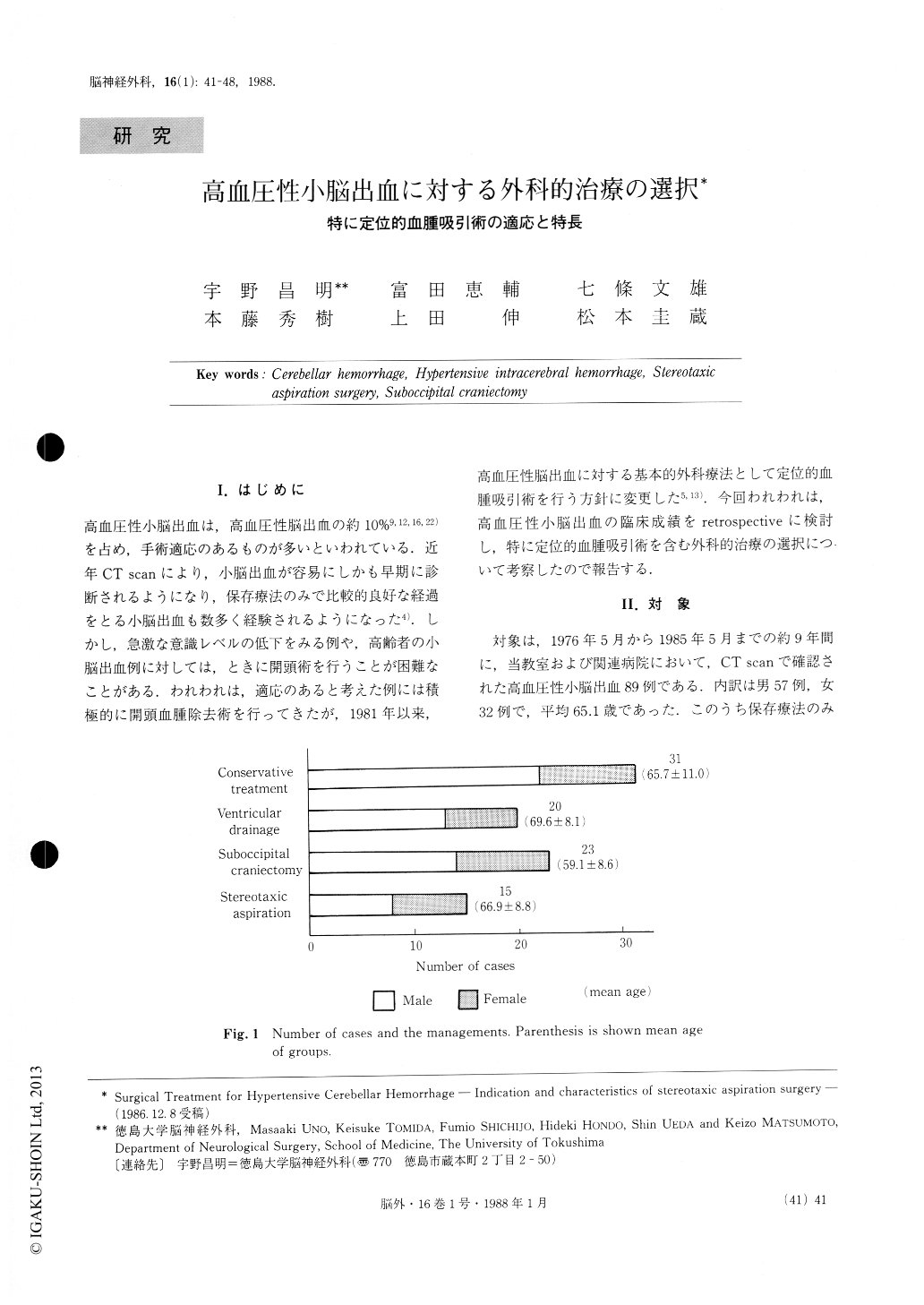
Thirty-one of these patients underwent conservative treatment, 20 were given ventricular drainage, 23 underwent suboccipital craniectomy and 15 underwent stereotaxic aspiration surgery.
The patients were classified into four categories according to the grading of hypertensive cerebellar hemorrhage proposed by Matsumoto in 1982.
Copyright © 1988, Igaku-Shoin Ltd. All rights reserved.