Japanese
English
- 有料閲覧
PPV購入案内
1,320円 (1,200円+税10%) こちらは、485ページから491ページの文献です。購入には医書.jp本会員登録が必要です。
会員登録完了後に改めて上記「購入サイトへ」を選択してください。
または「購入サイトへ」選択後に「購入ログイン」、「新規会員登録」の順に進んでください。
会員登録について詳しくはをご確認ください。
- Abstract 文献概要
- 1ページ目 Look Inside
I.緒言
Bobath1)によれば,すべての片麻痺(患者に強さは異なるが痙縮が存在するといわれる.この痙縮が高度な場合,自発的にも他動的にも運動が制限され,運動機能改善のための訓練に障害となっている.
従来,痙縮の治療には,1)理学療法,2)薬物療法,3)外科的療法,などが用いられて来た10,14,20).近年,きらに.4)生理学的療法として末梢神経,小脳または脊髄の電気刺激が注目されている3,5,7),痙縮に対する脊髄刺激の効果については,そのほとんどが多発性硬化症を対象として検索され.Cookら6)をはじめDooleyら12)によれば,約60%に良好な効果が得られたと報告されている.
Although the therapeutic effect of spinal cordstimulation (SCS) for spastic movement disoders isstill controversial, its effect for multiple sclerosis hasbeen supported by several authors. Among variousclinical beneficial effects, reduction of the spasticitymay be attractive for physical therapy of post-apople-ctic patients.
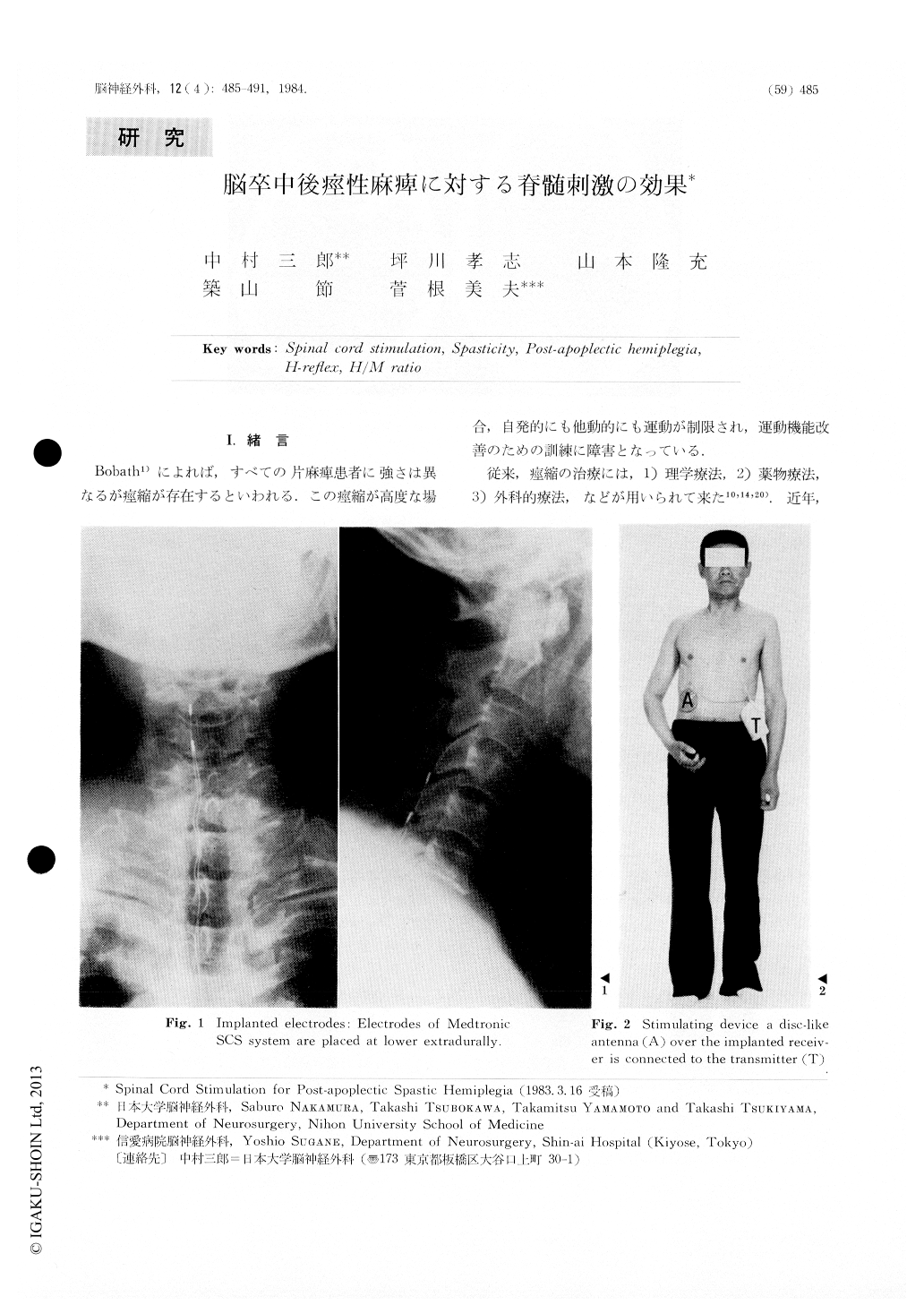
Two patients suffered from post-apoplectic spastichemiplegia were selected for SCS. Electrodes ofMedtronic's SCS system were placed at lower cervicalor upper thoratic spinal cord extradurally. Stimula-tion of 30-75 Hz in frequency and 0.3-0.5 in voltagecontinued for 12-14 hours during daytime every days.
Copyright © 1984, Igaku-Shoin Ltd. All rights reserved.