Japanese
English
- 有料閲覧
PPV購入案内
1,320円 (1,200円+税10%) こちらは、1165ページから1172ページの文献です。購入には医書.jp本会員登録が必要です。
会員登録完了後に改めて上記「購入サイトへ」を選択してください。
または「購入サイトへ」選択後に「購入ログイン」、「新規会員登録」の順に進んでください。
会員登録について詳しくはをご確認ください。
- Abstract 文献概要
- 1ページ目 Look Inside
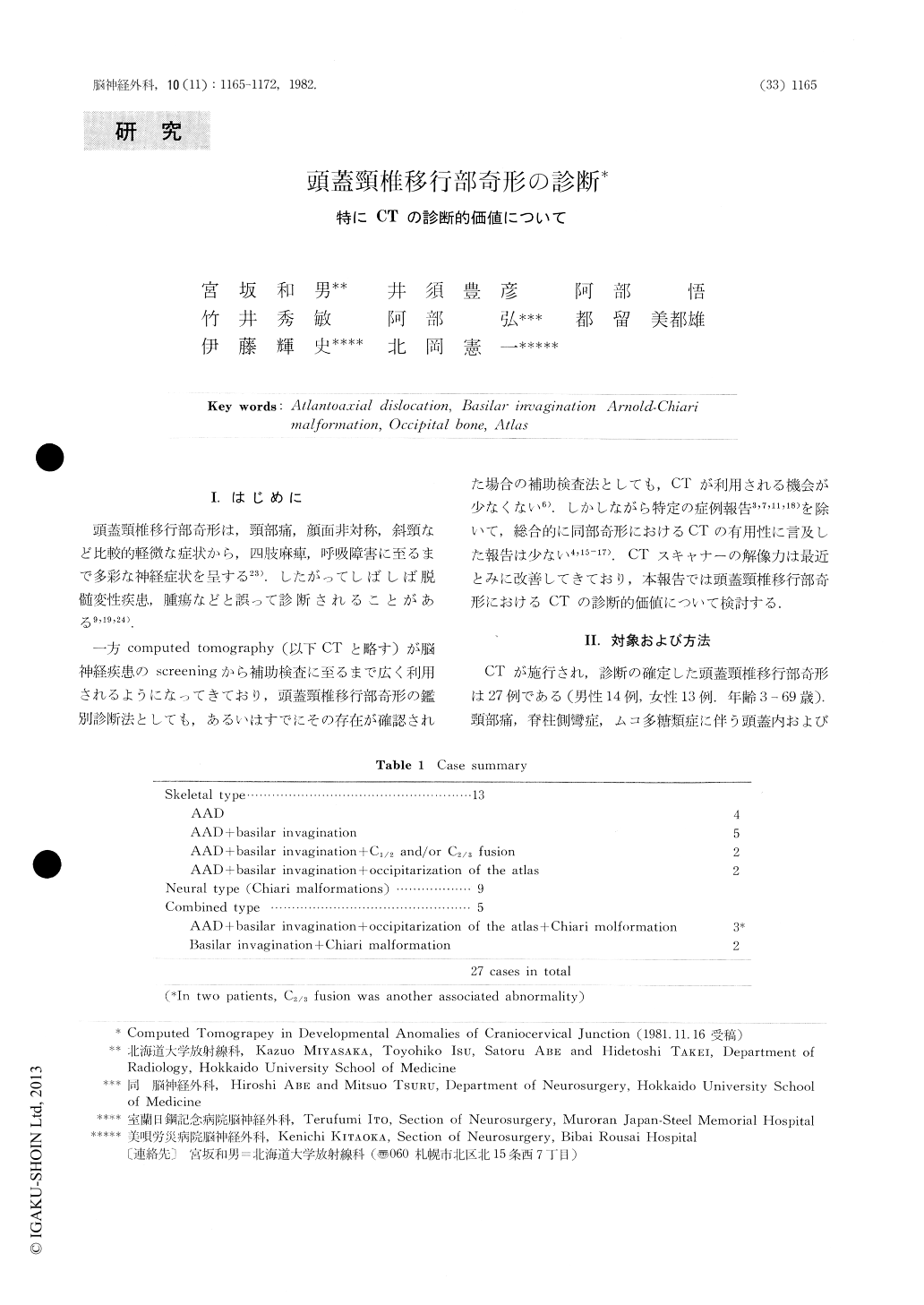
I.はじめに
頭蓋頸椎移行部奇形は,頸部痛,顔面非対称,斜頸など比較的軽微な症状から,四肢麻痺,呼吸障害に至るまで多彩な神経症状を呈する23).したがってしばしば脱髄変性疾患,腫瘍などと誤って診断されることがある9,19,24).
一方computed tomography(以下CTと略す)が脳神経疾患のscreeningから補助検査に至るまで広く利用されるようになってきており,頭蓋頸椎移行部奇形の鑑別診断法としても,あるいはすでにその存在が確認された場合の補助検査法としても,CTが利用される機会が少なくない6).しかしながら特定の症例報告3,7,11,18)を除いて,総合的に同部奇形におけるCTの有用性に言及した報告は少ない4,15-17).CTスキャナーの解像力は最近とみに改善してきており,本報告では頭蓋頸稚移行部奇形におけるCTの診断的価値について検討する.
We reviwed 27 patients with developmental anomalies incraniovertebral junction, and special attention was paid tocomputed tomography (CT) findings in congenital atlanto-axial dislocation (AAD), basilar invagination and Chiarimalformations.
In ADD, CT clearly demonstrated the relationships ofthe atlas to the axis in axial plane. Four major types weredistinguished; anteroposterior (6 cases), transverse (0 case),anteroposterior-transverse (4 cases) and rotatory (5 cases)dislocations. It was feasible by CT to analyse the patho-mechanics in each individual with AAD.
Copyright © 1982, Igaku-Shoin Ltd. All rights reserved.