Japanese
English
- 有料閲覧
PPV購入案内
1,320円 (1,200円+税10%) こちらは、55ページから62ページの文献です。購入には医書.jp本会員登録が必要です。
会員登録完了後に改めて上記「購入サイトへ」を選択してください。
または「購入サイトへ」選択後に「購入ログイン」、「新規会員登録」の順に進んでください。
会員登録について詳しくはをご確認ください。
- Abstract 文献概要
- 1ページ目 Look Inside
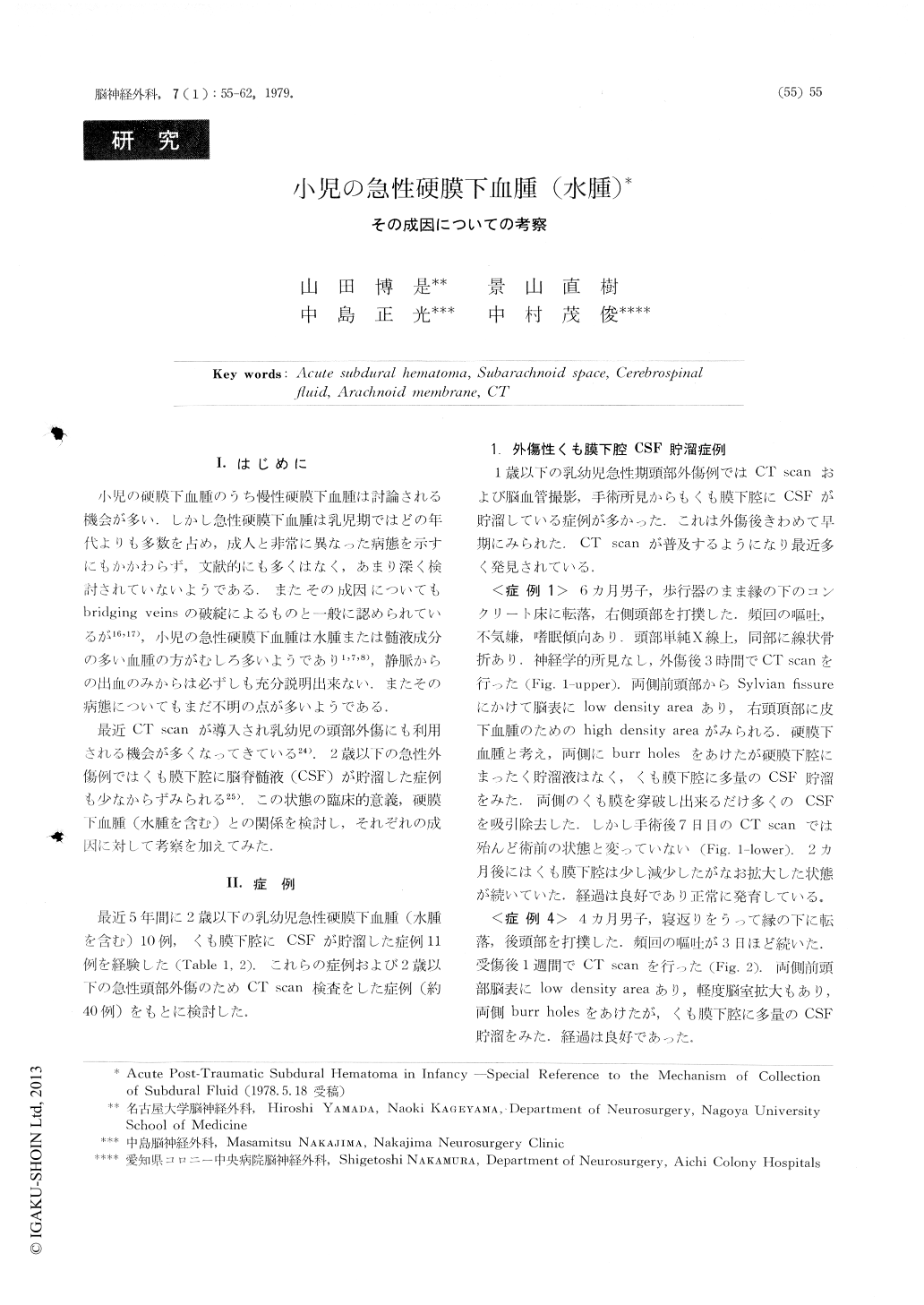
Ⅰ.はじめに
小児の硬膜下血腫のうち慢性硬膜下血腫は討論される機会が多い.しかし急性硬膜下血腫は乳児期ではどの年代よりも多数を占め,成人と非常に異なった病態を示すにもかかわらず,文献的にも多くはなく,あまり深く検討されていないようである.またその成因についてもbridging veinsの破綻による是,のと一般に認められているが16,17),小児の急性硬膜下血腫は水腫または髄液成分の多い血腫の方がむしろ多いようであり1,7,8),静脈からの出血のみからは必ずしも充分説明出来ない.またその病態についてもまだ不明の点が多いようである.
最近CT scanが導入され乳幼児の頭部外傷にも利用される機会が多くなってきている24).2歳以下の急性外傷例ではくも膜下腔に脳脊髄液(CSF)が貯溜した症例も少なからずみられる25).この状態の臨床的意義,硬膜下血腫(水腫を含む)との関係を検討し,それぞれの成因に対して考察を加えてみた.
Acute subdural hematoma in infants and children is a definite clinical entity, and seen more frequently in infants than older children or adults after the trauma. But the pathogenesis of the subdural hematoma or effusion is not well understood. Moreover subarachnoid fluid collection after the trauma has been less frequently described. In this paper we discussed about the significance of the subarachnoid fluid collection. The comparative analysis of these two status was made. Ten cases of subdural fluid collections and eleven cases of subarachnoid fluid collections under two years of age were also presented.
Copyright © 1979, Igaku-Shoin Ltd. All rights reserved.