Japanese
English
- 有料閲覧
PPV購入案内
1,320円 (1,200円+税10%) こちらは、1193ページから1199ページの文献です。購入には医書.jp本会員登録が必要です。
会員登録完了後に改めて上記「購入サイトへ」を選択してください。
または「購入サイトへ」選択後に「購入ログイン」、「新規会員登録」の順に進んでください。
会員登録について詳しくはをご確認ください。
- Abstract 文献概要
- 1ページ目 Look Inside
- 参考文献 Reference
Ⅰ.はじめに
ニューロナビゲーションシステムは,開頭手術において必須な手術支援装置となっており,あらゆる状況下で使用可能であることが求められている.ニューロナビゲーションシステムの原理から,多くの脳神経外科医は開頭手術の際に頭部固定が必須と考える.しかし,頭部固定ができない,もしくはできれば頭部固定をしないほうがよいという条件下でも,ニューロナビゲーションシステムを必要とする開頭手術は多々あり得る.2つ例を挙げると,1つは頭蓋骨が十分発達していないために頭部ピン固定自体が難しい乳幼児の開頭手術であり,もう1つは覚醒下手術である.
今回われわれは,頭部固定を必要としないニューロナビゲーションシステムを紹介し,その利点を考察する.
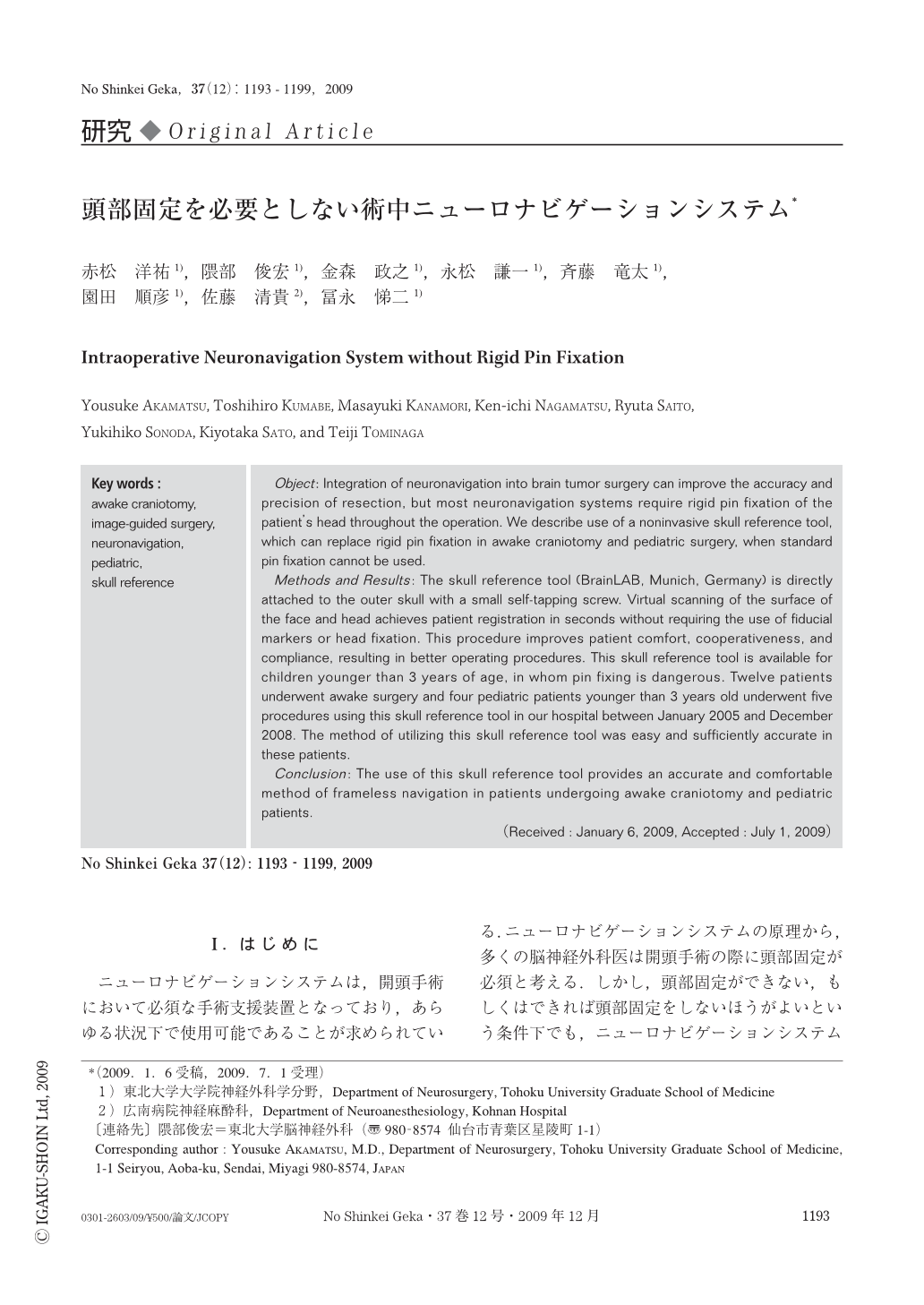
Object: Integration of neuronavigation into brain tumor surgery can improve the accuracy and precision of resection, but most neuronavigation systems require rigid pin fixation of the patient's head throughout the operation. We describe use of a noninvasive skull reference tool, which can replace rigid pin fixation in awake craniotomy and pediatric surgery, when standard pin fixation cannot be used.
Methods and Results: The skull reference tool (BrainLAB, Munich, Germany) is directly attached to the outer skull with a small self-tapping screw. Virtual scanning of the surface of the face and head achieves patient registration in seconds without requiring the use of fiducial markers or head fixation. This procedure improves patient comfort, cooperativeness, and compliance, resulting in better operating procedures. This skull reference tool is available for children younger than 3 years of age, in whom pin fixing is dangerous. Twelve patients underwent awake surgery and four pediatric patients younger than 3 years old underwent five procedures using this skull reference tool in our hospital between January 2005 and December 2008. The method of utilizing this skull reference tool was easy and sufficiently accurate in these patients.
Conclusion: The use of this skull reference tool provides an accurate and comfortable method of frameless navigation in patients undergoing awake craniotomy and pediatric patients.
Copyright © 2009, Igaku-Shoin Ltd. All rights reserved.