Japanese
English
- 有料閲覧
PPV購入案内
1,320円 (1,200円+税10%) こちらは、117ページから131ページの文献です。購入には医書.jp本会員登録が必要です。
会員登録完了後に改めて上記「購入サイトへ」を選択してください。
または「購入サイトへ」選択後に「購入ログイン」、「新規会員登録」の順に進んでください。
会員登録について詳しくはをご確認ください。
- Abstract 文献概要
- 1ページ目 Look Inside
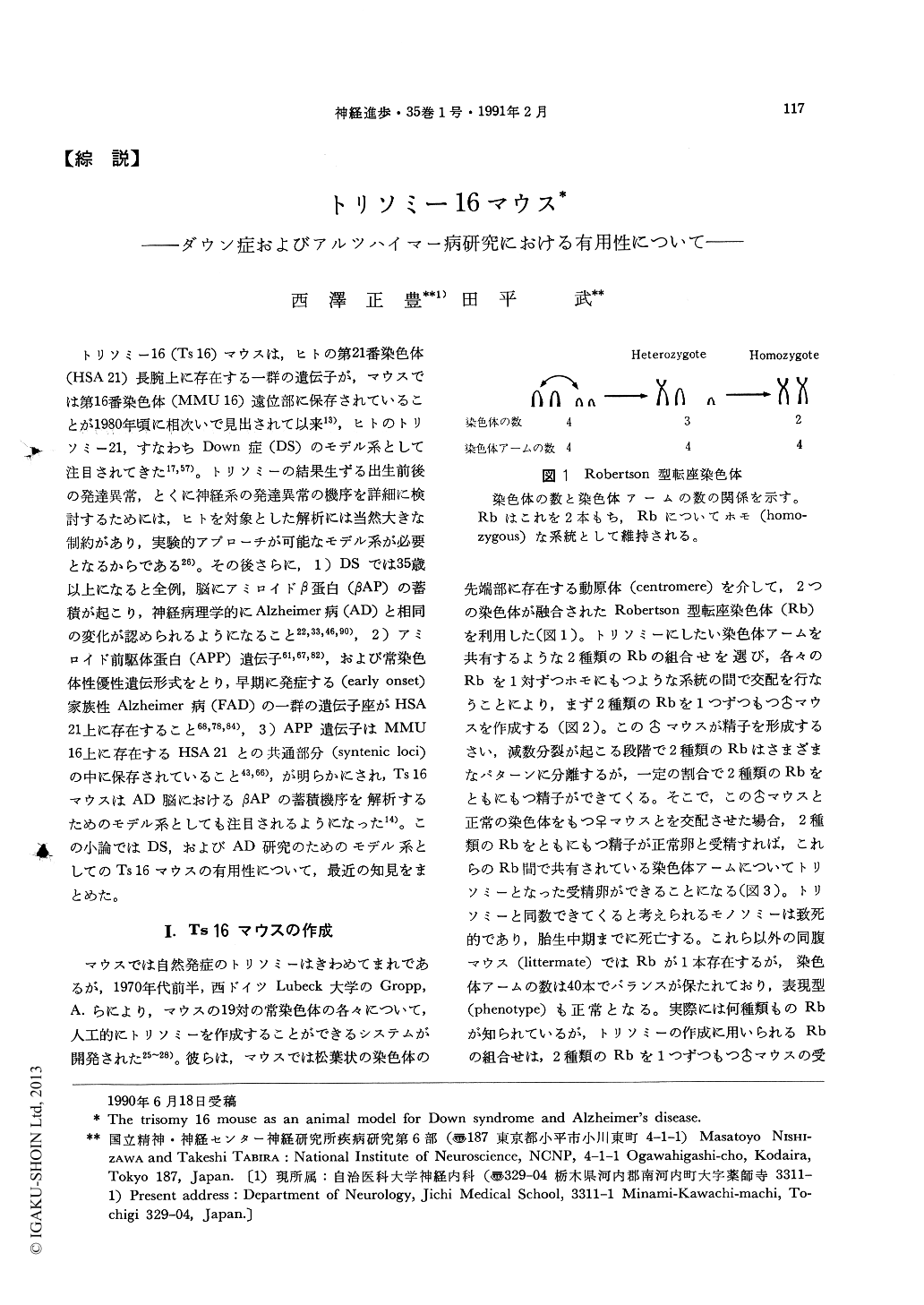
トリソミー16(Ts 16)マウスは,ヒトの第21番染色体(HSA 21)長腕上に存在する一群の遺伝子が,マウスでは第16番染色体(MMU 16)遠位部に保存されていることが1980年頃に相次いで見出されて以来13),ヒトのトリソミー21,すなわちDown症(DS)のモデル系として注目されてき17,57)。トリソミーの結果生ずる出生前後の発達異常,とくに神経系の発達異常の機序を詳細に検討するためには,ヒトを対象とした解析には当然大きな制約があり,実験的アプローチが可能なモデル系が必要となるからである26)。その後さらに,1) DSでは35歳以上になると全例,脳にアミロイドβ蛋白(βAP)の蓄積が起こり,神経病理学的にAlzheimer病(AD)と相同の変化が認められるようになること22,33,46,90),2)アミロイド前駆体蛋白(APP)遣伝子61,67,82),および常染色体性優性遺伝形式をとり,早期に発症する(early onset)家族性Alzheimer病(FAD)の一群の遺伝子座がHSA21上に存在すること68,78,84),3) APP遺伝子はMMU16上に存在するHSA 21との共通部分(syntenic loci)の中に保存されていること43,66),が明らかにされ,Ts 16マウスはAD脳におけるβAPの蓄積機序を解析するためのモデル系としても注目されるようになった14)。
Since it was found that syntenic gene loci are present between human chromosome 21 (HSA 21) and mouse chromosome 16 (MMU 16), including the gene encoding amyloid precursor protein (APP), trisomy 16 (Ts 16) mice have been extensively studied with expectation that this model may provide clues for understanding pathogenetic mechanisms involved in both Down syndrome (DS) and Alzheimer's disease (AD). Unfortunately, Ts 16 mice cannot survive to birth, and therefore the central nervous system cells with Ts 16 genotype have to be rescued in order to make it possible to study the effects of Ts 16 on brain maturation and aging.
Copyright © 1991, Igaku-Shoin Ltd. All rights reserved.