Japanese
English
- 有料閲覧
PPV購入案内
1,320円 (1,200円+税10%) こちらは、1333ページから1339ページの文献です。購入には医書.jp本会員登録が必要です。
会員登録完了後に改めて上記「購入サイトへ」を選択してください。
または「購入サイトへ」選択後に「購入ログイン」、「新規会員登録」の順に進んでください。
会員登録について詳しくはをご確認ください。
- Abstract 文献概要
- 1ページ目 Look Inside
- 参考文献 Reference
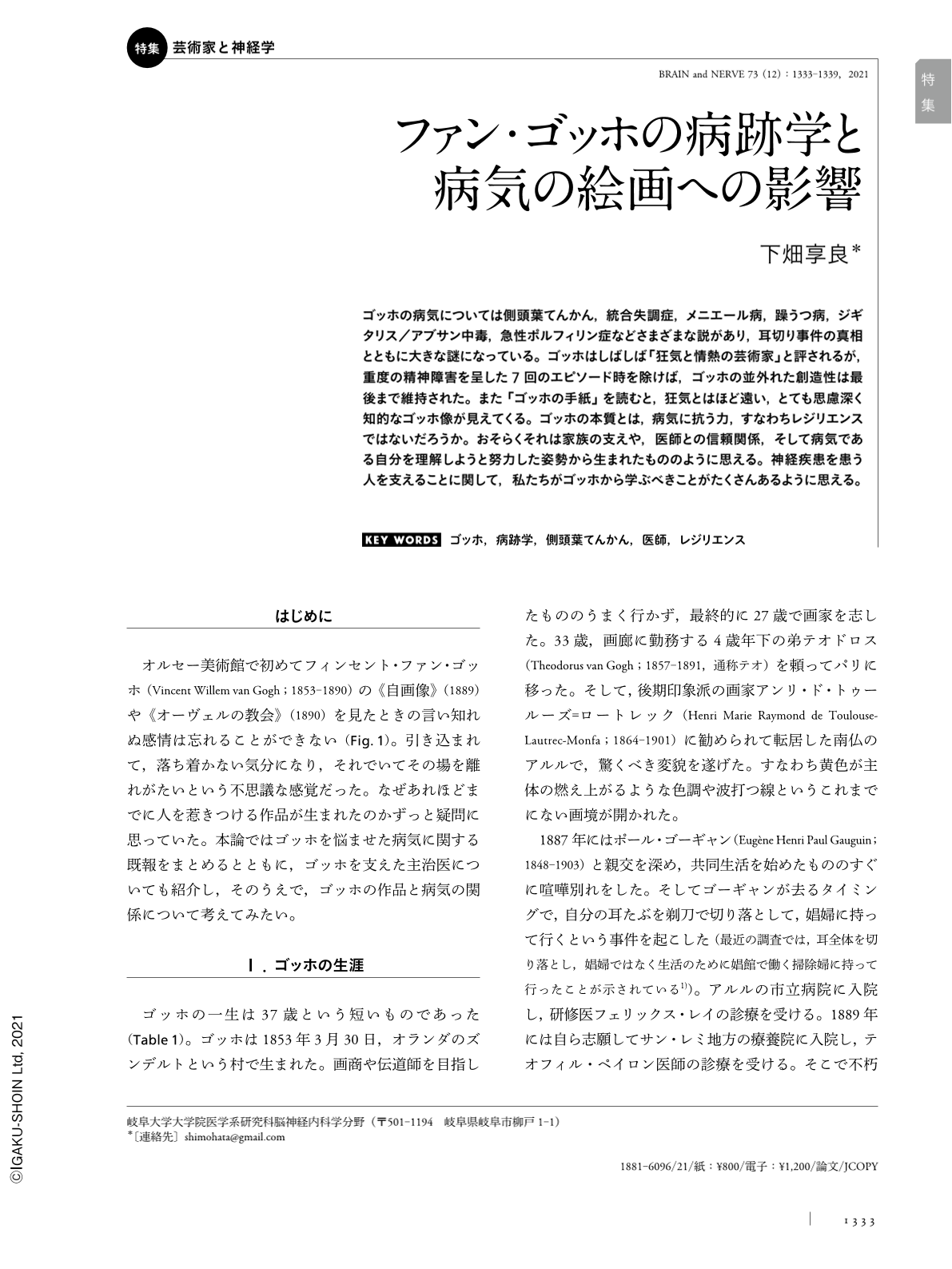
ゴッホの病気については側頭葉てんかん,統合失調症,メニエール病,躁うつ病,ジギタリス/アブサン中毒,急性ポルフィリン症などさまざまな説があり,耳切り事件の真相とともに大きな謎になっている。ゴッホはしばしば「狂気と情熱の芸術家」と評されるが,重度の精神障害を呈した7回のエピソード時を除けば,ゴッホの並外れた創造性は最後まで維持された。また「ゴッホの手紙」を読むと,狂気とはほど遠い,とても思慮深く知的なゴッホ像が見えてくる。ゴッホの本質とは,病気に抗う力,すなわちレジリエンスではないだろうか。おそらくそれは家族の支えや,医師との信頼関係,そして病気である自分を理解しようと努力した姿勢から生まれたもののように思える。神経疾患を患う人を支えることに関して,私たちがゴッホから学ぶべきことがたくさんあるように思える。
Abstract
There are many theories about Van Gogh's illness, including temporal lobe epilepsy, schizophrenia, Meniere's disease, manic depression, digitalis/absinthe poisoning, and acute intermittent porphyria, which, along with the truth of the ear-cutting incident, remain a great mystery. Van Gogh is often described as an “artist of madness and passion,” but except for seven episodes of severe mental disturbance, his extraordinary creativity was maintained to the end. Reading “Van Gogh's Letters” reveals a very thoughtful and intelligent Van Gogh, far from being insane. Perhaps the essence of Van Gogh is his resilience to illness. It might come from the support of his family, his trusting relationship with his doctors, and his efforts to understand himself as a sick person. In my opinion, there is much to learn from Van Gogh regarding supporting people with neurological diseases.
Copyright © 2021, Igaku-Shoin Ltd. All rights reserved.