Japanese
English
- 有料閲覧
PPV購入案内
1,320円 (1,200円+税10%) こちらは、769ページから779ページの文献です。購入には医書.jp本会員登録が必要です。
会員登録完了後に改めて上記「購入サイトへ」を選択してください。
または「購入サイトへ」選択後に「購入ログイン」、「新規会員登録」の順に進んでください。
会員登録について詳しくはをご確認ください。
- Abstract 文献概要
- 1ページ目 Look Inside
- 参考文献 Reference
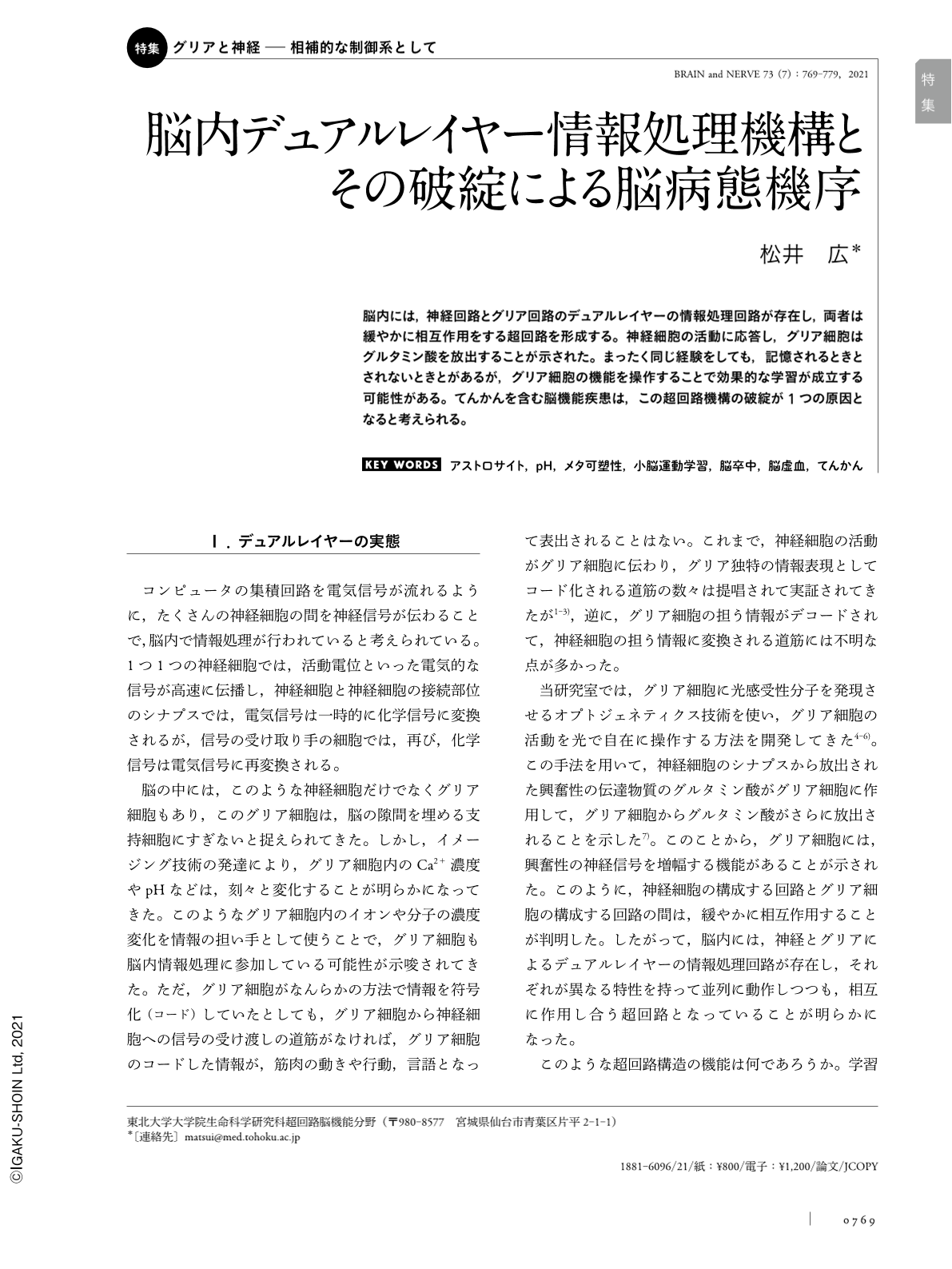
脳内には,神経回路とグリア回路のデュアルレイヤーの情報処理回路が存在し,両者は緩やかに相互作用をする超回路を形成する。神経細胞の活動に応答し,グリア細胞はグルタミン酸を放出することが示された。まったく同じ経験をしても,記憶されるときとされないときとがあるが,グリア細胞の機能を操作することで効果的な学習が成立する可能性がある。てんかんを含む脳機能疾患は,この超回路機構の破綻が1つの原因となると考えられる。
Abstract
Glial cells appear to have the capacity of coding information. Neuronal and glial circuits form a loosely coupled dual-layer super network within the brain. Glial cells react with the excitatory transmitter glutamate released from synapses of neurons and, in turn, release additional glutamate. Thus, they effectively function as excitatory signal amplifiers, with the gain of amplification depending on their cytosolic pH. Activation of metabotropic glutamate receptors in neurons is largely influenced by the state of glial cells. Depending on the state of our mind, an experience can become a lasting memory or fade away. The pH of glial cells at the time of the experience could play a pivotal role in memory formation. Glial function is also susceptible to plasticity. First-time exposure to a brief period of brain hyperactivity results in an acute breakdown of the inter-cellular network of glial cells. Therefore, artificial control of the glial state and glial plasticity may provide a new preventative strategy to manage dementia and epilepsy.
Copyright © 2021, Igaku-Shoin Ltd. All rights reserved.