Japanese
English
- 有料閲覧
PPV購入案内
1,320円 (1,200円+税10%) こちらは、203ページから210ページの文献です。購入には医書.jp本会員登録が必要です。
会員登録完了後に改めて上記「購入サイトへ」を選択してください。
または「購入サイトへ」選択後に「購入ログイン」、「新規会員登録」の順に進んでください。
会員登録について詳しくはをご確認ください。
- Abstract 文献概要
- 1ページ目 Look Inside
- 参考文献 Reference
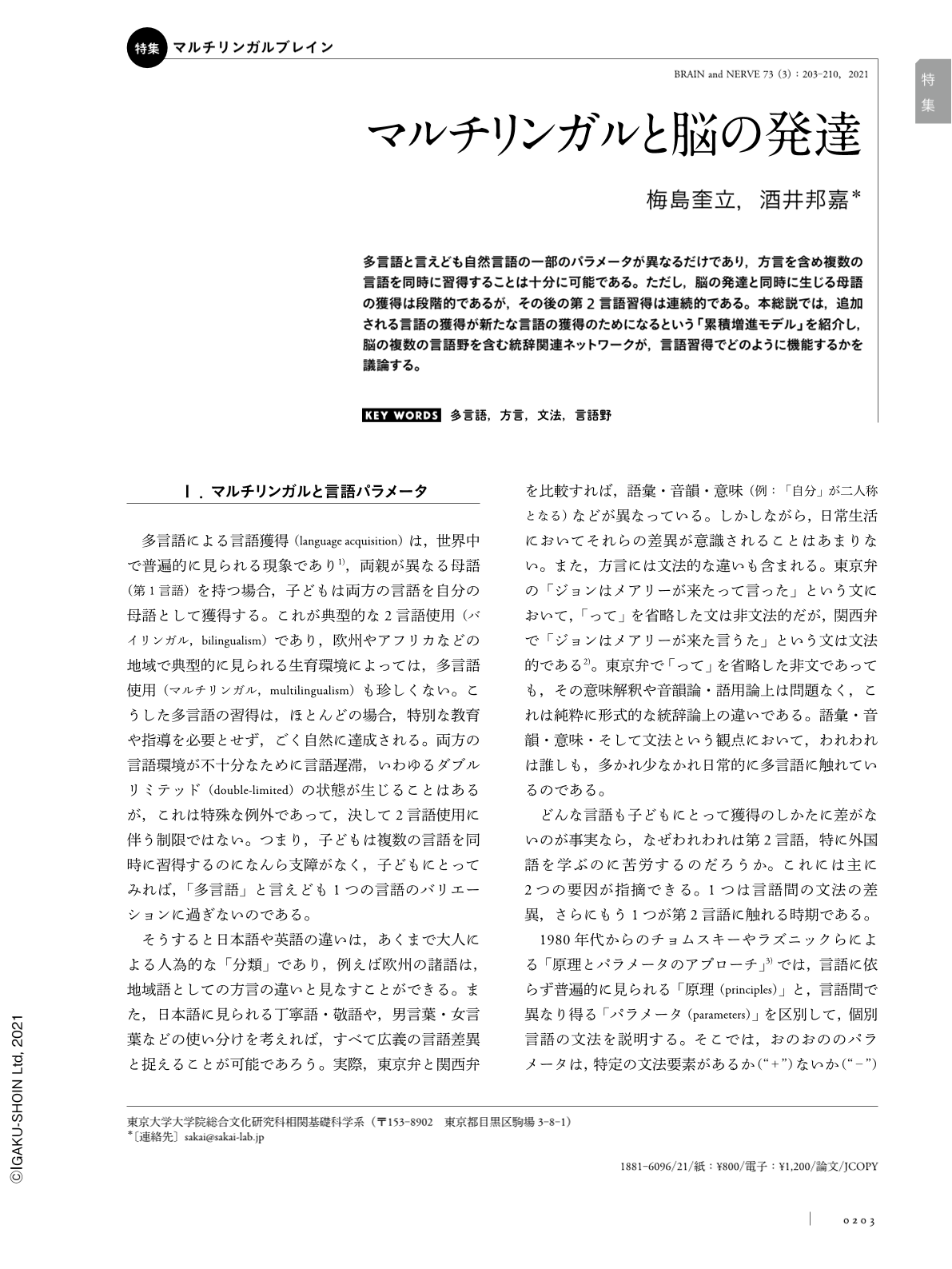
多言語と言えども自然言語の一部のパラメータが異なるだけであり,方言を含め複数の言語を同時に習得することは十分に可能である。ただし,脳の発達と同時に生じる母語の獲得は段階的であるが,その後の第2言語習得は連続的である。本総説では,追加される言語の獲得が新たな言語の獲得のためになるという「累積増進モデル」を紹介し,脳の複数の言語野を含む統辞関連ネットワークが,言語習得でどのように機能するかを議論する。
Abstract
Multilingualism is merely a parametric variation in the faculty of natural language, and it is possible to simultaneously acquire multiple languages, including dialects, at any age. While acquisition of a native language, which occurs in synchrony with development of the brain, is a multiple-step process, second language acquisition is continuous. Here, we introduce the Cumulative-Enhancement model, which states that acquisition of one additional language is beneficial for the subsequent acquisition of another. We further discuss how syntax-related networks, including multiple language areas in the brain, become functional during the course of language acquisition.
Copyright © 2021, Igaku-Shoin Ltd. All rights reserved.