Japanese
English
- 有料閲覧
PPV購入案内
1,320円 (1,200円+税10%) こちらは、633ページから638ページの文献です。購入には医書.jp本会員登録が必要です。
会員登録完了後に改めて上記「購入サイトへ」を選択してください。
または「購入サイトへ」選択後に「購入ログイン」、「新規会員登録」の順に進んでください。
会員登録について詳しくはをご確認ください。
- Abstract 文献概要
- 1ページ目 Look Inside
- 参考文献 Reference
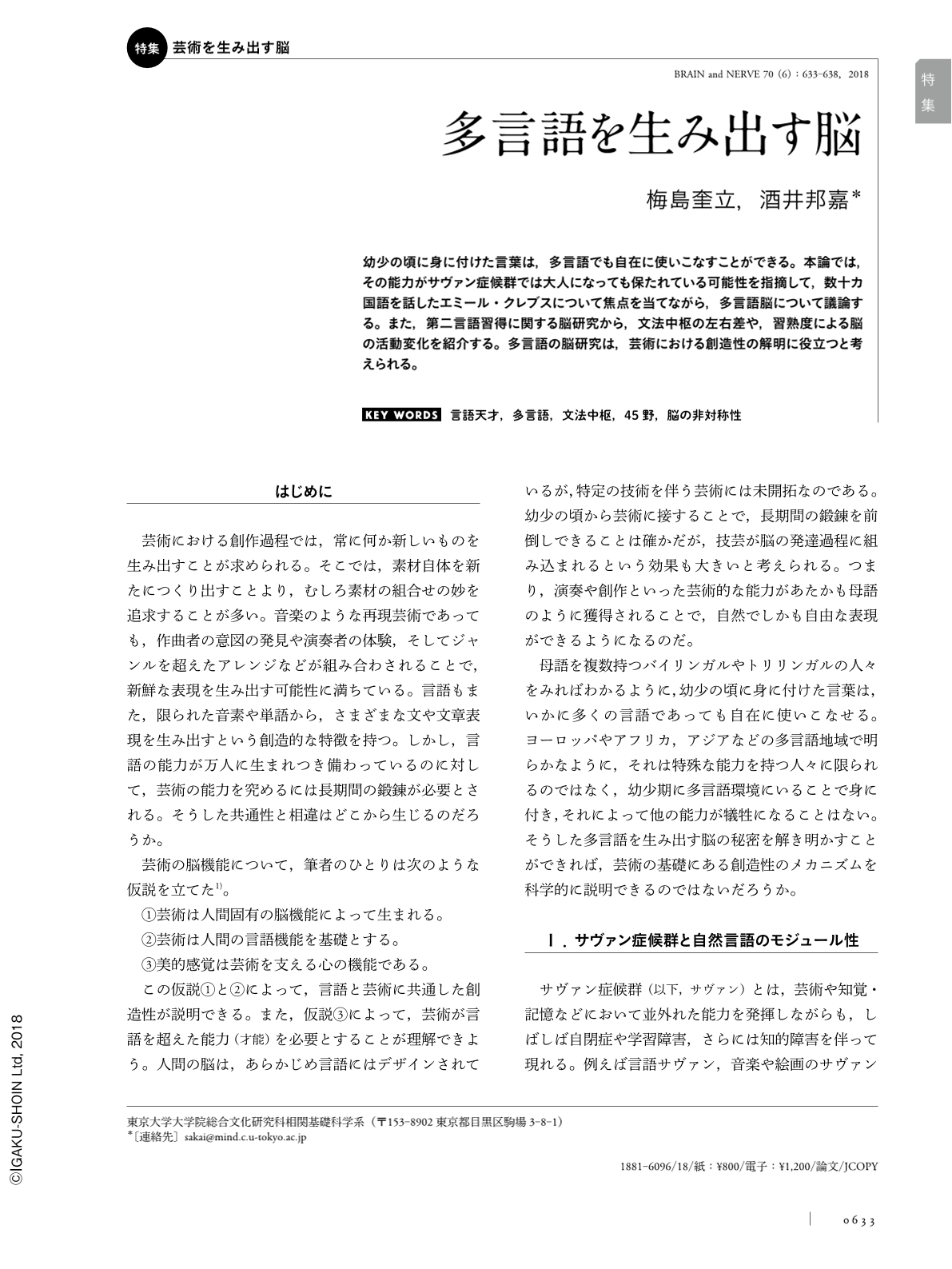
幼少の頃に身に付けた言葉は,多言語でも自在に使いこなすことができる。本論では,その能力がサヴァン症候群では大人になっても保たれている可能性を指摘して,数十カ国語を話したエミール・クレブスについて焦点を当てながら,多言語脳について議論する。また,第二言語習得に関する脳研究から,文法中枢の左右差や,習熟度による脳の活動変化を紹介する。多言語の脳研究は,芸術における創造性の解明に役立つと考えられる。
Abstract
Multiple languages can be used at command, if those language abilities were acquired in childhood. In this article, we report the possibility that such abilities are retained throughout adulthood for linguistic savants. We focus on Emil Krebs, a speaker of dozens of languages, and argue about the vast capacity of the multilingual brain. Moreover, we introduce the asymmetry of the grammar center and brain activation changes due to linguistic proficiency, both of which are findings from research on the second language acquisition capability of the brain. It is plausible that research on multilingualism will shed light on the mystery of human creativity in fine arts.
Copyright © 2018, Igaku-Shoin Ltd. All rights reserved.