Japanese
English
- 有料閲覧
PPV購入案内
1,320円 (1,200円+税10%) こちらは、743ページから748ページの文献です。購入には医書.jp本会員登録が必要です。
会員登録完了後に改めて上記「購入サイトへ」を選択してください。
または「購入サイトへ」選択後に「購入ログイン」、「新規会員登録」の順に進んでください。
会員登録について詳しくはをご確認ください。
- Abstract 文献概要
- 1ページ目 Look Inside
- 参考文献 Reference
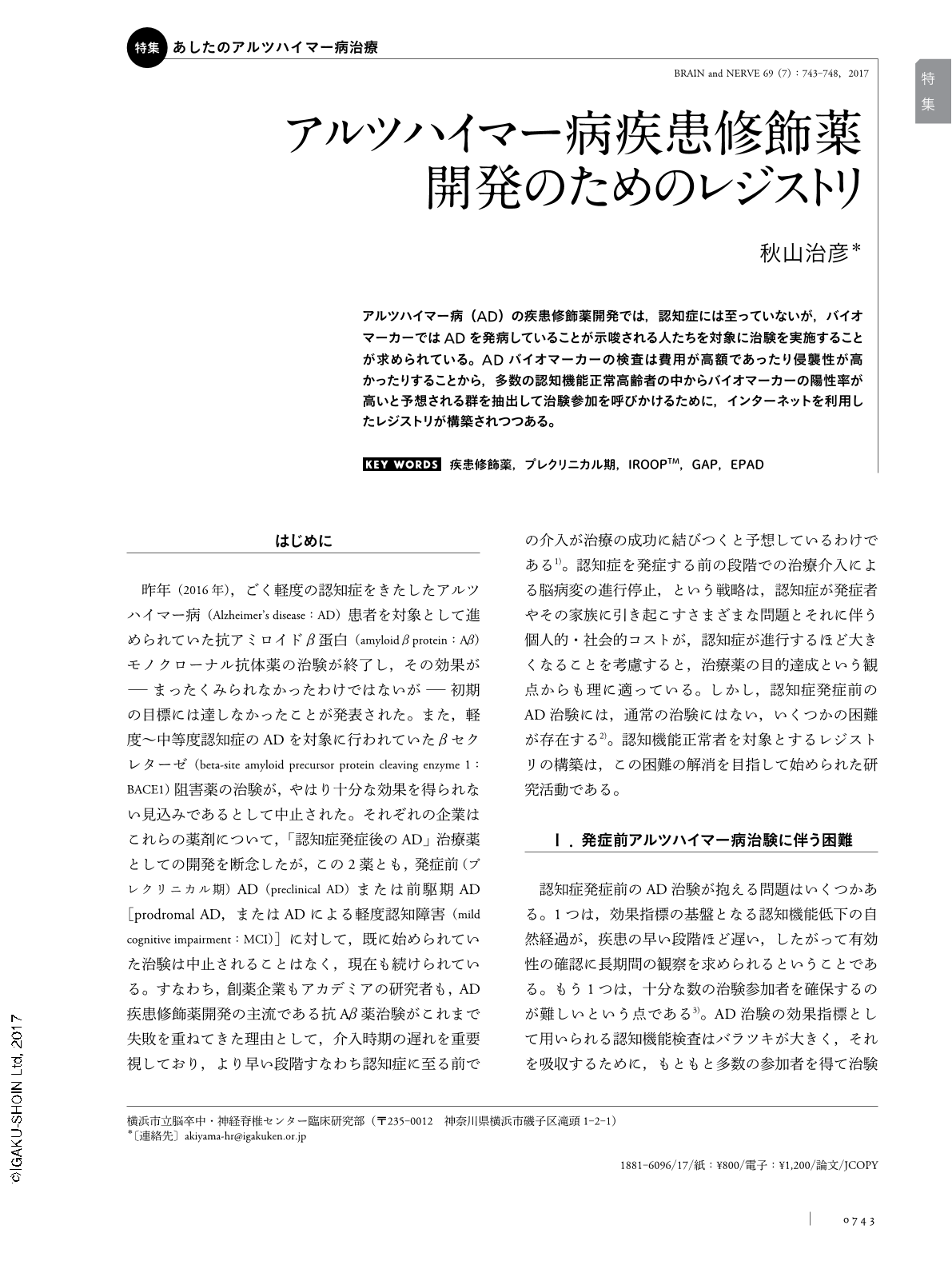
アルツハイマー病(AD)の疾患修飾薬開発では,認知症には至っていないが,バイオマーカーではADを発病していることが示唆される人たちを対象に治験を実施することが求められている。ADバイオマーカーの検査は費用が高額であったり侵襲性が高かったりすることから,多数の認知機能正常高齢者の中からバイオマーカーの陽性率が高いと予想される群を抽出して治験参加を呼びかけるために,インターネットを利用したレジストリが構築されつつある。
Abstract
The development of disease-modifying therapies (DMT) for Alzheimer's disease (AD) is an urgent goal worldwide. Since the first clinical trial of Abeta immunization therapy in 2001, a number of trials targeting early-stage AD dementia have failed. Researchers now believe that DMT must be initiated much earlier than in these failed trials, i.e., at the preclinical or prodromal stages of AD. This notion is supported by AD biomarker studies, which have revealed that Abeta and tau accumulation appears 10 to 30 years prior to the occurrence of dementia and propagates gradually in the brain to a symptomatic level. However, clinical trials that involve people without dementia have a number of difficulties in the recruitment of participants. The trial sites are required to perform outreach procedures to find potential participants. The AD biomarker tests are either costly or invasive, and the rate of biomarker-positive subjects in the non-demented population is low, suggesting a high screening failure rate. Preclinical AD registries are a possible solution to overcome such difficulties. These registries pool non-demented individuals who are interested in AD clinical research and collect information on demographics and the presence or absence of genetic, lifestyle, and other risk factors. A number of these registries have been established in the United States. An internet-based registry, IROOP, was launched in Japan in 2016.
Copyright © 2017, Igaku-Shoin Ltd. All rights reserved.