Japanese
English
- 有料閲覧
PPV購入案内
1,320円 (1,200円+税10%) こちらは、167ページから171ページの文献です。購入には医書.jp本会員登録が必要です。
会員登録完了後に改めて上記「購入サイトへ」を選択してください。
または「購入サイトへ」選択後に「購入ログイン」、「新規会員登録」の順に進んでください。
会員登録について詳しくはをご確認ください。
- Abstract 文献概要
- 1ページ目 Look Inside
- 参考文献 Reference
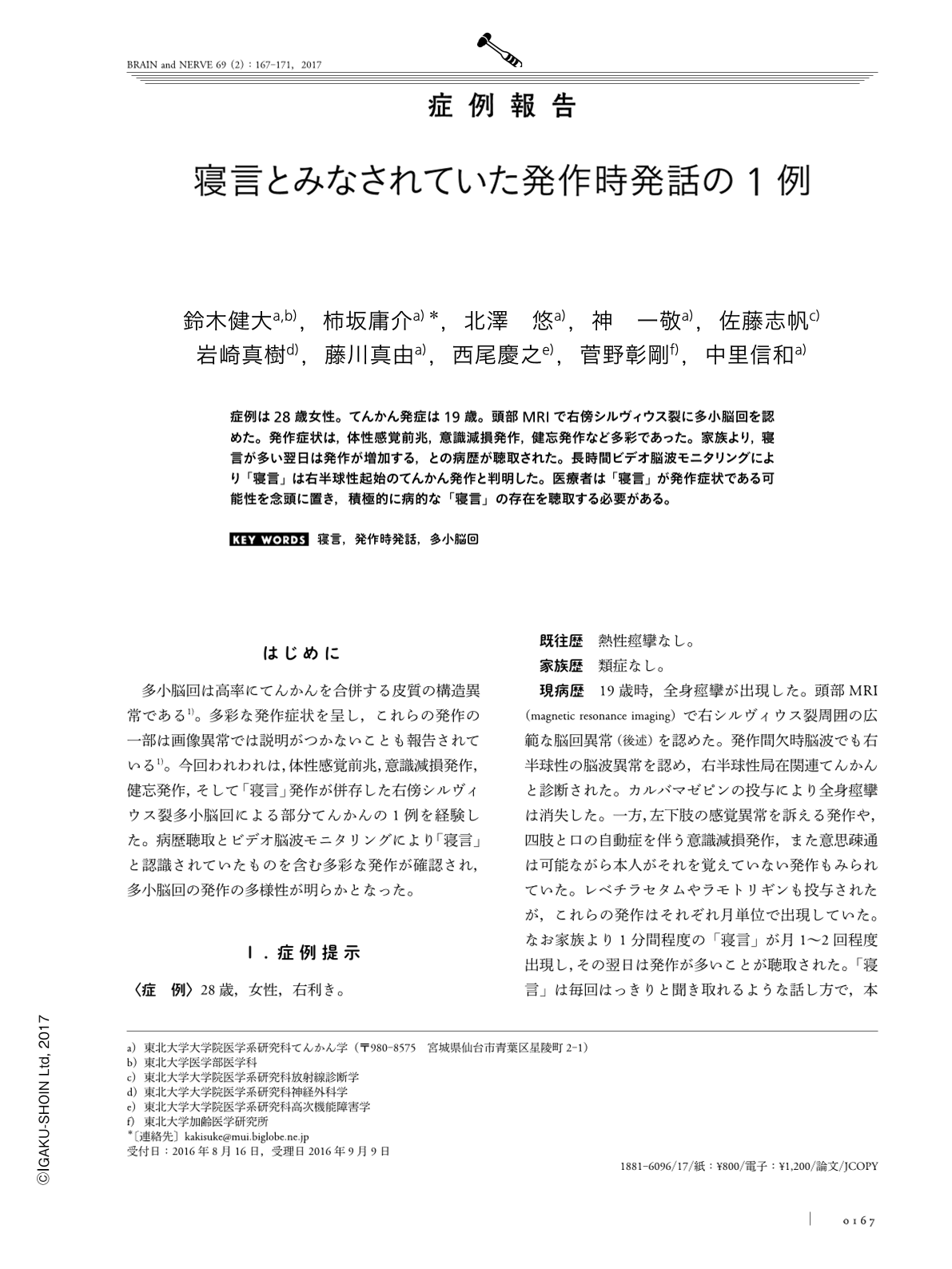
症例は28歳女性。てんかん発症は19歳。頭部MRIで右傍シルヴィウス裂に多小脳回を認めた。発作症状は,体性感覚前兆,意識減損発作,健忘発作など多彩であった。家族より,寝言が多い翌日は発作が増加する,との病歴が聴取された。長時間ビデオ脳波モニタリングにより「寝言」は右半球性起始のてんかん発作と判明した。医療者は「寝言」が発作症状である可能性を念頭に置き,積極的に病的な「寝言」の存在を聴取する必要がある。
Abstract
We present a 28-year-old female patient whose epilepsy started at the age of 19. MRI showed right perisylvian polymicrogyria. She exhibited various seizure symptoms, such as somatosensory aura involving the left leg, dyscognitive seizures, and amnesic seizures. Her mother indicated that the patient sometimes had “sleep talking”, which was associated with presence of epileptic seizures of the next day. Long-term video electroencephalography (EEG) revealed that her episodes of “sleep talking” were epileptic events, specifically ictal speech, originating in the right hemisphere. The present case demonstrates the importance of considering “sleep talk” as an epileptic symptom. Careful history taking is fundamental to carry patients with possibly pathological “sleep talk” to the long-term video EEG, which will contribute correct diagnosis and treatment.
(Received August 16, 2016; Accepted September 9, 2016; Published February 1, 2017)
Copyright © 2017, Igaku-Shoin Ltd. All rights reserved.