Japanese
English
- 有料閲覧
PPV購入案内
1,320円 (1,200円+税10%) こちらは、1453ページから1457ページの文献です。購入には医書.jp本会員登録が必要です。
会員登録完了後に改めて上記「購入サイトへ」を選択してください。
または「購入サイトへ」選択後に「購入ログイン」、「新規会員登録」の順に進んでください。
会員登録について詳しくはをご確認ください。
- Abstract 文献概要
- 1ページ目 Look Inside
- 参考文献 Reference
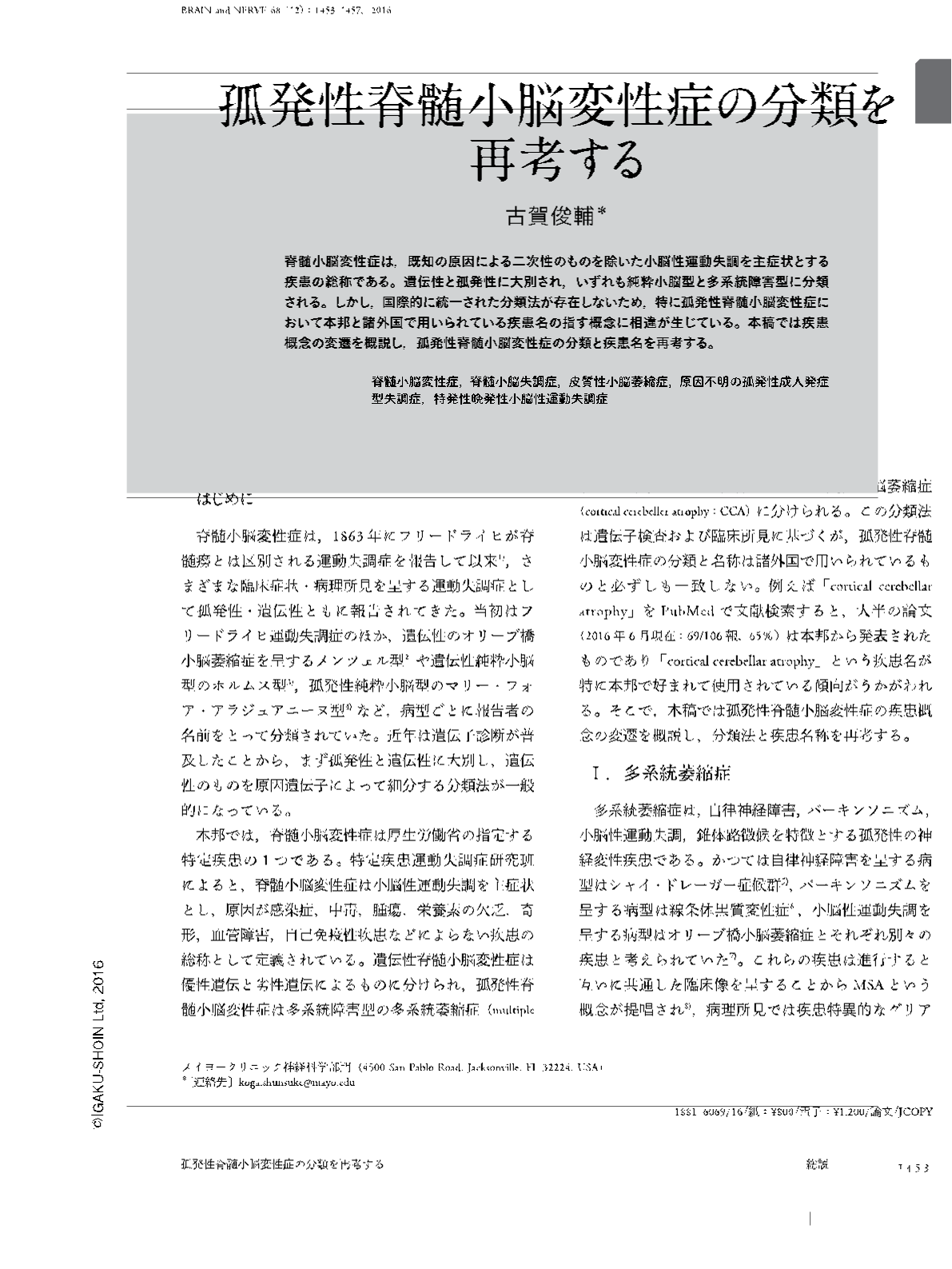
脊髄小脳変性症は,既知の原因による二次性のものを除いた小脳性運動失調を主症状とする疾患の総称である。遺伝性と孤発性に大別され,いずれも純粋小脳型と多系統障害型に分類される。しかし,国際的に統一された分類法が存在しないため,特に孤発性脊髄小脳変性症において本邦と諸外国で用いられている疾患名の指す概念に相違が生じている。本稿では疾患概念の変遷を概説し,孤発性脊髄小脳変性症の分類と疾患名を再考する。
Abstract
Spinocerebellar degeneration (SCD) is a neurodegenerative disease characterized by progressive cerebellar ataxia. SCD has a wide range of clinical, pathological, and genetic features, including whether the disease is sporadic or hereditary, and whether it manifests as purely cerebellar or affects multiple systems. Therefore, the classification of SCD has been complicated and has changed over time. Recent advances in genetic testing have shed light on the classification of hereditary SCD. In contrast, the classification of sporadic SCD remains chaotic and there exist nomenclature discrepancies in sporadic SCD between Japanese and English literature. Sporadic SCD is usually divided into multiple system atrophy and cortical cerebellar atrophy in Japanese literature, but the latter nomenclature seems to be uncommon in English literature. The aim of this review is to reconsider the nomenclature and classification of sporadic SCD. At this time, sporadic adult-onset ataxia of unknown etiology is an acceptable term to describe a case of sporadic SCD that does not fit the multiple system atrophy classification.
Copyright © 2016, Igaku-Shoin Ltd. All rights reserved.