Japanese
English
- 有料閲覧
PPV購入案内
1,320円 (1,200円+税10%) こちらは、399ページから405ページの文献です。購入には医書.jp本会員登録が必要です。
会員登録完了後に改めて上記「購入サイトへ」を選択してください。
または「購入サイトへ」選択後に「購入ログイン」、「新規会員登録」の順に進んでください。
会員登録について詳しくはをご確認ください。
- Abstract 文献概要
- 1ページ目 Look Inside
- 参考文献 Reference
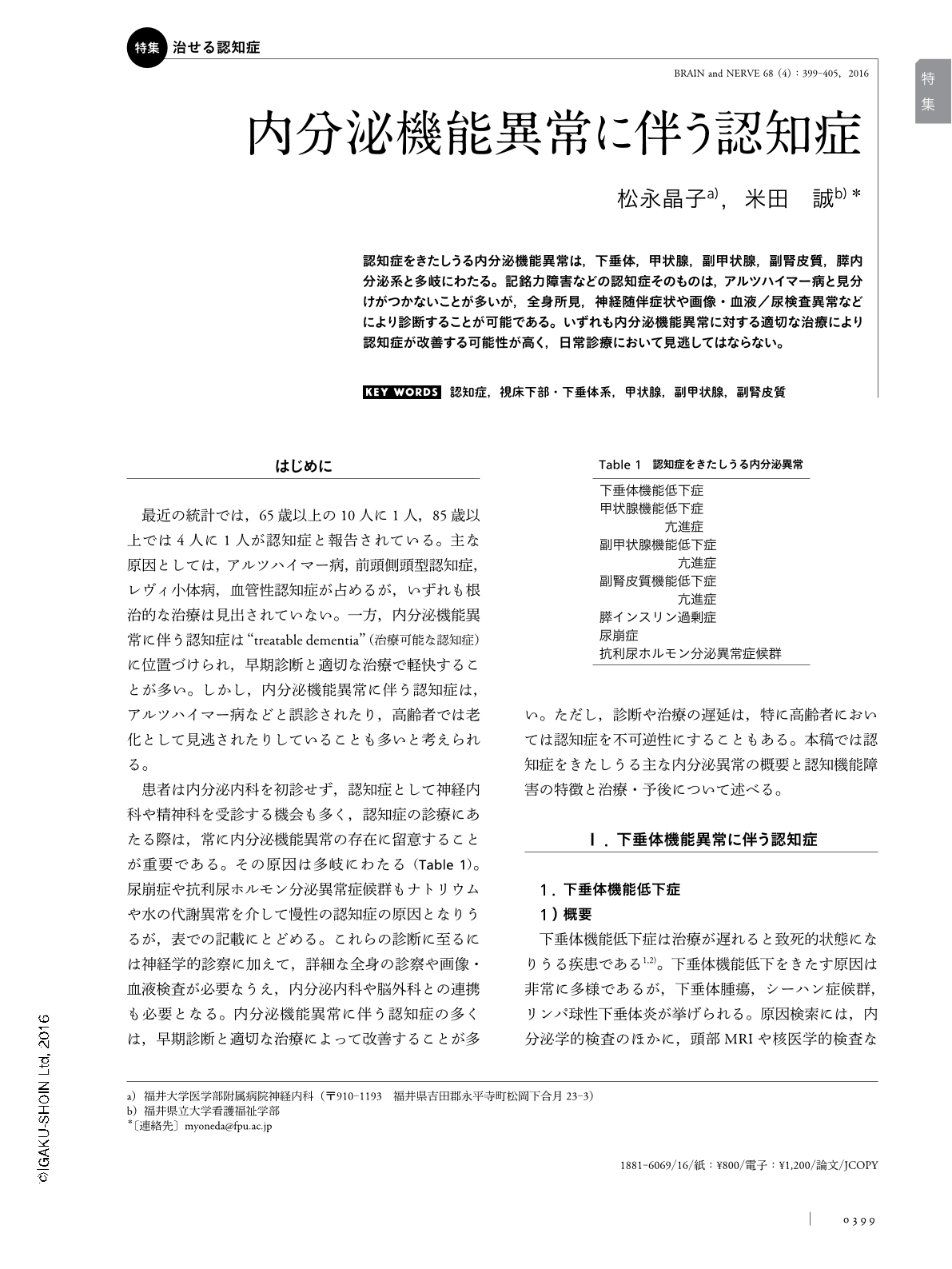
認知症をきたしうる内分泌機能異常は,下垂体,甲状腺,副甲状腺,副腎皮質,膵内分泌系と多岐にわたる。記銘力障害などの認知症そのものは,アルツハイマー病と見分けがつかないことが多いが,全身所見,神経随伴症状や画像・血液/尿検査異常などにより診断することが可能である。いずれも内分泌機能異常に対する適切な治療により認知症が改善する可能性が高く,日常診療において見逃してはならない。
Abstract
Endocrine diseases affecting various organs, such as the pituitary gland, the thyroid, the parathyroid, the adrenal glands and the pancreas, occasionally cause dementia. While Alzheimer's disease (AD) is the main cause of dementia in the elderly and is untreatable, dementia caused by endocrine diseases is treatable in most cases. However, patients with dementia associated with endocrine diseases show memory impairments similar to those found in AD, often leading to misdiagnoses. Patients with endocrine diseases often present with other characteristic systemic and neuropsychiatric symptoms caused by altered hormone levels. Such neuropsychiatric symptoms include involuntary movements, depression, seizures, and muscle weakness. In these cases, abnormalities in imaging and blood or urine tests are helpful in making a differential diagnosis. As delays in the diagnosis and treatment of these patients may cause irreversible brain damage, it is imperative for clinicians to carefully exclude the possibility of latent endocrine diseases when treating patients with dementia.
Copyright © 2016, Igaku-Shoin Ltd. All rights reserved.