Japanese
English
- 有料閲覧
PPV購入案内
1,320円 (1,200円+税10%) こちらは、59ページから68ページの文献です。購入には医書.jp本会員登録が必要です。
会員登録完了後に改めて上記「購入サイトへ」を選択してください。
または「購入サイトへ」選択後に「購入ログイン」、「新規会員登録」の順に進んでください。
会員登録について詳しくはをご確認ください。
- Abstract 文献概要
- 1ページ目 Look Inside
- 参考文献 Reference
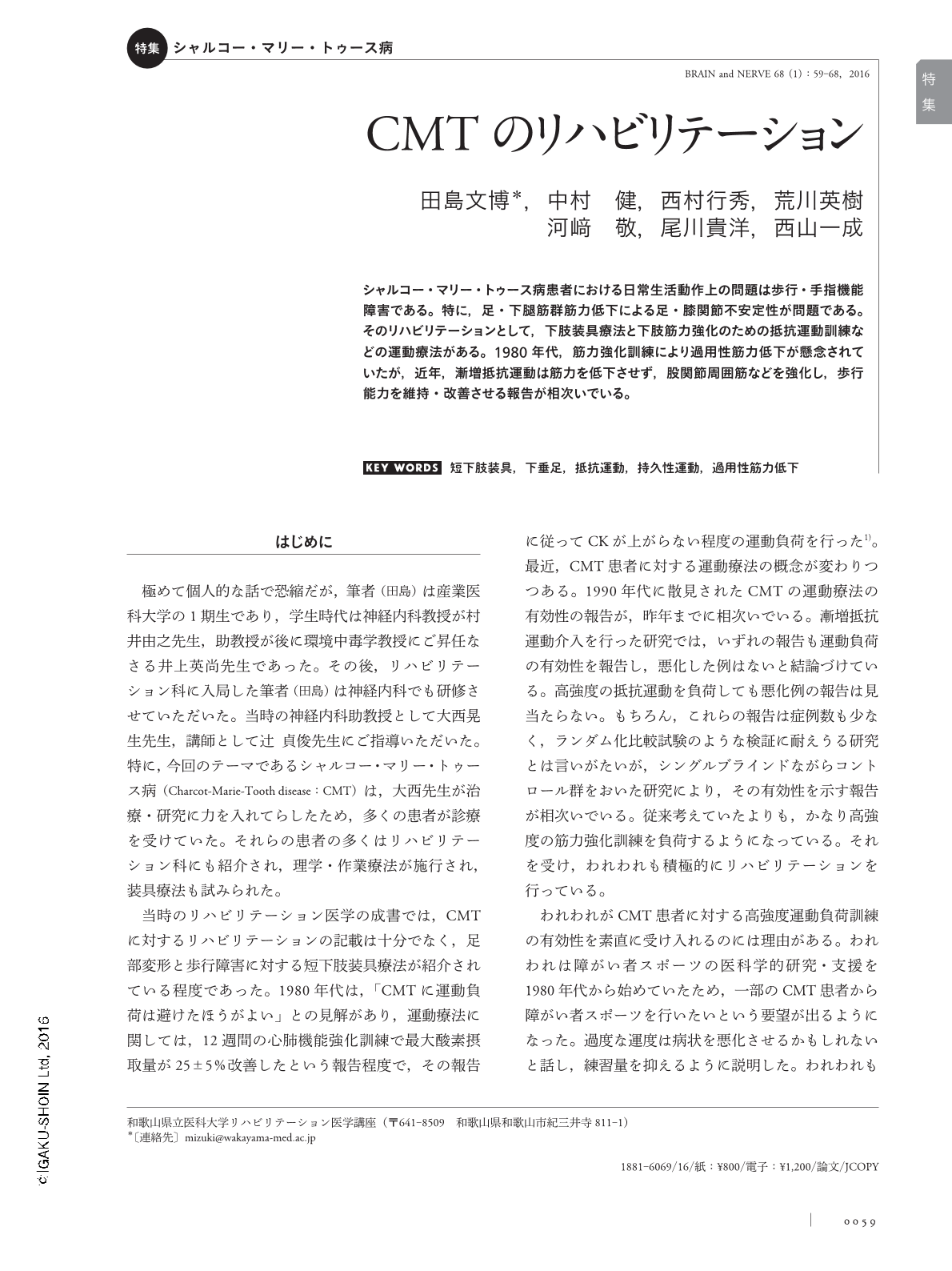
シャルコー・マリー・トゥース病患者における日常生活動作上の問題は歩行・手指機能障害である。特に,足・下腿筋群筋力低下による足・膝関節不安定性が問題である。そのリハビリテーションとして,下肢装具療法と下肢筋力強化のための抵抗運動訓練などの運動療法がある。1980年代,筋力強化訓練により過用性筋力低下が懸念されていたが,近年,漸増抵抗運動は筋力を低下させず,股関節周囲筋などを強化し,歩行能力を維持・改善させる報告が相次いでいる。
Abstract
Charcot-Marie-Tooth disease (CMT) is one of the most commonly inherited neuromuscular diseases causing progressive muscle weakness; contracture; deformity in the feet, legs, and hands; and impairments of ambulation and handgrip. Reduced physical ability can be attributed not only to the disease but also to physical deconditioning. Previously, most physicians in the field of rehabilitation were anxious about the hypothesis of overwork weakness in CMT, and did not conduct intensive exercise programs for patients with CMT. However, recent studies have reported that progressive resistance strengthening programs for lower extremities are feasible, safe, beneficial, and improve exercise intolerance and undue fatigue in patients with CMT. Although the improvement in exercise tolerance may be partly due to the reversal of deconditioning effect of related sedentary lifestyle, progressive resistance training and physical fitness can improve walking function, activities of daily living, and subjective perception of pain and fatigue in patients with CMT. To increase the daily physical function, some studies described the potential benefits of ankle-foot orthoses (AFOs); however, no control study supported it. So far, the training programs on CMT have been dependent on the exercise programs for able-bodied individuals. To increase the effects of rehabilitation, optimal programs that combine the training protocol and AFO strategies will have to be designed for patients with CMT.
Copyright © 2016, Igaku-Shoin Ltd. All rights reserved.