Japanese
English
- 有料閲覧
PPV購入案内
1,320円 (1,200円+税10%) こちらは、275ページから285ページの文献です。購入には医書.jp本会員登録が必要です。
会員登録完了後に改めて上記「購入サイトへ」を選択してください。
または「購入サイトへ」選択後に「購入ログイン」、「新規会員登録」の順に進んでください。
会員登録について詳しくはをご確認ください。
- Abstract 文献概要
- 1ページ目 Look Inside
- 参考文献 Reference
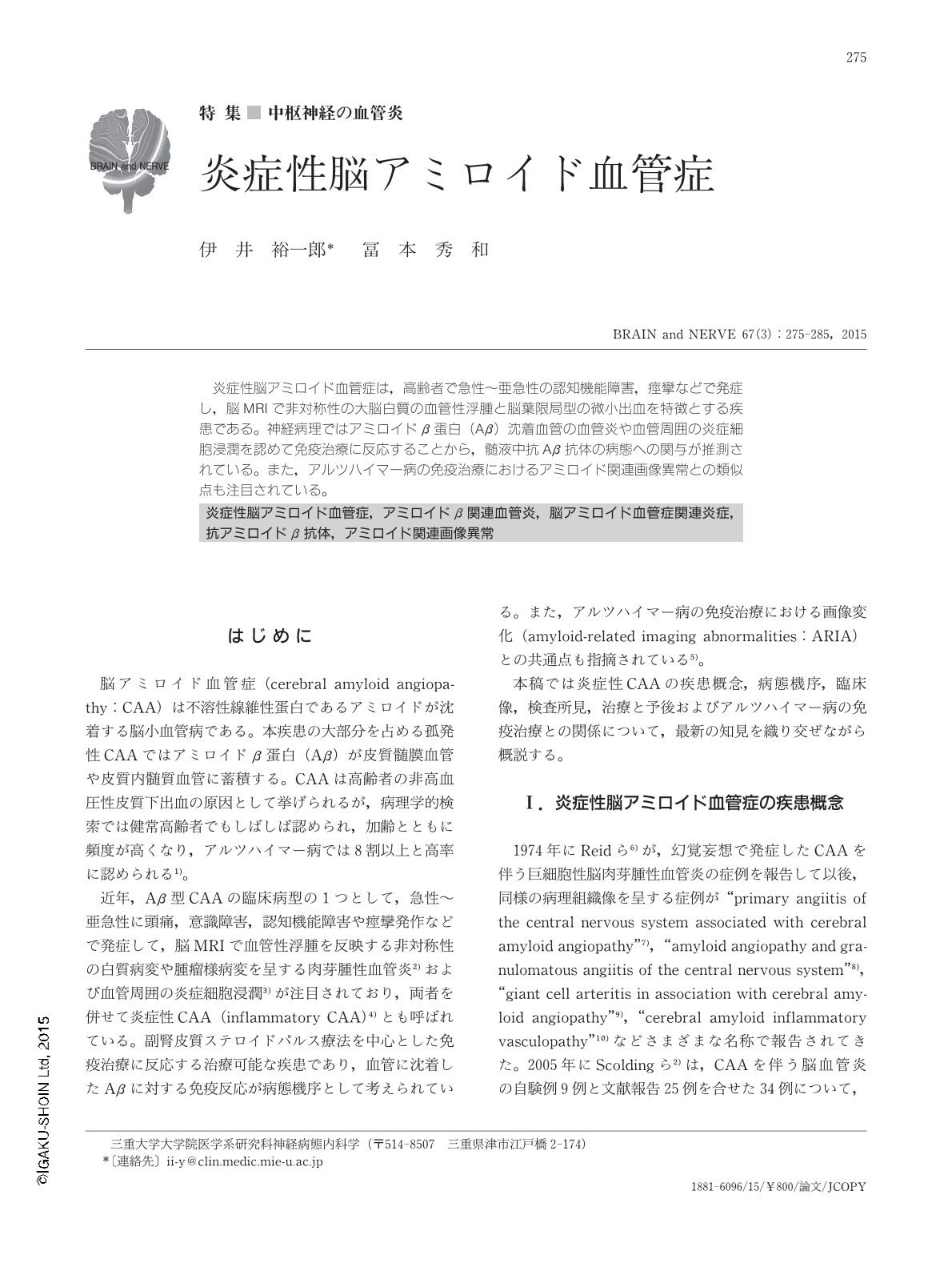
炎症性脳アミロイド血管症は,高齢者で急性〜亜急性の認知機能障害,痙攣などで発症し,脳MRIで非対称性の大脳白質の血管性浮腫と脳葉限局型の微小出血を特徴とする疾患である。神経病理ではアミロイドβ蛋白(Aβ)沈着血管の血管炎や血管周囲の炎症細胞浸潤を認めて免疫治療に反応することから,髄液中抗Aβ抗体の病態への関与が推測されている。また,アルツハイマー病の免疫治療におけるアミロイド関連画像異常との類似点も注目されている。
Abstract
Inflammatory cerebral amyloid angiopathy (CAA) typically affects older patients who present with acute or subacute cognitive decline, headache, behavioral change, seizures, and focal neurological deficits. Brain magnetic resonance imaging (MRI) reveals patchy or confluent asymmetric white matter hyperintensities on T2-weighted or fluid-attenuated inversion recovery images, which indicates vasogenic edema, and previous lobar hemorrhages and/or multiple lobar microbleeds on T2*-weighted gradient-recalled echo or susceptibility-weighted imaging. Neuropathological findings include frank vasculitis and/or perivascular inflammation with mononuclear or multinucleated giant cells that are associated with amyloid-beta (Aβ)-laden vessels. Importantly, these findings suggest that these patients may respond well to immunosuppressive treatment with high-dose corticosteroids and/or cyclophosphamide. The pathogenesis of this syndrome is still unknown, although anti-Aβ autoantibodies in the cerebrospinal fluid may mediate inflammatory processes against cerebrovascular Aβ. Moreover, MRI findings in patients with inflammatory CAA are very similar to those in patients with Alzheimer's disease who were treated with a monoclonal anti-Aβ antibody, and these findings are called amyloid-related imaging abnormalities (ARIA). Anti-Aβ autoantibodies in the cerebrospinal fluid might be a biomarker of future disease-modifying therapies for patients with Alzheimer's disease and CAA.
Copyright © 2015, Igaku-Shoin Ltd. All rights reserved.