Japanese
English
- 有料閲覧
PPV購入案内
1,320円 (1,200円+税10%) こちらは、857ページから870ページの文献です。購入には医書.jp本会員登録が必要です。
会員登録完了後に改めて上記「購入サイトへ」を選択してください。
または「購入サイトへ」選択後に「購入ログイン」、「新規会員登録」の順に進んでください。
会員登録について詳しくはをご確認ください。
- Abstract 文献概要
- 1ページ目 Look Inside
- 参考文献 Reference
はじめに
わが国の血管障害,特に脳卒中の疫学は,この50年間に大きく変貌している。わが国では,脳卒中死亡率の減少,脳出血の減少,脳梗塞の増加,罹患年齢の高齢化など大きな変化が認められ,食生活の変化,生活環境の変化,高血圧治療をはじめとする薬物治療の普及,人口の急速な高齢化などが反映した現象と考察されている。
近年は,食生活の欧米化やライフスタイルの変化を反映して,脳出血は減少し脳梗塞が増加する傾向が顕著になり,さらに人口の急速な高齢化と相俟って,脳梗塞患者が増加し,中でも心房細動に起因する心原性脳塞栓が増加傾向にある。また,アルツハイマー病などの認知症の発症や経過に,これまで無症候性と考えられていた軽度の脳血管病変が関与する可能性も論じられるようになった。
本稿では,脳卒中発症や再発などについて,疫学的見地から秋田県脳卒中発症登録(Akita Stroke Onset Registry:ASOR)のデータを中心に概説する。
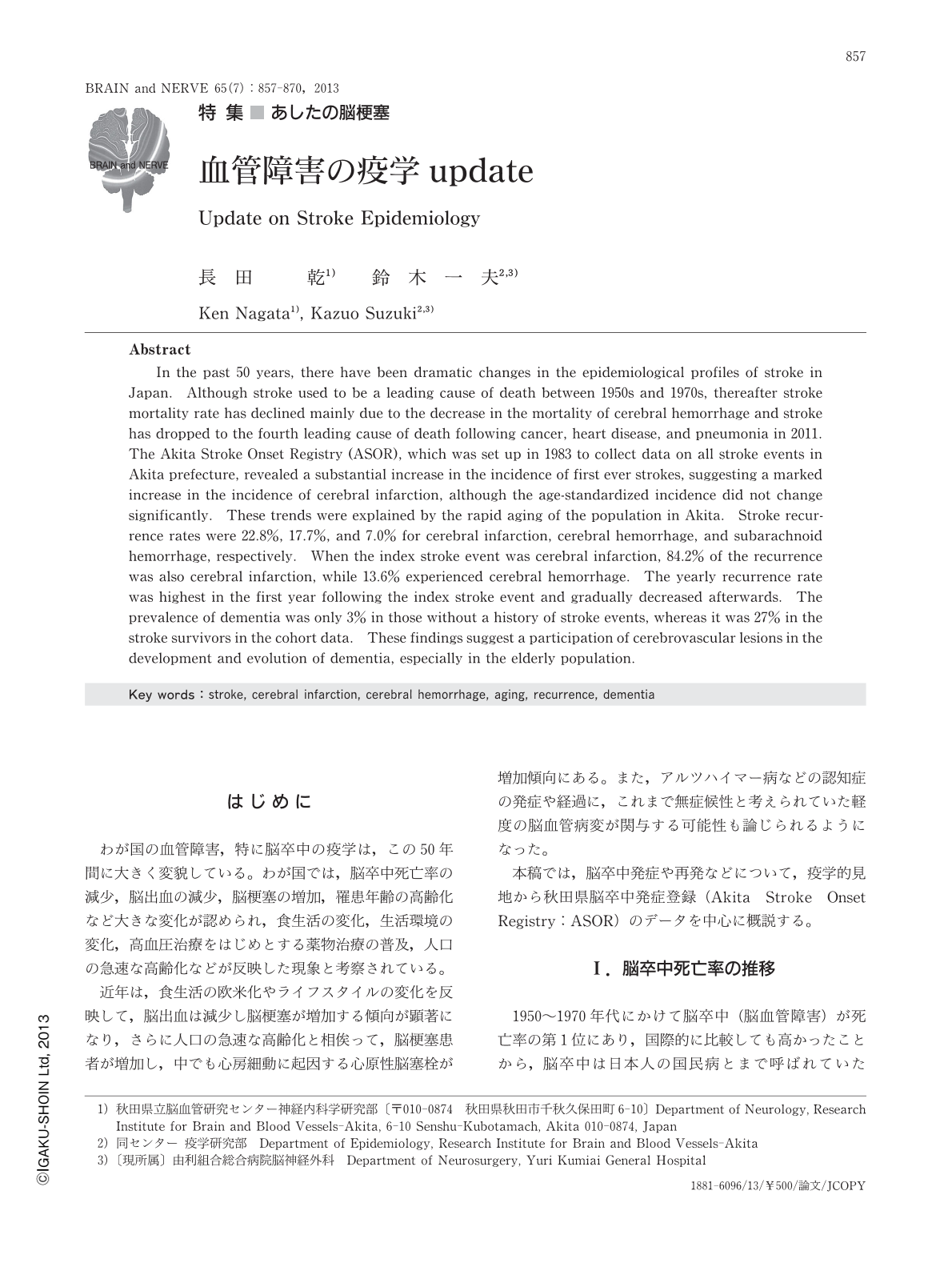
Abstract
In the past 50 years, there have been dramatic changes in the epidemiological profiles of stroke in Japan. Although stroke used to be a leading cause of death between 1950s and 1970s, thereafter stroke mortality rate has declined mainly due to the decrease in the mortality of cerebral hemorrhage and stroke has dropped to the fourth leading cause of death following cancer, heart disease, and pneumonia in 2011. The Akita Stroke Onset Registry (ASOR), which was set up in 1983 to collect data on all stroke events in Akita prefecture, revealed a substantial increase in the incidence of first ever strokes, suggesting a marked increase in the incidence of cerebral infarction, although the age-standardized incidence did not change significantly. These trends were explained by the rapid aging of the population in Akita. Stroke recurrence rates were 22.8%, 17.7%, and 7.0% for cerebral infarction, cerebral hemorrhage, and subarachnoid hemorrhage, respectively. When the index stroke event was cerebral infarction, 84.2% of the recurrence was also cerebral infarction, while 13.6% experienced cerebral hemorrhage. The yearly recurrence rate was highest in the first year following the index stroke event and gradually decreased afterwards. The prevalence of dementia was only 3% in those without a history of stroke events, whereas it was 27% in the stroke survivors in the cohort data. These findings suggest a participation of cerebrovascular lesions in the development and evolution of dementia, especially in the elderly population.
Copyright © 2013, Igaku-Shoin Ltd. All rights reserved.