Japanese
English
- 有料閲覧
PPV購入案内
1,320円 (1,200円+税10%) こちらは、18ページから26ページの文献です。購入には医書.jp本会員登録が必要です。
会員登録完了後に改めて上記「購入サイトへ」を選択してください。
または「購入サイトへ」選択後に「購入ログイン」、「新規会員登録」の順に進んでください。
会員登録について詳しくはをご確認ください。
- Abstract 文献概要
- 1ページ目 Look Inside
- 参考文献 Reference
はじめに
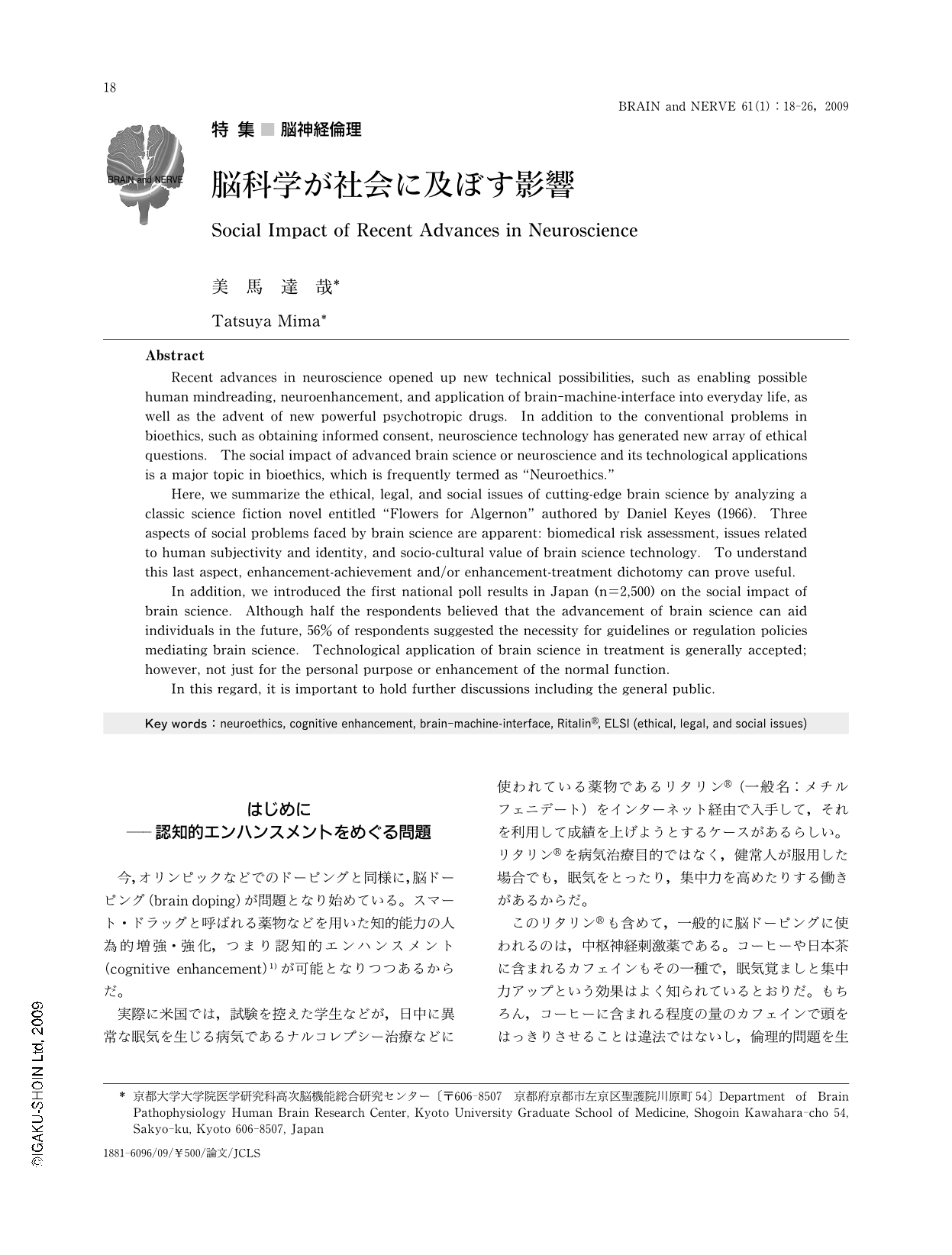
―認知的エンハンスメントをめぐる問題 今,オリンピックなどでのドーピングと同様に,脳ドーピング(brain doping)が問題となり始めている。スマート・ドラッグと呼ばれる薬物などを用いた知的能力の人為的増強・強化,つまり認知的エンハンスメント(cognitive enhancement)1)が可能となりつつあるからだ。 実際に米国では,試験を控えた学生などが,日中に異常な眠気を生じる病気であるナルコレプシー治療などに使われている薬物であるリタリン(R) (一般名:メチルフェニデート)をインターネット経由で入手して,それを利用して成績を上げようとするケースがあるらしい。リタリン(R)を病気治療目的ではなく,健常人が服用した場合でも,眠気をとったり,集中力を高めたりする働きがあるからだ。 このリタリン(R)も含めて,一般的に脳ドーピングに使われるのは,中枢神経刺激薬である。コーヒーや日本茶に含まれるカフェインもその一種で,眠気覚ましと集中力アップという効果はよく知られているとおりだ。もちろん,コーヒーに含まれる程度の量のカフェインで頭をはっきりさせることは違法ではないし,倫理的問題を生じることはない。その一方,法的な取り締まりの対象になる覚せい剤のように,依存性や毒性が強いものもある。医薬品として使われている薬剤を利用することの倫理性という問題は,ある意味では食品と違法薬物のボーダーラインと言ってもいい。 2008年1月には,非公式ではあるが,60カ国の約1,400人の読者を対象としたインターネット調査を科学雑誌Natureが実施し,リタリン(R)モダフィニル(ナルコレプシーの治療薬),βブロッカー(不整脈や高血圧の治療に使われるが抗不安作用がある)の病気治療目的ではない使用をした経験を尋ねた2)。その結果,これらの薬物(それ以外の同様の薬物を含む)の使用経験ありは5人に1人で,うち62%はリタリン(R)だったという。厳密な調査ではないため,データの信頼性という面では問題はあるものの,認知的エンハンスメントが現実味を帯びた問題であることをうかがわせる。また,今後,より効果的で有害作用の少ない睡眠異常症治療薬が開発されれば(これは患者にとっては好ましいことである),医療ではないエンハンスメント目的での使用が拡大する可能性もある。 これは,脳科学に基づく医療技術の発展が社会に与える影響の1例である。脳神経倫理(neuroethics)が果たすべき役割の1つは,こうした問題を倫理的・社会的・法的に検討することである。認知的エンハンスメントなどの脳科学技術の発展がもたらしうる諸問題に関して,わかりやすく検討するために,架空の物語ではあるが,ダニエル・キイスによる世界的ベストセラー『アルジャーノンに花束を』(原著1966年)3)を例に挙げて,整理してみよう。
Abstract
Recent advances in neuroscience opened up new technical possibilities, such as enabling possible human mindreading, neuroenhancement, and application of brain-machine-interface into everyday life, as well as the advent of new powerful psychotropic drugs. In addition to the conventional problems in bioethics, such as obtaining informed consent, neuroscience technology has generated new array of ethical questions. The social impact of advanced brain science or neuroscience and its technological applications is a major topic in bioethics, which is frequently termed as "Neuroethics." Here, we summarize the ethical, legal, and social issues of cutting-edge brain science by analyzing a classic science fiction novel entitled "Flowers for Algernon" authored by Daniel Keyes (1966). Three aspects of social problems faced by brain science are apparent: biomedical risk assessment, issues related to human subjectivity and identity, and socio-cultural value of brain science technology. To understand this last aspect, enhancement-achievement and/or enhancement-treatment dichotomy can prove useful. In addition, we introduced the first national poll results in Japan (n=2,500) on the social impact of brain science. Although half the respondents believed that the advancement of brain science can aid individuals in the future, 56% of respondents suggested the necessity for guidelines or regulation policies mediating brain science. Technological application of brain science in treatment is generally accepted; however, not just for the personal purpose or enhancement of the normal function. In this regard,it is important to hold further discussions including the general public.
Copyright © 2009, Igaku-Shoin Ltd. All rights reserved.