Japanese
English
- 有料閲覧
PPV購入案内
1,320円 (1,200円+税10%) こちらは、490ページから493ページの文献です。購入には医書.jp本会員登録が必要です。
会員登録完了後に改めて上記「購入サイトへ」を選択してください。
または「購入サイトへ」選択後に「購入ログイン」、「新規会員登録」の順に進んでください。
会員登録について詳しくはをご確認ください。
- Abstract 文献概要
- 1ページ目 Look Inside
はじめに
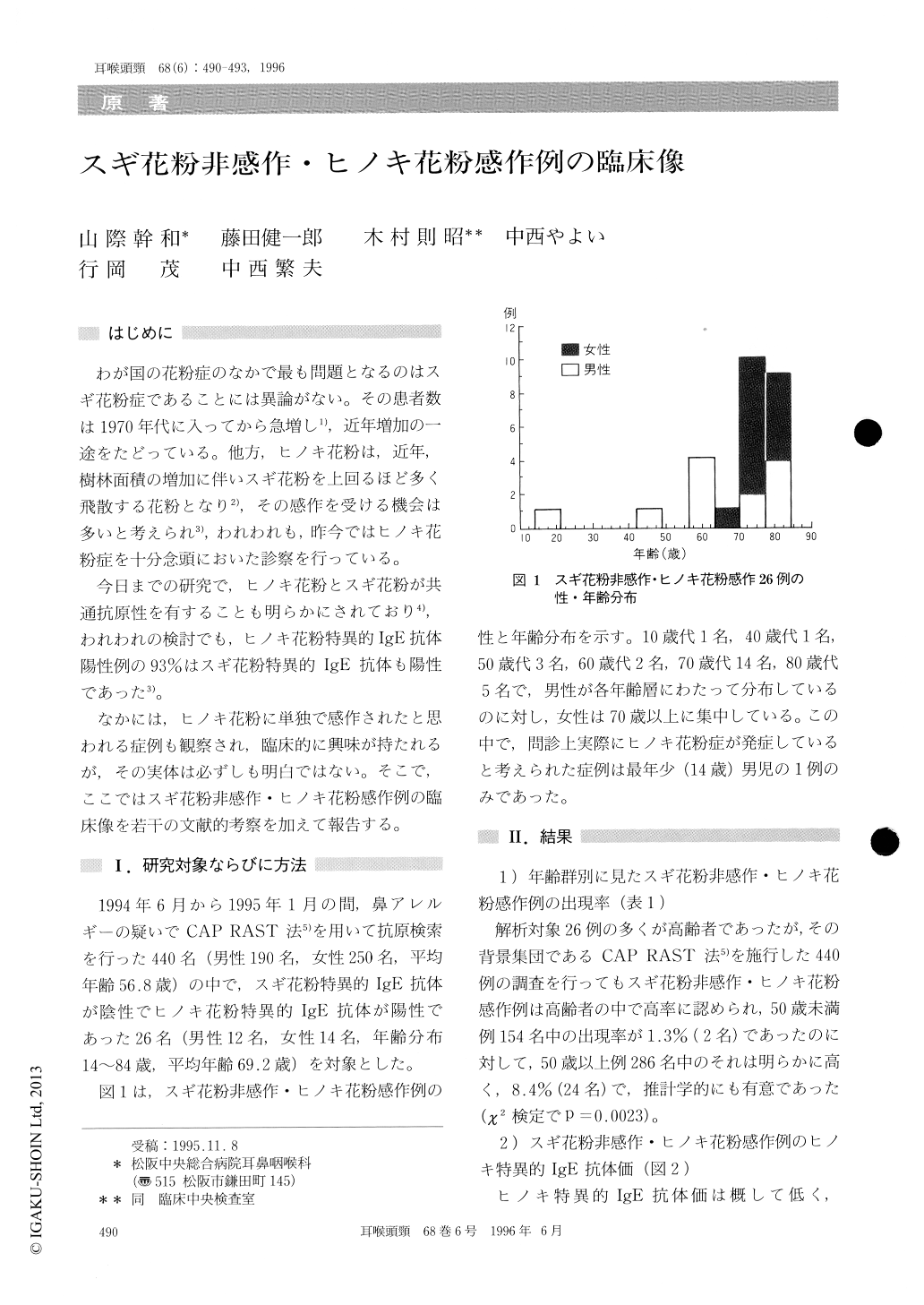
わが国の花粉症のなかで最も問題となるのはスギ花粉症であることには異論がない。その患者数は1970年代に入ってから急増し1),近年増加の一途をたどっている。他方,ヒノキ花粉は,近年,樹林面積の増加に伴いスギ花粉を上回るほど多く飛散する花粉となり2),その感作を受ける機会は多いと考えられ3),われわれも,昨今ではヒノキ花粉症を十分念頭においた診察を行っている。
今日までの研究で,ヒノキ花粉とスギ花粉が共通抗原性を有することも明らかにされており4),われわれの検討でも,ヒノキ花粉特異的IgE抗体陽性例の93%はスギ花粉特異的IgE抗体も陽性であった3)。
なかには,ヒノキ花粉に単独で感作されたと思われる症例も観察され,臨床的に興味が持たれるが,その実体は必ずしも明白ではない。そこで,ここではスギ花粉非感作・ヒノキ花粉感作例の臨床像を若干の文献的考察を加えて報告する。
As cypress and cedar pollens have some common antigens, we have rarely seen patients having spe-cific IgE antibody to cypress pollen but not to cedar pollen. We investigated 12 males and 14 females (5.9%) with such condition out of 190 males and 250 females (56.8 years old on the average) with suspected nasal allergy. They were relatively older people, 69.2 years old on the average, and were rarely suffering from pollenosis but mostly had specific IgE antibody to house dust and mites. IgE antibody to cypress pollen fluctuated in 13 cases in repeated measurement. The antibody titer increased soon after pollen season was over and decreased 5 months after.
Copyright © 1996, Igaku-Shoin Ltd. All rights reserved.