Japanese
English
- 有料閲覧
PPV購入案内
1,320円 (1,200円+税10%) こちらは、287ページから295ページの文献です。購入には医書.jp本会員登録が必要です。
会員登録完了後に改めて上記「購入サイトへ」を選択してください。
または「購入サイトへ」選択後に「購入ログイン」、「新規会員登録」の順に進んでください。
会員登録について詳しくはをご確認ください。
- Abstract 文献概要
- 1ページ目 Look Inside
- 参考文献 Reference
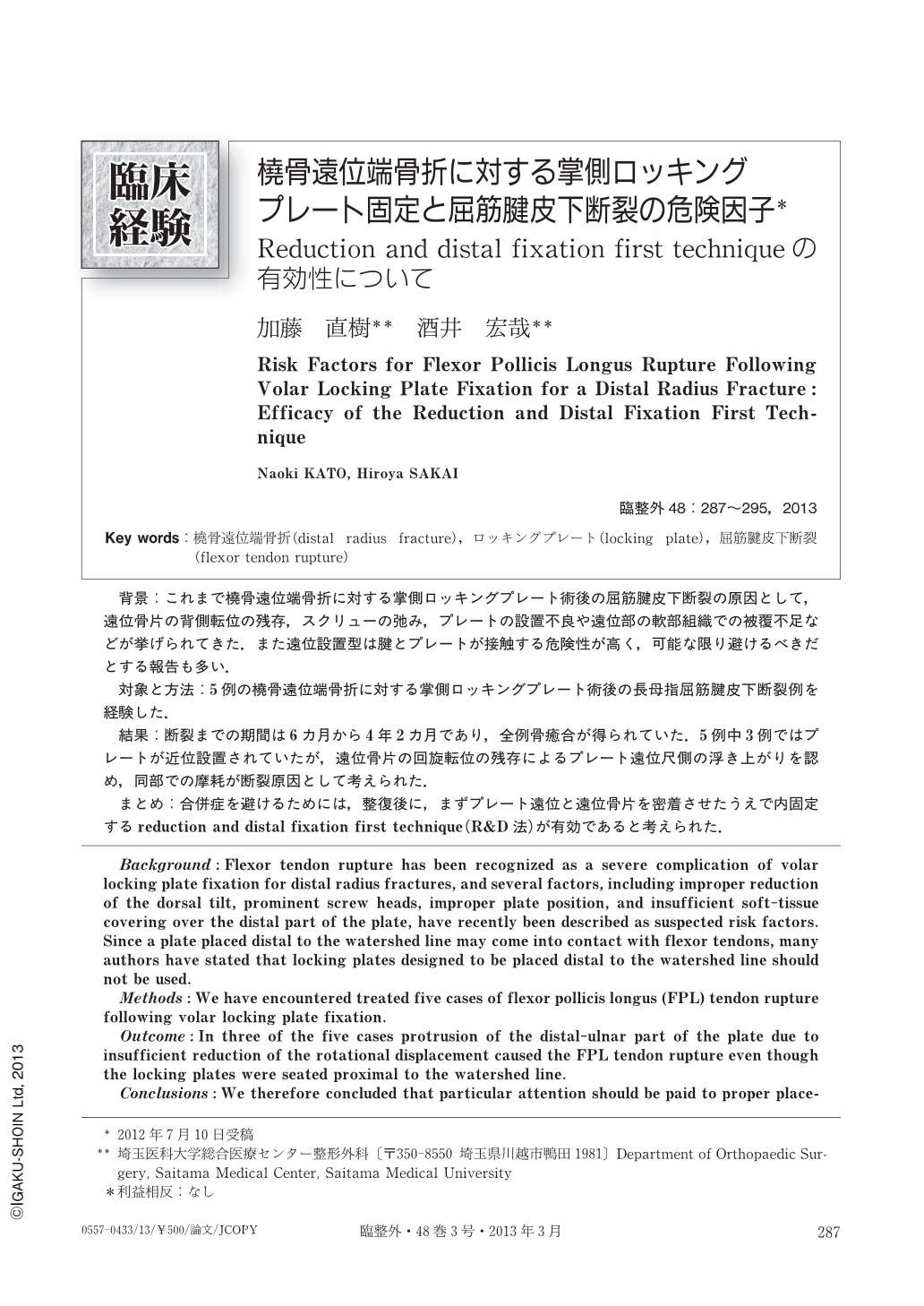
背景:これまで橈骨遠位端骨折に対する掌側ロッキングプレート術後の屈筋腱皮下断裂の原因として,遠位骨片の背側転位の残存,スクリューの弛み,プレートの設置不良や遠位部の軟部組織での被覆不足などが挙げられてきた.また遠位設置型は腱とプレートが接触する危険性が高く,可能な限り避けるべきだとする報告も多い.
対象と方法:5例の橈骨遠位端骨折に対する掌側ロッキングプレート術後の長母指屈筋腱皮下断裂例を経験した.
結果:断裂までの期間は6カ月から4年2カ月であり,全例骨癒合が得られていた.5例中3例ではプレートが近位設置されていたが,遠位骨片の回旋転位の残存によるプレート遠位尺側の浮き上がりを認め,同部での摩耗が断裂原因として考えられた.
まとめ:合併症を避けるためには,整復後に,まずプレート遠位と遠位骨片を密着させたうえで内固定するreduction and distal fixation first technique(R&D法)が有効であると考えられた.
Background:Flexor tendon rupture has been recognized as a severe complication of volar locking plate fixation for distal radius fractures, and several factors, including improper reduction of the dorsal tilt, prominent screw heads, improper plate position, and insufficient soft-tissue covering over the distal part of the plate, have recently been described as suspected risk factors. Since a plate placed distal to the watershed line may come into contact with flexor tendons, many authors have stated that locking plates designed to be placed distal to the watershed line should not be used.
Methods:We have encountered treated five cases of flexor pollicis longus (FPL) tendon rupture following volar locking plate fixation.
Outcome:In three of the five cases protrusion of the distal-ulnar part of the plate due to insufficient reduction of the rotational displacement caused the FPL tendon rupture even though the locking plates were seated proximal to the watershed line.
Conclusions:We therefore concluded that particular attention should be paid to proper placement of the distal part of the plate against the volar surface of the radius. We recommend fixing the distal part of the plate first after performing the anatomical reduction. The purpose of this report was to describe our experience with FPL tendon ruptures and to propose the reduction and distal fixation first technique as a reliable fixation technique.
Copyright © 2013, Igaku-Shoin Ltd. All rights reserved.