Japanese
English
- 有料閲覧
PPV購入案内
1,320円 (1,200円+税10%) こちらは、693ページから697ページの文献です。購入には医書.jp本会員登録が必要です。
会員登録完了後に改めて上記「購入サイトへ」を選択してください。
または「購入サイトへ」選択後に「購入ログイン」、「新規会員登録」の順に進んでください。
会員登録について詳しくはをご確認ください。
- Abstract 文献概要
- 1ページ目 Look Inside
- 参考文献 Reference
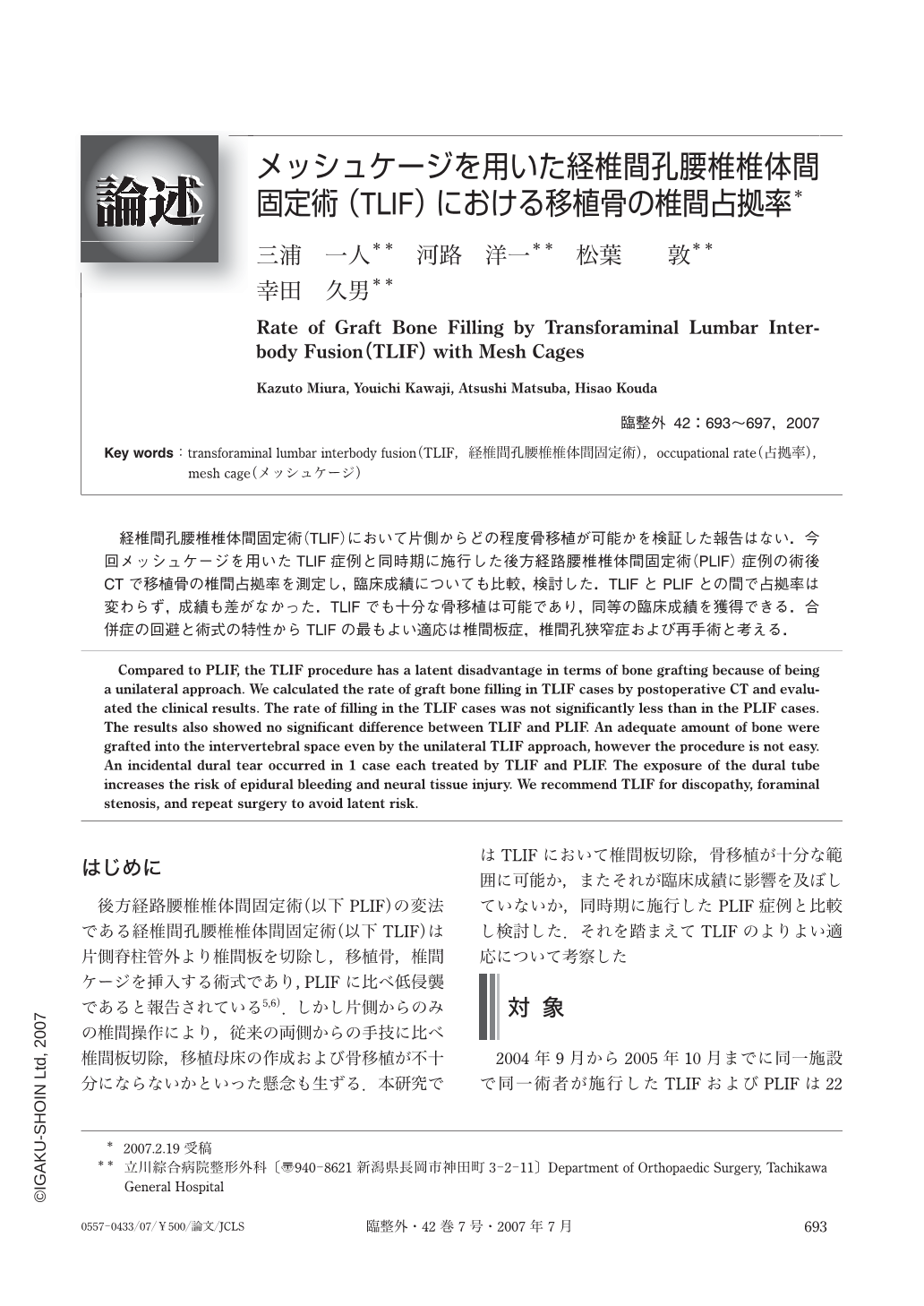
経椎間孔腰椎椎体間固定術(TLIF)において片側からどの程度骨移植が可能かを検証した報告はない.今回メッシュケージを用いたTLIF症例と同時期に施行した後方経路腰椎椎体間固定術(PLIF)症例の術後CTで移植骨の椎間占拠率を測定し,臨床成績についても比較,検討した.TLIFとPLIFとの間で占拠率は変わらず,成績も差がなかった.TLIFでも十分な骨移植は可能であり,同等の臨床成績を獲得できる.合併症の回避と術式の特性からTLIFの最もよい適応は椎間板症,椎間孔狭窄症および再手術と考える.
Compared to PLIF, the TLIF procedure has a latent disadvantage in terms of bone grafting because of being a unilateral approach. We calculated the rate of graft bone filling in TLIF cases by postoperative CT and evaluated the clinical results. The rate of filling in the TLIF cases was not significantly less than in the PLIF cases. The results also showed no significant difference between TLIF and PLIF. An adequate amount of bone were grafted into the intervertebral space even by the unilateral TLIF approach, however the procedure is not easy. An incidental dural tear occurred in 1 case each treated by TLIF and PLIF. The exposure of the dural tube increases the risk of epidural bleeding and neural tissue injury. We recommend TLIF for discopathy, foraminal stenosis, and repeat surgery to avoid latent risk.
Copyright © 2007, Igaku-Shoin Ltd. All rights reserved.