Japanese
English
- 有料閲覧
PPV購入案内
1,320円 (1,200円+税10%) こちらは、455ページから459ページの文献です。購入には医書.jp本会員登録が必要です。
会員登録完了後に改めて上記「購入サイトへ」を選択してください。
または「購入サイトへ」選択後に「購入ログイン」、「新規会員登録」の順に進んでください。
会員登録について詳しくはをご確認ください。
- Abstract 文献概要
- 1ページ目 Look Inside
低酸素脳症により前頭葉性歩行失行を呈した1例を報告した。症例は34歳,女性。WPW症候群による心室性頻拍発作で低酸素脳症となり,その後歩行失行が出現した。Foot grasp reflex, Gegenhaltenなどの前頭葉症候と123I-IMP SPECTにて前頭葉内側を中心とする血流低下を認め,前頭葉性歩行失行と診断した。
Droxidopaによる明らかな改善を認めず,約7カ月後自然経過にてfoot grasp reflexの軽減とともに独立歩行が可能になった。これまで低酸素脳症による前頭葉性の歩行失行の病態は注目されておらず,本例はfoot grasp reflexが歩行失行の発現に重要と考えられた。
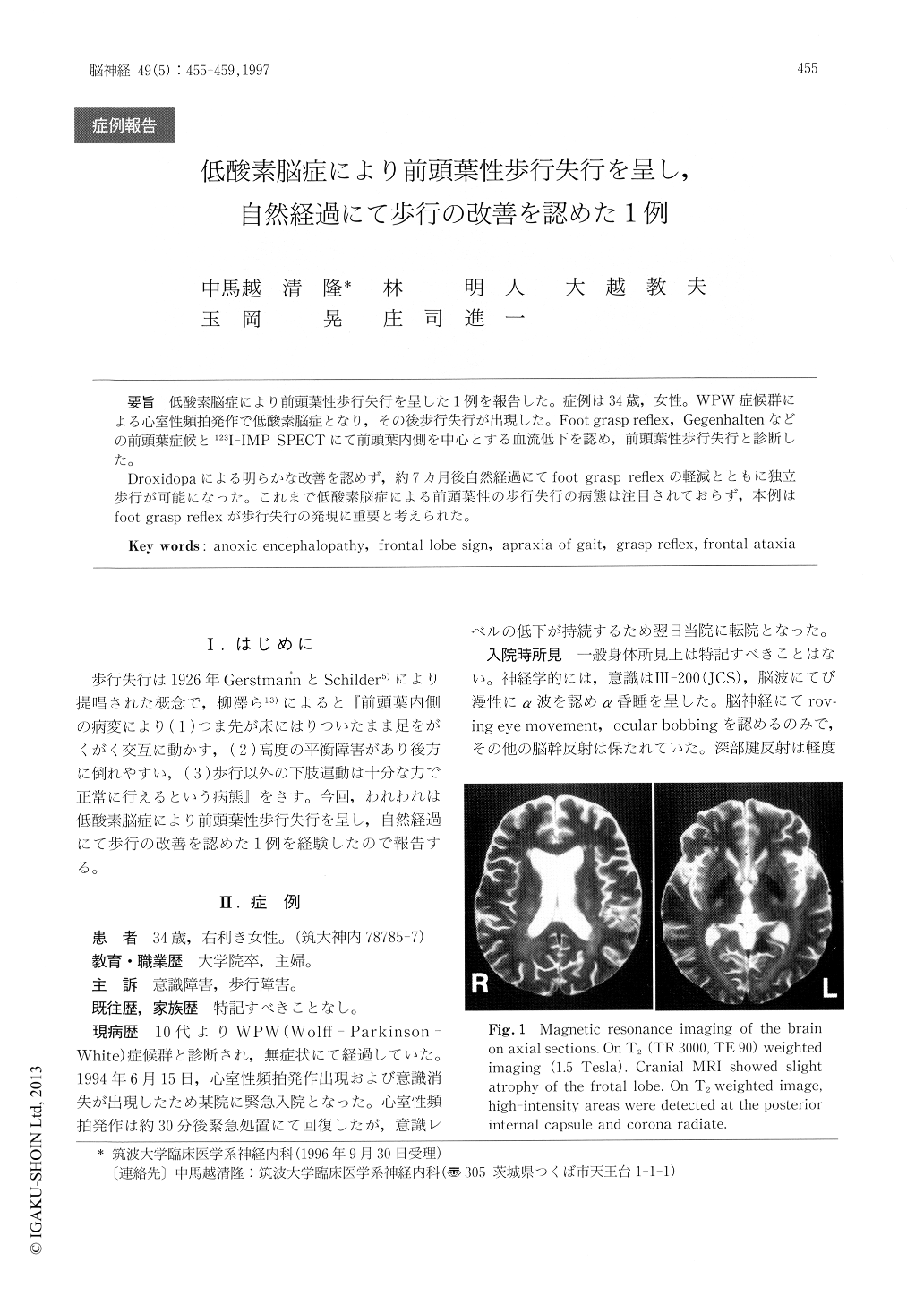
We reported a rare case who had hypoxic-ence-phalopathy causing frontal apraxia of gait. The patient, a 34-year-old female, was admitted in July, 1994, complaining of difficulty in walking after anoxic brain damage caused by ventricular arrhyth-mia. She had difficulty in raising her feet, which appeared to be rooted to the floor. There was no evidence of motor paralysis, spasticity, rigidity or sensory loss, but she did show frontal lobe signs such as foot grasp reflex and Gegenhalten. Cranial MRI showed slight atrophy of the frotal lobe.
Copyright © 1997, Igaku-Shoin Ltd. All rights reserved.