Japanese
English
- 有料閲覧
PPV購入案内
1,320円 (1,200円+税10%) こちらは、383ページから390ページの文献です。購入には医書.jp本会員登録が必要です。
会員登録完了後に改めて上記「購入サイトへ」を選択してください。
または「購入サイトへ」選択後に「購入ログイン」、「新規会員登録」の順に進んでください。
会員登録について詳しくはをご確認ください。
- Abstract 文献概要
- 1ページ目 Look Inside
- 参考文献 Reference
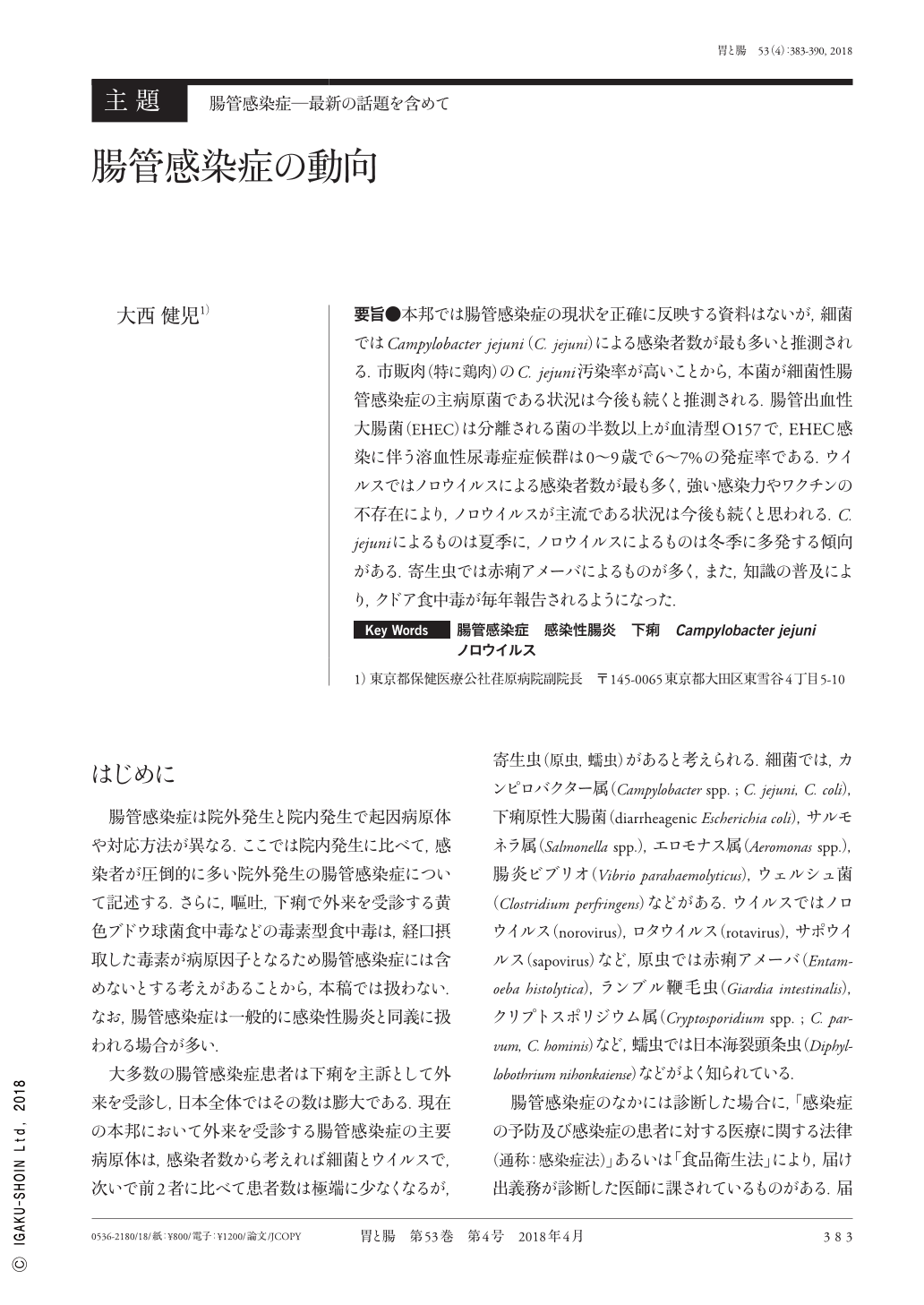
要旨●本邦では腸管感染症の現状を正確に反映する資料はないが,細菌ではCampylobacter jejuni(C. jejuni)による感染者数が最も多いと推測される.市販肉(特に鶏肉)のC. jejuni汚染率が高いことから,本菌が細菌性腸管感染症の主病原菌である状況は今後も続くと推測される.腸管出血性大腸菌(EHEC)は分離される菌の半数以上が血清型O157で,EHEC感染に伴う溶血性尿毒症症候群は0〜9歳で6〜7%の発症率である.ウイルスではノロウイルスによる感染者数が最も多く,強い感染力やワクチンの不存在により,ノロウイルスが主流である状況は今後も続くと思われる.C. jejuniによるものは夏季に,ノロウイルスによるものは冬季に多発する傾向がある.寄生虫では赤痢アメーバによるものが多く,また,知識の普及により,クドア食中毒が毎年報告されるようになった.
While the current status of enteric infections in Japan is not accurately or thoroughly known, the most predominant pathogens responsible for bacterial and viral enteric infections are thought to be Campylobacter jejuni and norovirus, respectively. In the course of any year, enteric infections due to C. jejuni tend to predominate in the summer and those due to norovirus tend to predominate in the winter. The prevalence of C. jejuni and norovirus as the main pathogenic organisms responsible for bacterial and viral enteric infections is expected to continue due to the high rate of C. jejuni contamination in chickens, extreme contagiousness of norovirus, and absence of a norovirus vaccine. More than half of enterohemorrhagic Escherichia coli(EHEC)strains are serotype O-157, and hemolytic uremic syndrome is found in 6-7% of pediatric patients(0-9 years old)infected with EHEC. Amebic enteric infections are predominantly parasitic, and the reported number of patients with food poisoning by Kudoa septempunctata has increased as a consequence of the spreading awareness of this protozoan in the public and medical community.
Copyright © 2018, Igaku-Shoin Ltd. All rights reserved.