Japanese
English
- 有料閲覧
PPV購入案内
1,320円 (1,200円+税10%) こちらは、930ページから938ページの文献です。購入には医書.jp本会員登録が必要です。
会員登録完了後に改めて上記「購入サイトへ」を選択してください。
または「購入サイトへ」選択後に「購入ログイン」、「新規会員登録」の順に進んでください。
会員登録について詳しくはをご確認ください。
- Abstract 文献概要
- 1ページ目 Look Inside
- 参考文献 Reference
抄録
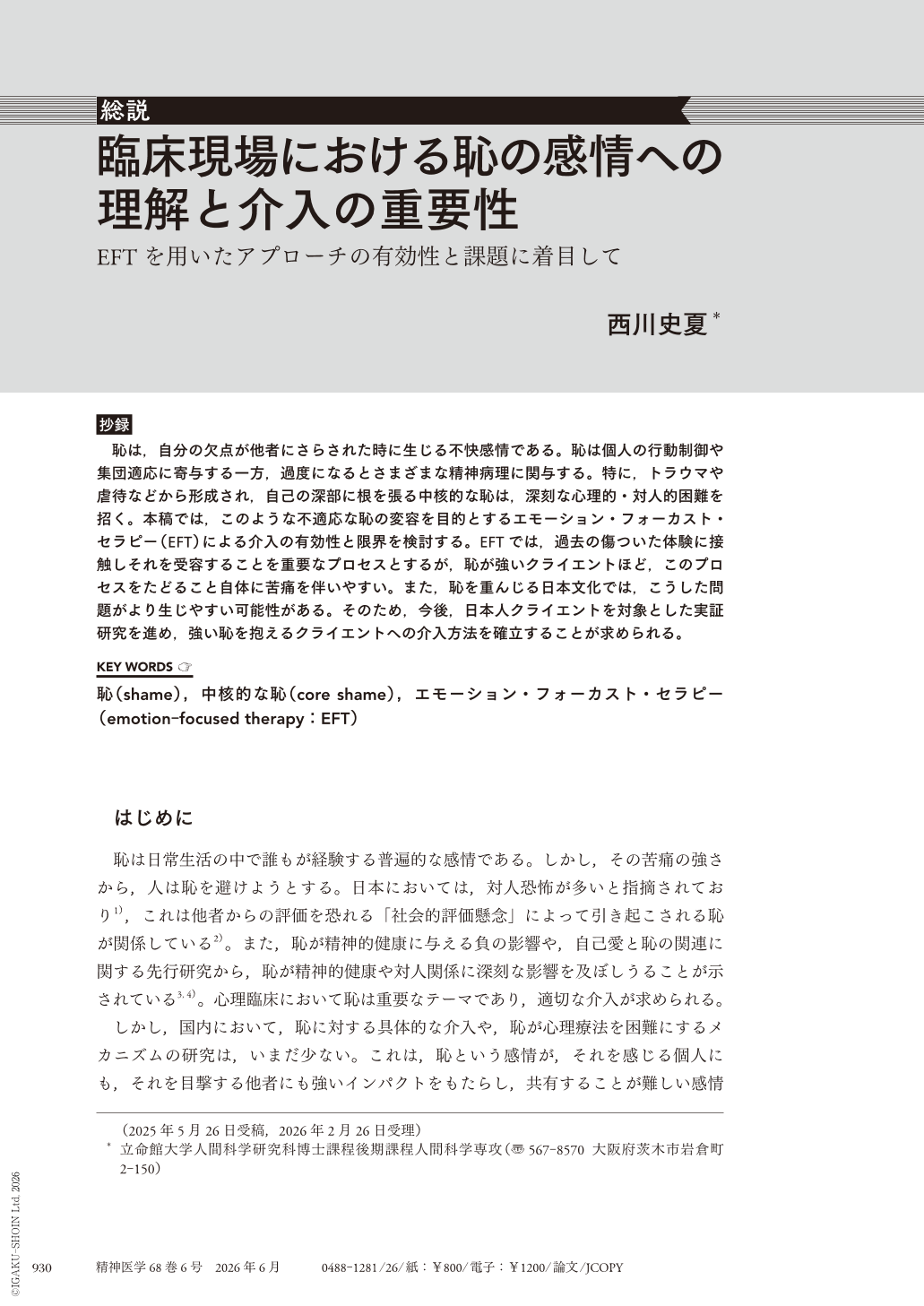
恥は,自分の欠点が他者にさらされた時に生じる不快感情である。恥は個人の行動制御や集団適応に寄与する一方,過度になるとさまざまな精神病理に関与する。特に,トラウマや虐待などから形成され,自己の深部に根を張る中核的な恥は,深刻な心理的・対人的困難を招く。本稿では,このような不適応な恥の変容を目的とするエモーション・フォーカスト・セラピー(EFT)による介入の有効性と限界を検討する。EFTでは,過去の傷ついた体験に接触しそれを受容することを重要なプロセスとするが,恥が強いクライエントほど,このプロセスをたどること自体に苦痛を伴いやすい。また,恥を重んじる日本文化では,こうした問題がより生じやすい可能性がある。そのため,今後,日本人クライエントを対象とした実証研究を進め,強い恥を抱えるクライエントへの介入方法を確立することが求められる。
Shame is an unpleasant emotion that arises when one's shortcomings are exposed to others. While shame contributes to behavioral regulation and social adaptation, excessive shame is implicated in psychopathology. In particular, core shame that develops from trauma or abuse takes root within the self and leads to severe psychological and interpersonal difficulties. This paper examines the effectiveness and limitations of Emotion-Focused Therapy (EFT) in transforming such maladaptive shame. Although EFT regards contact with and acceptance of past painful experiences as crucial, clients with strong shame may find this process especially distressing. Moreover, in Japanese culture, which places a high value on shame as a means of maintaining social harmony, people may be more likely to experience and express shame. Therefore, it is necessary to advance empirical research with Japanese clients and to establish intervention methods for intense shame.
Copyright © 2026, Igaku-Shoin Ltd. All rights reserved.