Japanese
English
- 有料閲覧
PPV購入案内
2,200円 (2,000円+税10%) こちらは、755ページから763ページの文献です。購入には医書.jp本会員登録が必要です。
会員登録完了後に改めて上記「購入サイトへ」を選択してください。
または「購入サイトへ」選択後に「購入ログイン」、「新規会員登録」の順に進んでください。
会員登録について詳しくはをご確認ください。
- Abstract 文献概要
- 1ページ目 Look Inside
- 参考文献 Reference
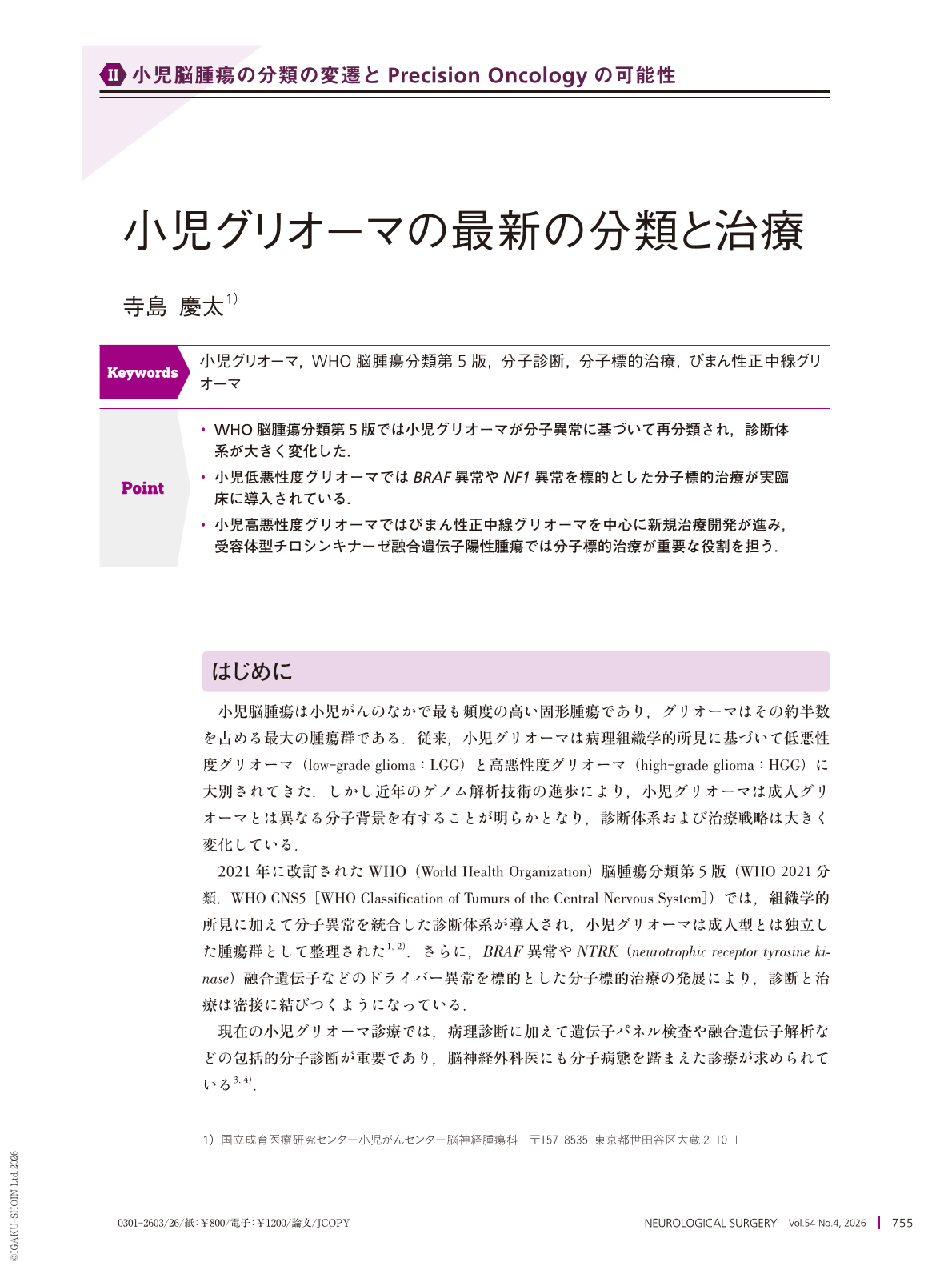
Point
・WHO脳腫瘍分類第5版では小児グリオーマが分子異常に基づいて再分類され,診断体系が大きく変化した.
・小児低悪性度グリオーマではBRAF異常やNF1異常を標的とした分子標的治療が実臨床に導入されている.
・小児高悪性度グリオーマではびまん性正中線グリオーマを中心に新規治療開発が進み,受容体型チロシンキナーゼ融合遺伝子陽性腫瘍では分子標的治療が重要な役割を担う.
Pediatric gliomas constitute the largest group of pediatric brain tumors and are biologically distinct from adult gliomas. The 2021 fifth edition of the World Health Organization Classification of Tumors of the Central Nervous System (WHO CNS5) introduced a molecularly integrated classification system and recognized pediatric-type gliomas as distinct entities. In pediatric low-grade gliomas, activation of the MAPK pathway is a common molecular hallmark, with BRAF V600E mutations, BRAF fusions, FGFR1 alterations, and NF1-associated abnormalities representing major driver events. These discoveries have supported the development of targeted therapies, including dabrafenib plus trametinib, tovorafenib, and MEK inhibitors. In pediatric high-grade gliomas, diffuse midline glioma, H3 K27-altered, remains one of the most devastating tumors, although recent advances have led to the approval of dordaviprone in the United States. In addition, infant-type hemispheric gliomas frequently harbor NTRK, ROS1, or ALK fusions and may respond markedly to corresponding targeted therapies. Comprehensive molecular diagnostics have therefore become essential for accurate classification and treatment selection. This review summarizes the current WHO CNS5 classification of pediatric gliomas and highlights recent advances in molecularly guided therapeutic strategies.
Copyright © 2026, Igaku-Shoin Ltd. All rights reserved.