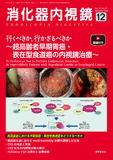
Japanese
English
- 有料閲覧
- Abstract 文献概要
- 1ページ目 Look Inside
- 参考文献 Reference
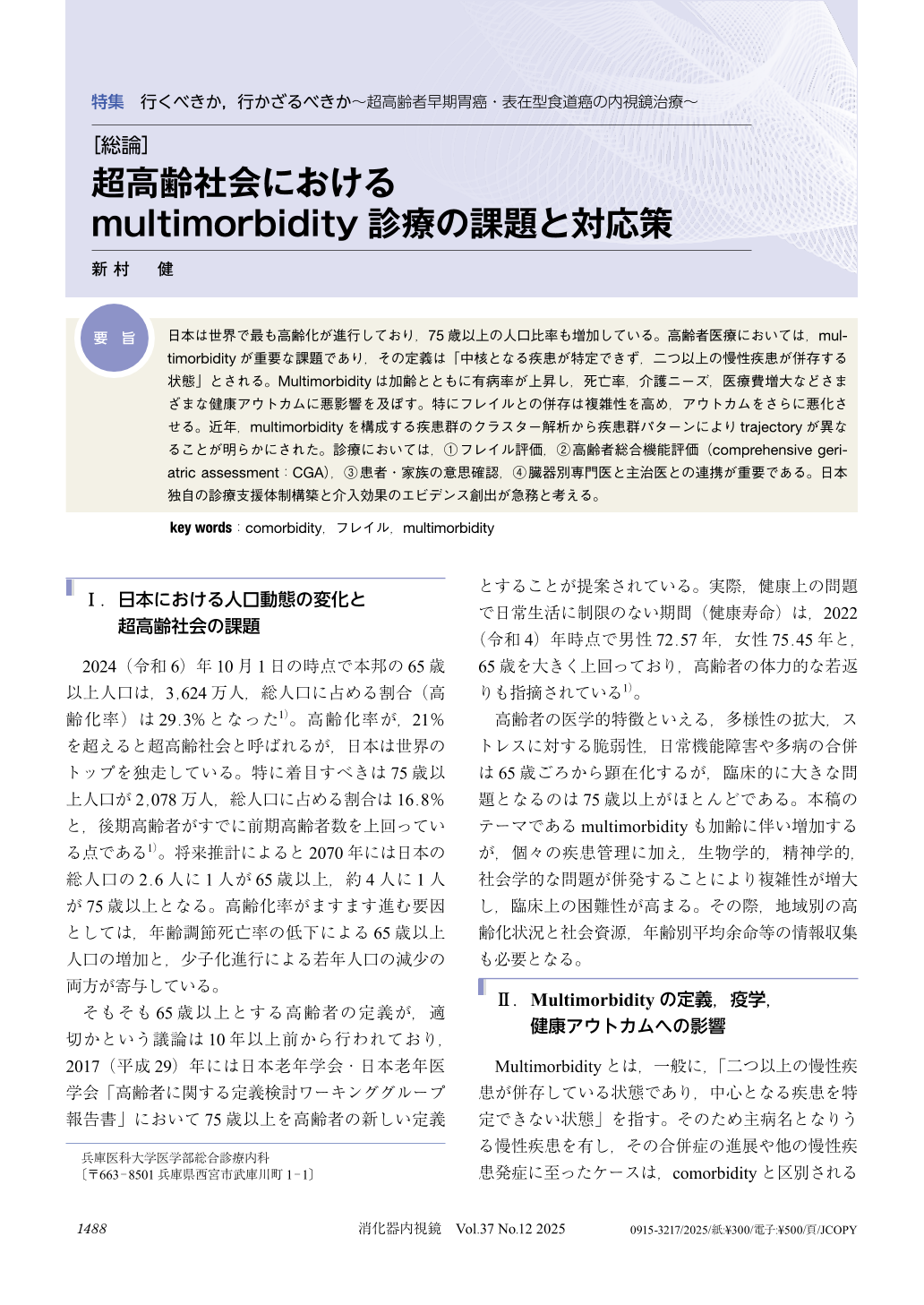
要旨
日本は世界で最も高齢化が進行しており,75歳以上の人口比率も増加している。高齢者医療においては,multimorbidityが重要な課題であり,その定義は「中核となる疾患が特定できず,二つ以上の慢性疾患が併存する状態」とされる。Multimorbidityは加齢とともに有病率が上昇し,死亡率,介護ニーズ,医療費増大などさまざまな健康アウトカムに悪影響を及ぼす。特にフレイルとの併存は複雑性を高め,アウトカムをさらに悪化させる。近年,multimorbidityを構成する疾患群のクラスター解析から疾患群パターンによりtrajectoryが異なることが明らかにされた。診療においては,①フレイル評価,②高齢者総合機能評価(comprehensive geriatric assessment:CGA),③患者・家族の意思確認,④臓器別専門医と主治医との連携が重要である。日本独自の診療支援体制構築と介入効果のエビデンス創出が急務と考える。
Japan has reached a super-aged society the most rapidly in the world, with a growing proportion of individuals aged 75 and older. Multimorbidity-defined as the co-existence of two or more chronic conditions without a single dominant disease-is a critical issue in geriatric care. It is associated with worse health outcomes including higher mortality, increased care needs, and rising healthcare costs. Coexisting frailty further complicates care and worsens prognosis. Key clinical strategies include: (1) frailty assessment, (2) comprehensive geriatric assessment (CGA), (3) eliciting patient and family preferences, and (4) coordination between primary care physicians and specialists. Establishing Japan-specific care models and generating outcome-based evidence are urgently needed.
© tokyo-igakusha.co.jp. All right reserved.