Japanese
English
- 有料閲覧
- Abstract 文献概要
- 1ページ目 Look Inside
- 参考文献 Reference
要旨
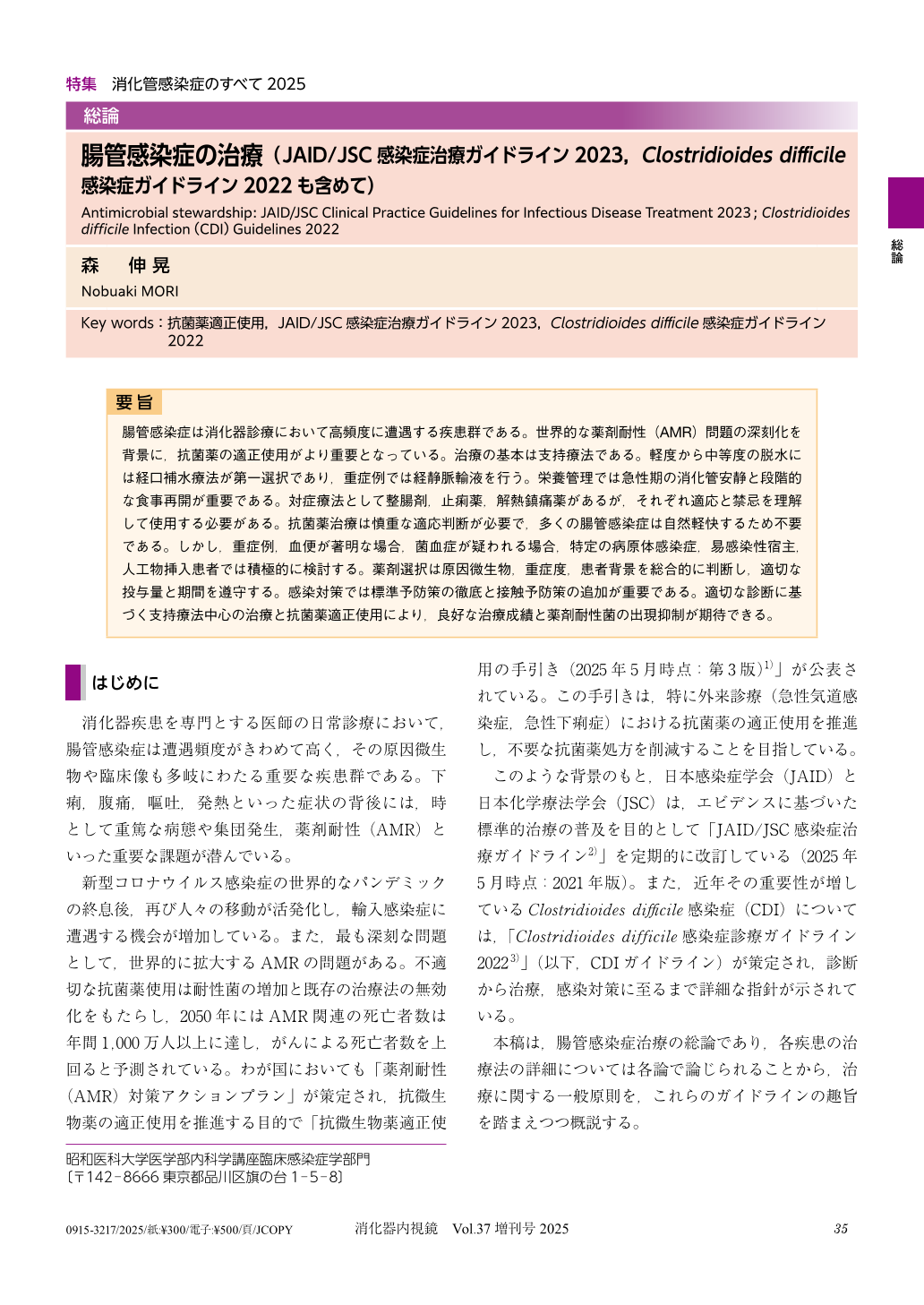
腸管感染症は消化器診療において高頻度に遭遇する疾患群である。世界的な薬剤耐性(AMR)問題の深刻化を背景に,抗菌薬の適正使用がより重要となっている。治療の基本は支持療法である。軽度から中等度の脱水には経口補水療法が第一選択であり,重症例では経静脈輸液を行う。栄養管理では急性期の消化管安静と段階的な食事再開が重要である。対症療法として整腸剤,止痢薬,解熱鎮痛薬があるが,それぞれ適応と禁忌を理解して使用する必要がある。抗菌薬治療は慎重な適応判断が必要で,多くの腸管感染症は自然軽快するため不要である。しかし,重症例,血便が著明な場合,菌血症が疑われる場合,特定の病原体感染症,易感染性宿主,人工物挿入患者では積極的に検討する。薬剤選択は原因微生物,重症度,患者背景を総合的に判断し,適切な投与量と期間を遵守する。感染対策では標準予防策の徹底と接触予防策の追加が重要である。適切な診断に基づく支持療法中心の治療と抗菌薬適正使用により,良好な治療成績と薬剤耐性菌の出現抑制が期待できる。
Gastrointestinal infections are commonly encountered diseases in gastroenterology practice. Against the background of the global antimicrobial resistance (AMR) problem, the appropriate use of antimicrobial agents has become increasingly important. The cornerstone of treatment is supportive care, primarily consisting of fluid therapy and electrolyte management. Oral rehydration therapy is the first-line treatment for mild to moderate dehydration, while intravenous fluid therapy is required for severe cases. Nutritional management involves gastrointestinal rest during the acute phase and gradual dietary resumption. Symptomatic treatments include probiotics, antidiarrheal agents, and antipyretics, but their indications and contraindications must be carefully considered. Antimicrobial therapy requires careful assessment of indications, as most gastrointestinal infections resolve spontaneously without antibiotics. However, antimicrobial treatment should be actively considered in severe cases, for example in patients with significant bloody stool, suspected bacteremia, specific pathogen infections, or immunocompromised hosts, and in patients with implanted devices. Drug selection should be based on a comprehensive evaluation of causative microorganisms, disease severity, and patient background, with adherence to appropriate dosage and duration. Infection control measures emphasize strict adherence to standard precautions and additional contact precautions. Through supportive care-centered treatment based on the proper diagnosis and rational antimicrobial use, favorable clinical outcomes and suppression of antimicrobial-resistant bacteria emergence can be expected. This approach contributes to optimal patient care while addressing the global challenge of antimicrobial resistance in healthcare settings.
© tokyo-igakusha.co.jp. All right reserved.