Japanese
English
- 有料閲覧
- Abstract 文献概要
- 1ページ目 Look Inside
- 参考文献 Reference
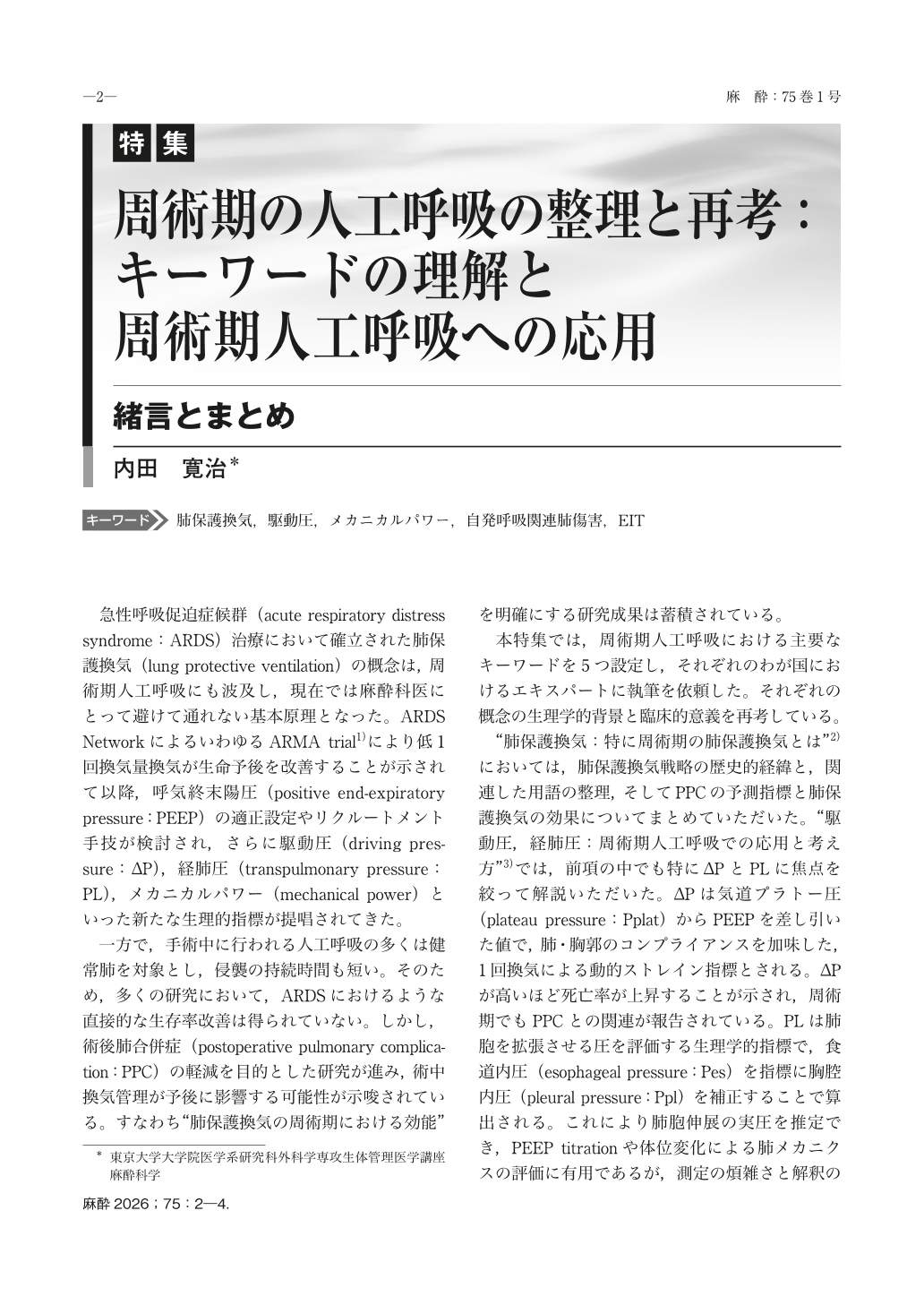
急性呼吸促迫症候群(acute respiratory distress syndrome:ARDS)治療において確立された肺保護換気(lung protective ventilation)の概念は,周術期人工呼吸にも波及し,現在では麻酔科医にとって避けて通れない基本原理となった。ARDS NetworkによるいわゆるARMA trial1)により低1回換気量換気が生命予後を改善することが示されて以降,呼気終末陽圧(positive end-expiratory pressure:PEEP)の適正設定やリクルートメント手技が検討され,さらに駆動圧(driving pressure:ΔP),経肺圧(transpulmonary pressure:PL),メカニカルパワー(mechanical power)といった新たな生理的指標が提唱されてきた。
After the results of the ARDS(acute respiratory distress syndrome)Network clinical trial were reported, lung-protective ventilation with a low tidal volume and appropriate positive end-expiratory pressure(PEEP)became the standard of safe anesthesia practice. New physiologic concepts, i.e., driving pressure, transpulmonary pressure, mechanical power, and spontaneous-effort-related injury have more recently refined our understanding of ventilatory stress. In addition, electrical impedance tomography(EIT)now allows the real-time visualization of ventilation distribution, providing the basis for individualized ventilation strategies. In the perioperative setting, lung protection requires the balancing of alveolar recruitment and overdistension while accounting for the patient’s physiology and surgical position and the depth of anesthesia. The integration of mechanical, physiologic, and imaging information will enable personalized lung-protective strategies that prevent postoperative pulmonary complications and improve patient outcomes.
Copyright © 2026 KOKUSEIDO CO., LTD. All Rights Reserved.