Japanese
English
- 有料閲覧
- Abstract 文献概要
- 1ページ目 Look Inside
- 参考文献 Reference
はじめに
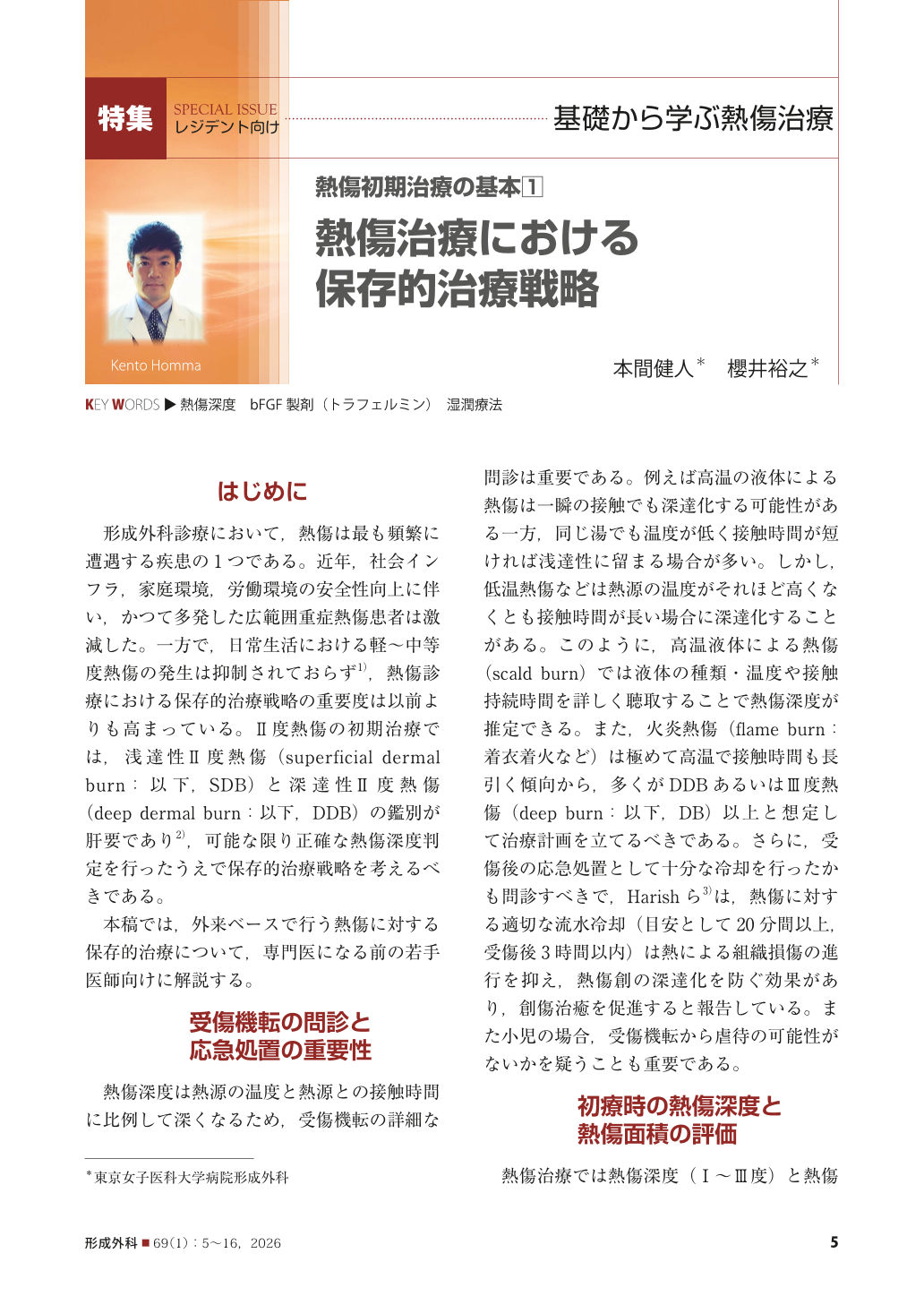
形成外科診療において,熱傷は最も頻繁に遭遇する疾患の1つである。近年,社会インフラ,家庭環境,労働環境の安全性向上に伴い,かつて多発した広範囲重症熱傷患者は激減した。一方で,日常生活における軽〜中等度熱傷の発生は抑制されておらず 1),熱傷診療における保存的治療戦略の重要度は以前よりも高まっている。Ⅱ度熱傷の初期治療では,浅達性Ⅱ度熱傷(superficial dermal burn:以下,SDB)と深達性Ⅱ度熱傷(deep dermal burn:以下,DDB)の鑑別が肝要であり 2),可能な限り正確な熱傷深度判定を行ったうえで保存的治療戦略を考えるべきである。
本稿では,外来ベースで行う熱傷に対する保存的治療について,専門医になる前の若手医師向けに解説する。
Minor (<5% total body surface area [TBSA]) thermal burns can be treated conservatively on an outpatient basis. A structured approach begins with a detailed history taking and bedside depth assessment, i.e., capillary refill, pin‑prick testing, or imaging, to distinguish superficial dermal burns (SDBs) from deeper lesions. Blister management remains unsettled: the 2021 Japanese Burn Guidelines advise against early deroofing, and randomized trials have described similar epithelialization times for aspiration versus deroofing, and the treatment decisions must therefore be individualized. Moist wound healing underpins therapy; SDBs are managed with petrolatum‑based dressings plus basic fibroblast growth factor (b-FGF) spray, shifting to advanced dressings as the exudate decreases, whereas deeper dermal burns need closer infection surveillance and possible surgery. The choice of dressing (from polyurethane films and hydrocolloids to silver‑impregnated hydro-fiber designed for burns) is algorithmic, matching the depth, exudate, and infection risk. Topical antibiotics are reserved for contaminated wounds to curb resistance and avoid sterile-site overuse. This evidence‑based framework aims to shorten the healing period, minimize scarring, and prevent sepsis in ambulatory burn patients.
Copyright© 2026 KOKUSEIDO CO., LTD. All Rights Reserved.