Japanese
English
- 有料閲覧
- Abstract 文献概要
- 1ページ目 Look Inside
- 参考文献 Reference
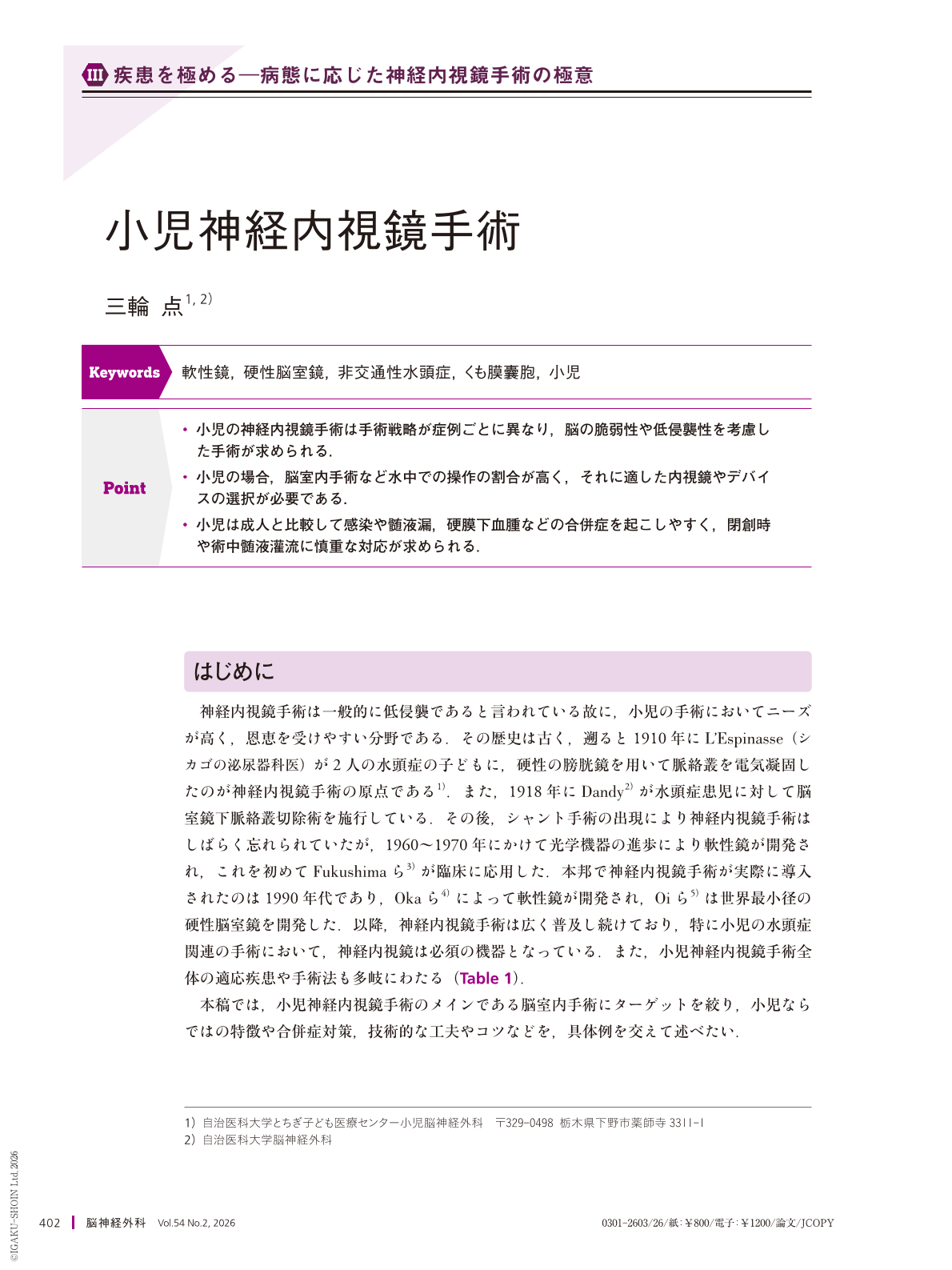
Point
・小児の神経内視鏡手術は手術戦略が症例ごとに異なり,脳の脆弱性や低侵襲性を考慮した手術が求められる.
・小児の場合,脳室内手術など水中での操作の割合が高く,それに適した内視鏡やデバイスの選択が必要である.
・小児は成人と比較して感染や髄液漏,硬膜下血腫などの合併症を起こしやすく,閉創時や術中髄液灌流に慎重な対応が求められる.
*本論文中、[Video]マークのある図につきましては、関連する動画を見ることができます(公開期間:2029年4月まで)。
Pediatric neuroendoscopic surgery involves a wide range of indications and surgical techniques. Neuroendoscopy has become an essential tool in the management of hydrocephalus in children. Given the heterogeneity of clinical presentations, surgical strategies must be individualized for each case. Additionally, the procedures must consider the fragility of the pediatric brain and emphasize minimally invasive approaches. Such surgeries often involve a high proportion of intraventricular manipulation under continuous irrigation, requiring the appropriate selection of endoscopes and specialized devices suited for such environments. Furthermore, compared with adults, pediatric patients are more prone to complications, including infection, cerebrospinal fluid leakage, and subdural hematoma, necessitating meticulous management during intraoperative cerebrospinal fluid irrigation and wound closure. In this study, we describe the characteristics and key considerations of pediatric neuroendoscopic surgery based on our experience with endoscopic third ventriculostomy (ETV) for noncommunicating hydrocephalus, fenestration of arachnoid cysts, and combined procedures using flexible scopes and rigid ventriculoscopes.
Copyright © 2026, Igaku-Shoin Ltd. All rights reserved.