Japanese
English
- 有料閲覧
- Abstract 文献概要
- 1ページ目 Look Inside
- 参考文献 Reference
Point
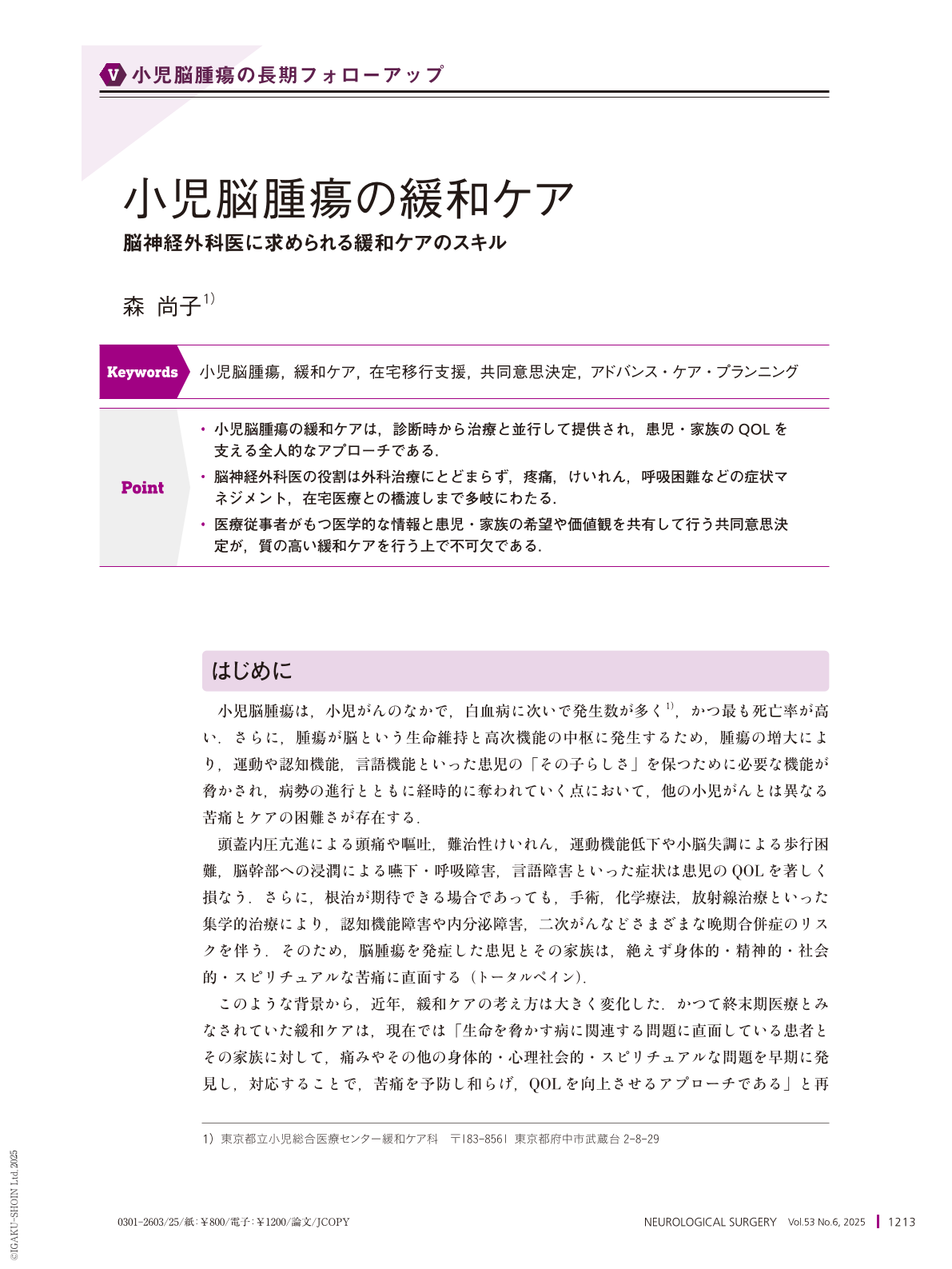
・小児脳腫瘍の緩和ケアは,診断時から治療と並行して提供され,患児・家族のQOLを支える全人的なアプローチである.
・脳神経外科医の役割は外科治療にとどまらず,疼痛,けいれん,呼吸困難などの症状マネジメント,在宅医療との橋渡しまで多岐にわたる.
・医療従事者がもつ医学的な情報と患児・家族の希望や価値観を共有して行う共同意思決定が,質の高い緩和ケアを行う上で不可欠である.
Pediatric brain tumors are the leading cause of cancer-related deaths in children, and cause unique suffering by degrading the neurological functions essential to a child's identity. Palliative care is no longer seen as terminal care, but rather as a crucial approach to improve quality of life (QOL), which should integrated from the time of diagnosis alongside curative therapy. Effective symptom management is fundamental, addressing increased intracranial pressure with steroids, and pain via a stepwise approach using opioids, adjuvant analgesics, seizures, and swallowing difficulties through multidisciplinary collaboration. Palliative intent surgery, such as a cerebrospinal fluid shunt or tumor debulking, and palliative radiotherapy can provide significant symptom relief. There is also a growing desire for home-based care, which requires a seamless transition supported by a close collaboration between hospitals and community medical teams. This was achieved through pre-discharge conferences to share prognoses, specific emergency care plans, and 24-hour support. The principles of shared decision-making (SDM) and Advance Care Planning (ACP) are vital to ensure that care aligns with the patient and family values through ongoing dialogue. The neurosurgeon's role extends beyond technical procedures to coordinate comprehensive care and empower patients and their families throughout the course of illness.
Copyright © 2025, Igaku-Shoin Ltd. All rights reserved.