Japanese
English
- 有料閲覧
- Abstract 文献概要
- 1ページ目 Look Inside
- 参考文献 Reference
Point
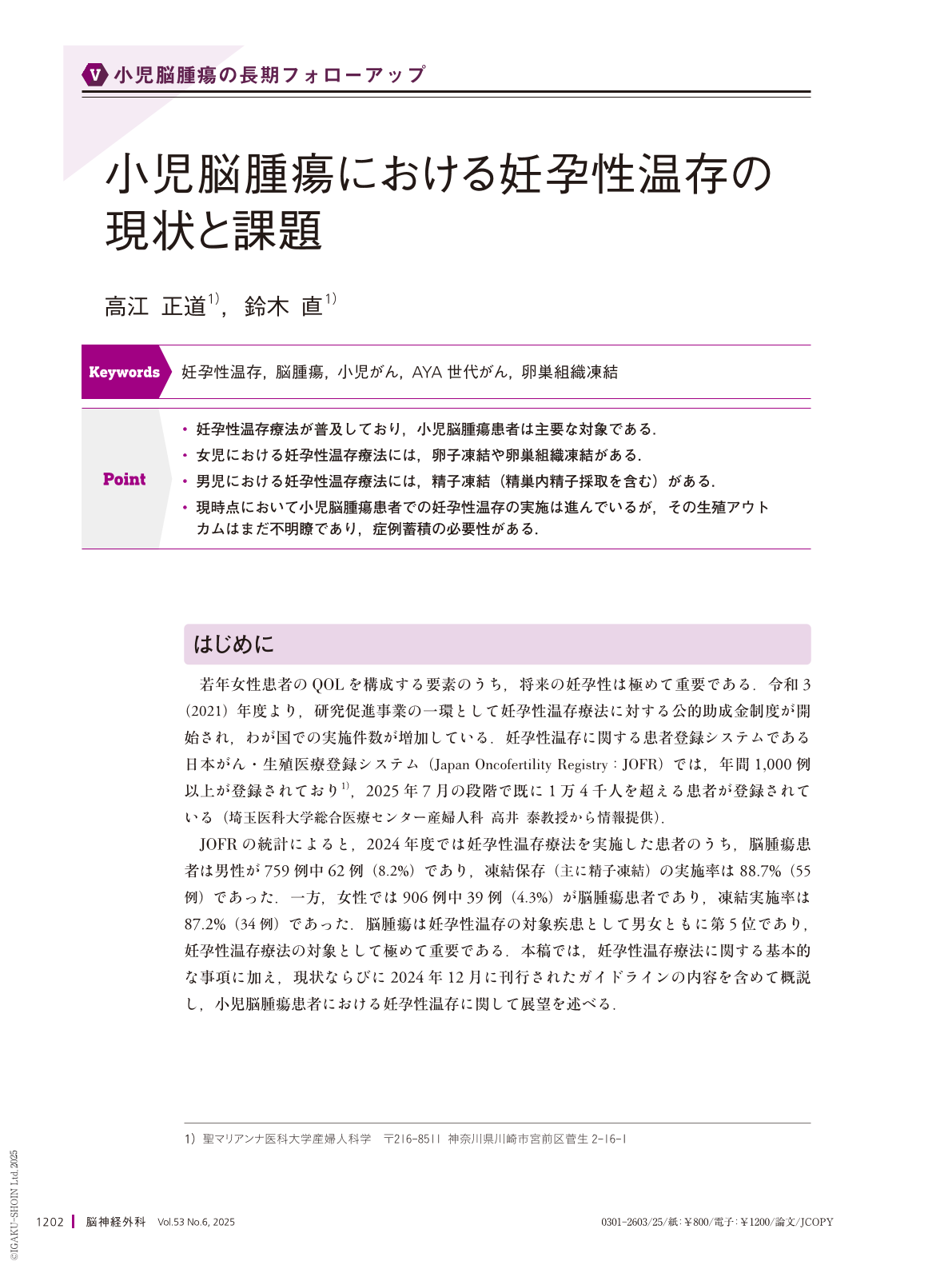
・妊孕性温存療法が普及しており,小児脳腫瘍患者は主要な対象である.
・女児における妊孕性温存療法には,卵子凍結や卵巣組織凍結がある.
・男児における妊孕性温存療法には,精子凍結(精巣内精子採取を含む)がある.
・現時点において小児脳腫瘍患者での妊孕性温存の実施は進んでいるが,その生殖アウトカムはまだ不明瞭であり,症例蓄積の必要性がある.
Fertility preservation treatment is becoming increasingly popular in Japan, but very few pediatric brain tumor patients have undergone this treatment even though such tumors are relatively common and affected patients are important candidates for fertility preservation. Fertility preservation treatments for girls include oocyte cryopreservation (OC) and ovarian tissue cryopreservation (OTC). However, OC requires transvaginal procedures and daily controlled ovarian stimulation, which can be difficult to implement, and OTC is still a new option, and there have been very few live births till now. For boys, sperm cryopreservation, including after testicular sperm extraction (TESE), is the only fertility preservation option. Among pediatric patients with brain tumors, boys are at higher risk of fertility loss (gonadal failure), especially those with germ cell tumors. Furthermore, more than half of the treatment protocols for atypical teratoid rhabdoid tumor or ependymoma have been shown to result in gonadal failure in both boys and girls. Currently, the reproductive outcomes of fertility preservation in pediatric brain tumor patients are unclear, and more cases need to be investigated.
Copyright © 2025, Igaku-Shoin Ltd. All rights reserved.