Japanese
English
- 有料閲覧
- Abstract 文献概要
- 1ページ目 Look Inside
- 参考文献 Reference
Point
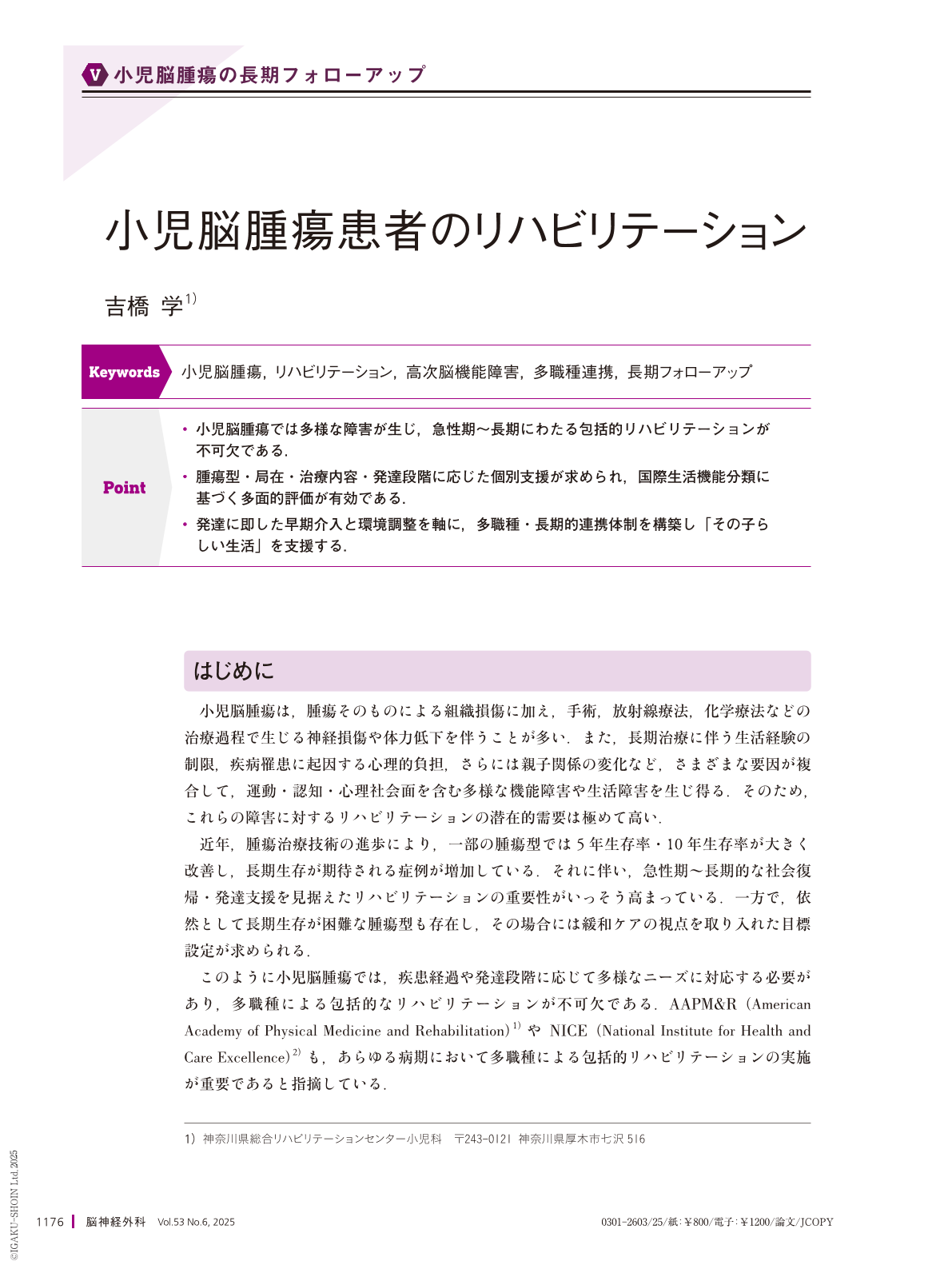
・小児脳腫瘍では多様な障害が生じ,急性期〜長期にわたる包括的リハビリテーションが不可欠である.
・腫瘍型・局在・治療内容・発達段階に応じた個別支援が求められ,国際生活機能分類に基づく多面的評価が有効である.
・発達に即した早期介入と環境調整を軸に,多職種・長期的連携体制を構築し「その子らしい生活」を支援する.
Pediatric brain tumors result in diverse neurological and functional impairments arising from both the tumor itself and its treatment, including surgery, radiotherapy, and chemotherapy. Advances in oncological therapies have improved long-term survival rates, creating an increasing need for comprehensive rehabilitation throughout the acute, recovery, and community phases. Rehabilitation must address motor, cognitive, swallowing, communication, and psychosocial challenges through a multidisciplinary and developmentally informed approach. The International Classification of Functioning, Disability, and Health framework provides a useful structure for integrating interventions targeting body functions, activities, and participation. Early intervention, developmental alignment, and environmental modification are essential to optimize outcomes and promote participation in daily life and education. Long-term follow-up is required, as late effects and higher-order cognitive dysfunction often emerge during growth and school-age years. Effective coordination among medical, educational, and social services is critical to ensure continuity of care, including transition and vocational support during adolescence and adulthood. Despite growing recognition of its importance, evidence-based rehabilitation protocols and interinstitutional collaboration remain limited. Further research is needed to standardize assessment and intervention practices, develop longitudinal care models, and establish networks linking oncology, rehabilitation, and community resources to support each child in achieving a meaningful and self-directed life.
Copyright © 2025, Igaku-Shoin Ltd. All rights reserved.