Japanese
English
- 有料閲覧
- Abstract 文献概要
- 1ページ目 Look Inside
- 参考文献 Reference
Point
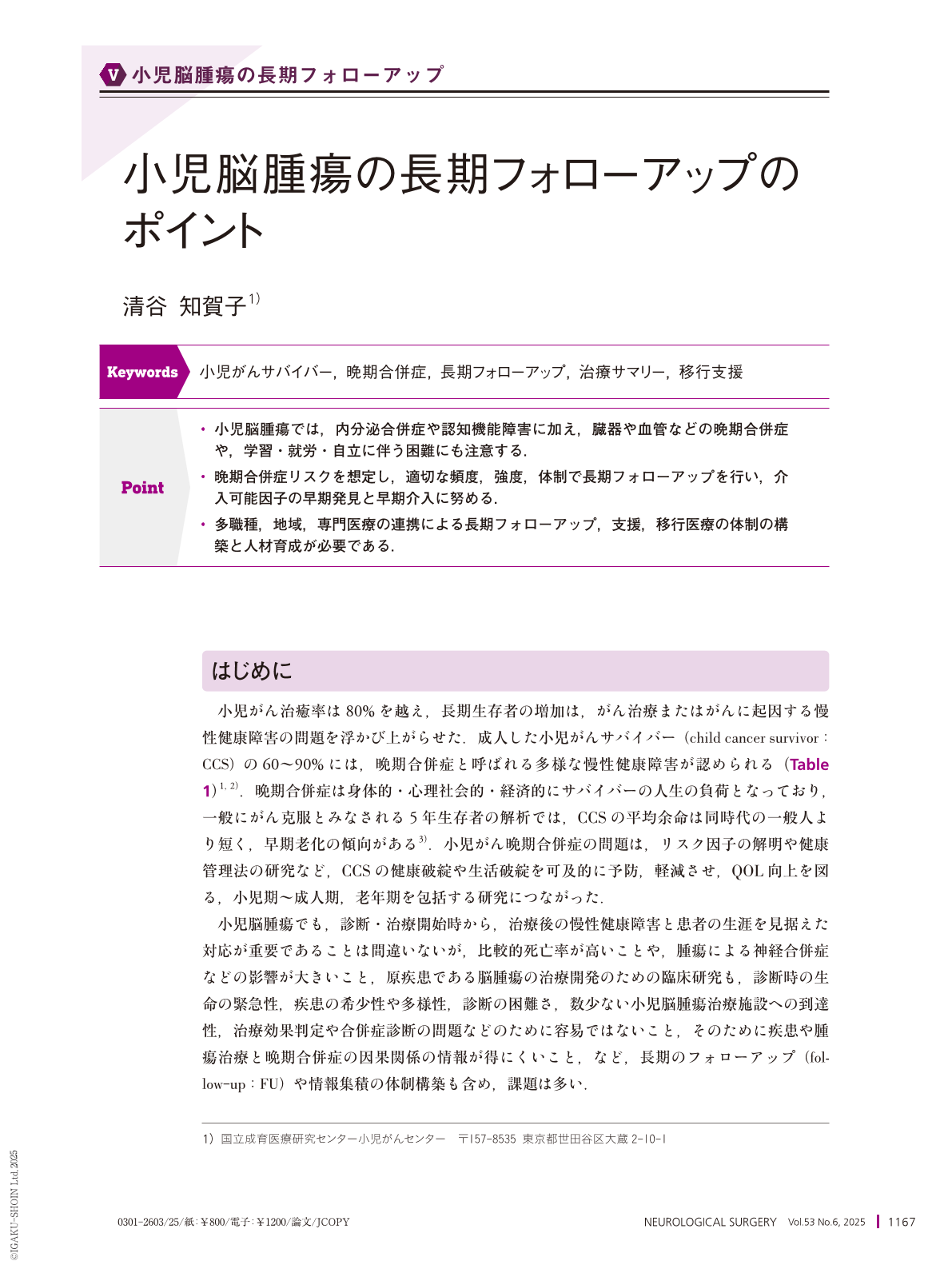
・小児脳腫瘍では,内分泌合併症や認知機能障害に加え,臓器や血管などの晩期合併症や,学習・就労・自立に伴う困難にも注意する.
・晩期合併症リスクを想定し,適切な頻度,強度,体制で長期フォローアップを行い,介入可能因子の早期発見と早期介入に努める.
・多職種,地域,専門医療の連携による長期フォローアップ,支援,移行医療の体制の構築と人材育成が必要である.
With the improvement in survival rates, the goal of pediatric oncology is to shift from improving survival rates to living with cancer and surviving in good health without serious late complications. The same is true for pediatric brain tumors. Depending on the individual patient's risk of late complications, long-term follow-up should be conducted with appropriate frequency, intensity, and structure to detect possible intervening factors and implement early intervention, with attention to possible endocrine complications, cognitive dysfunction, organ damage, vascular disease, and secondary tumors in the late stages. Addressing psychosocial issues specific to adolescents and young adults, as well as providing transition support and assistance with learning, employment, and independence difficulties associated with higher brain dysfunction, is also important. As neurosurgeons have limitations in dealing with these problems, it is necessary to establish a continuous and organic medical and support system for the patient's lifetime in collaboration with pediatrics, internal medicine, departments specializing in complication care, nurses, pharmacists, psychologists, rehabilitation centers, social workers, community medicine, and social welfare support. To this end, there appears to be an urgent need to train personnel involved in the long-term follow-up of pediatric brain tumors.
Copyright © 2025, Igaku-Shoin Ltd. All rights reserved.