Japanese
English
- 有料閲覧
PPV購入案内
1,320円 (1,200円+税10%) こちらは、93ページから97ページの文献です。購入には医書.jp本会員登録が必要です。
会員登録完了後に改めて上記「購入サイトへ」を選択してください。
または「購入サイトへ」選択後に「購入ログイン」、「新規会員登録」の順に進んでください。
会員登録について詳しくはをご確認ください。
- Abstract 文献概要
- 1ページ目 Look Inside
- 参考文献 Reference
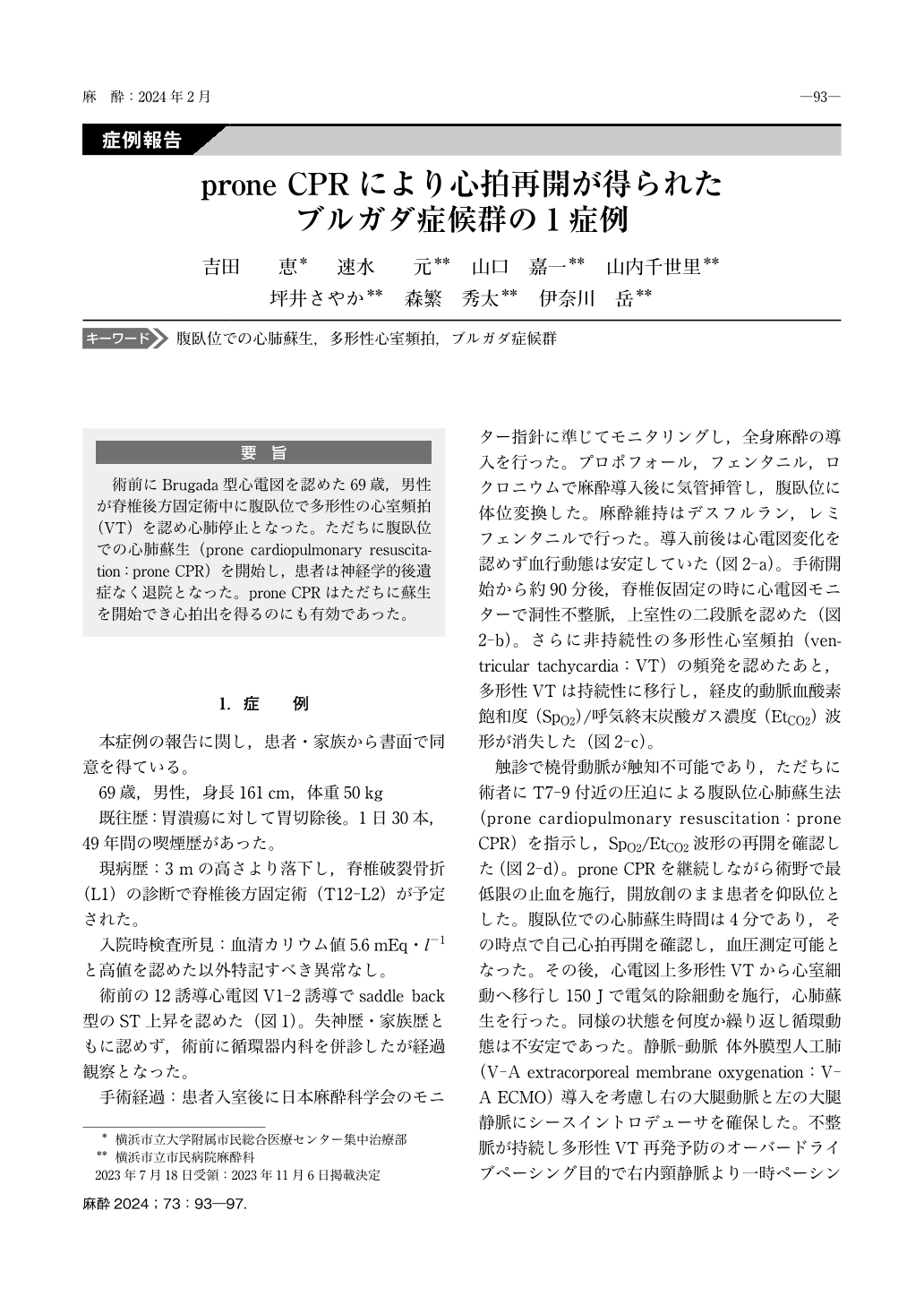
要旨
術前にBrugada型心電図を認めた69歳,男性が脊椎後方固定術中に腹臥位で多形性の心室頻拍(VT)を認め心肺停止となった。ただちに腹臥位での心肺蘇生(prone cardiopulmonary resuscitation:prone CPR)を開始し,患者は神経学的後遺症なく退院となった。prone CPRはただちに蘇生を開始でき心拍出を得るのにも有効であった。
A 69-year-old male with a preoperative Brugada-type electrocardiogram developed polymorphic ventricular tachycardia in the prone position during posterior spinal fusion surgery, resulting in cardiopulmonary arrest(CPA). Prone cardiopulmonary resuscitation(prone CPR)was immediately initiated;pulse oximetry then showed a good waveform and the patient’s end-tidal CO2 was restored. He was discharged without neurological sequelae. Prone CPR was effective in initiating immediate resuscitation and obtaining cardiac output. It is important that clinicians share knowledge and potential responses when CPA occurs in the prone position.
Copyright © 2024 KOKUSEIDO CO., LTD. All Rights Reserved.